
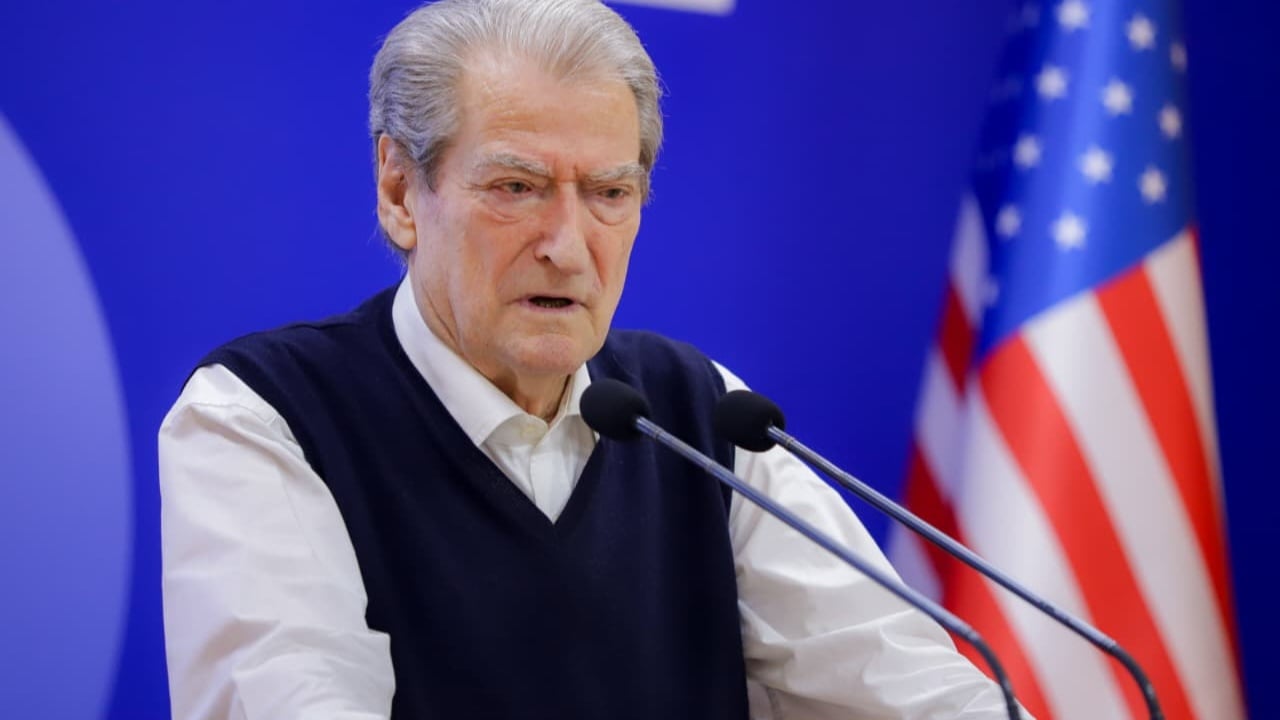
The leader of the Democratic Party, Sali Berisha, returned to the protests being held in Tirana, calling on PD supporters and citizens not to withdraw from the gatherings. In remarks to journalists, he presented these protests as a strong civic reaction, even as the slogan “Rama in prison, Berisha in prison” has accompanied public debate around them.
Call to continue the rallies
During a press conference with journalists, Berisha asked Democrats and opposition supporters to continue taking part in the protests in the capital. He expanded the appeal to other citizens as well, inside and outside the country, to contribute in support of these gatherings.
His message came at a time when the protests remain one of the opposition’s main political instruments on the ground, while public debate around them continues to be intense and polarized.
How Berisha presents the protests
In Berisha’s version, the protests represent a civic movement of unusual reach and endurance. He described them as the continent’s most powerful and longest-lasting movement, assigning them very high symbolic and political weight.
This is familiar political language for mobilization, aimed at keeping the opposition base engaged and presenting the protest not simply as party action, but as a broader social reaction.
Appeal for broader support
Berisha said the protesters who come out every night are, in his view, the voice of the conscience of a violated and oppressed society. In the same vein, he described the participants as representatives of civic and youth sacrifice for freedom and dignity.
Further, the PD leader called not only on Democrats, but on every Albanian citizen, wherever they may be, to support the protest in every possible way.
Protest as a tool of political pressure
Berisha’s statements confirm that the opposition is investing politically in the continuation of the protests in Tirana. Beyond the strong rhetoric, it remains to be seen whether this mobilization will actually broaden or remain limited to the traditional party base.
At this stage, what is clearly visible is the attempt to turn the protest into the axis of the political confrontation, with the aim of maintaining constant pressure on the government and institutions.
Berisha placed the emphasis on participation and the sustainability of the protest, calling for the gatherings not to fade. His rhetoric presents the protest as a broad civic cause, while the real effect of this appeal will be measured by turnout on the ground.