
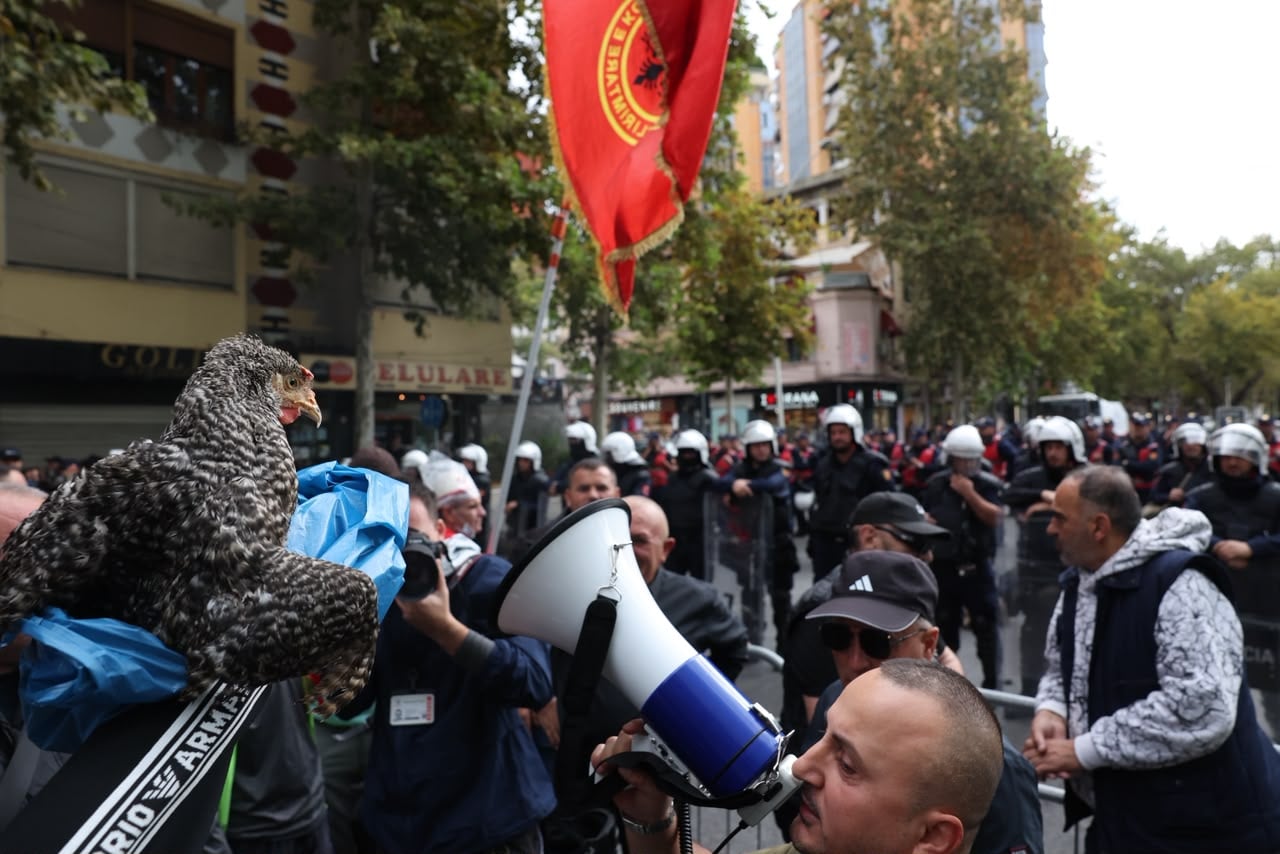
The Democratic Party appears to have assessed the protest held outside Parliament positively and is seeking to extend the mobilization into the evening. A message sent to its structures describes the action as “very good and strong,” while at the same time calling for a renewed presence at 18:00 near Parliament.
Internal message: praise for the morning, call to continue
In the communication distributed to PD structures, the morning action is presented as successful and high-intensity. However, the main emphasis of the message does not stop at the protest’s balance sheet, but on the need to maintain the same pace in the afternoon as well.
According to this communication, supporters are asked to return to the protest again and preserve the energy shown earlier in the day.
Focus on 18:00 near Parliament
The most concrete part of the call concerns the evening schedule. Structures are asked to notify as many people as possible who were unable to take part in the morning, so that they can be present at 18:00 at Parliament.
The message argues that the afternoon offers better opportunities for participation because of the timing, indicating that the opposition is trying to broaden its presence on the ground beyond the core already engaged in the early hours.
For those escorted by police, PD says it has engaged lawyers
The same message also mentions the issue of people escorted by police during the protest. According to the version conveyed by PD, lawyers have been sent to assist them and follow their situation.
At this stage, there are no other public details on the number of those escorted or the specific circumstances of the police interventions, beyond what has been communicated by the opposition camp.
The political message behind the mobilization
Beyond the motivational language, the internal communication shows that PD is treating the protest as an action that should be sustained throughout the day and not as a limited symbolic appearance.
This suggests that the opposition is testing its capacity to maintain political pressure in front of Parliament, while the real balance of participation and the effect on the ground remain to be seen beyond the declarations of the organizers themselves.
In essence, the message distributed by PD structures has two clear pillars: to present the morning protest as successful and to secure a second wave of participation in the evening.
It remains to be seen whether the call to return at 18:00 will translate into a real increase in participation or remain only part of internal political mobilization.