
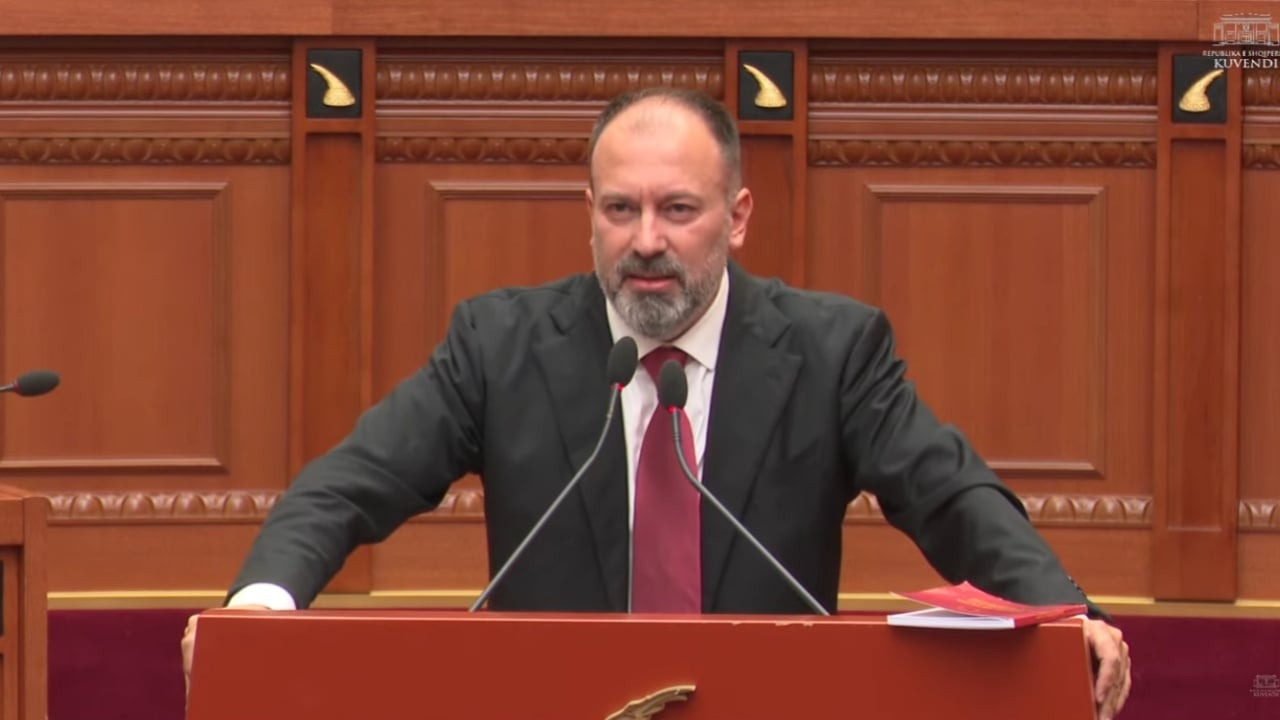
The debate over territorial reform returned to Parliament with sharp tones, as Arbjan Mazniku attributed the blocking of a considerable part of the commission’s work to the opposition. According to his version, the commission lost 41% of its mandate because of a lack of agreement and delays in starting meetings.
Accusation of dragging out the commission
In his speech in Parliament, Mazniku, one of the initiators of the law on Territorial Reform and co-chair of the relevant commission, said the first meeting was not held for 112 days. According to him, this period translates into the burning of 41% of the commission’s mandate time.
The fact cannot be ignored that the debate on the reform is taking place amid political accusations, while institutional time has been consumed without yet producing an agreed product between the sides.
Mazniku defends the 2014 reform
Mazniku presented the 2014 territorial reform as a successful process. According to him, in hearings and discussions there has been no real demand to return to the communes, while even alternative proposals have not shown that the old model was considered a solution.
He claimed that after the reform, municipalities were strengthened, revenues increased, debts were reduced, and investment capacity expanded. However, he acknowledged that these results are not enough for what the majority aims to achieve in terms of services to citizens.
Call to focus on services, not maps
In his argument, Mazniku insisted that citizens do not measure reform by administrative boundaries on a map, but by the services they receive in daily life. He listed roads, water, cleaning, lighting, drainage canals, nurseries, kindergartens and public transport as concrete concerns.
This is an argument the government has consistently used to defend interventions in local organization: less debate over administrative division and more emphasis on efficiency. But this is precisely where the strongest point of the political debate also arises, since the promise of better services requires measurable results, not only political formulations.
The experts’ deadlock and the call to continue the work
Mazniku also said there was a joint group of experts that was supposed to bring forward the technical elements of the reform, but on July 15 there was no agreement for the findings to be presented. According to him, at that point the commission faced two paths: either the reform would stall, or work would continue on the problems citizens encounter across the territory.
In the end, he called on the sides to work together on competencies, finances and analysis of the reform. It remains to be seen whether this appeal will produce real agreement, or whether the commission will continue to remain another arena of political clashes without concrete consequences for local governance.
Beyond Parliament’s rhetoric, the core of the debate remains the same: has the territorial reform brought more services and more real power for municipalities, or only a reorganization that continues to be sold as a success without a full public accounting?
So far, the answer has been given more through political statements than through clear accountability on finances, competencies and concrete effects on citizens.