
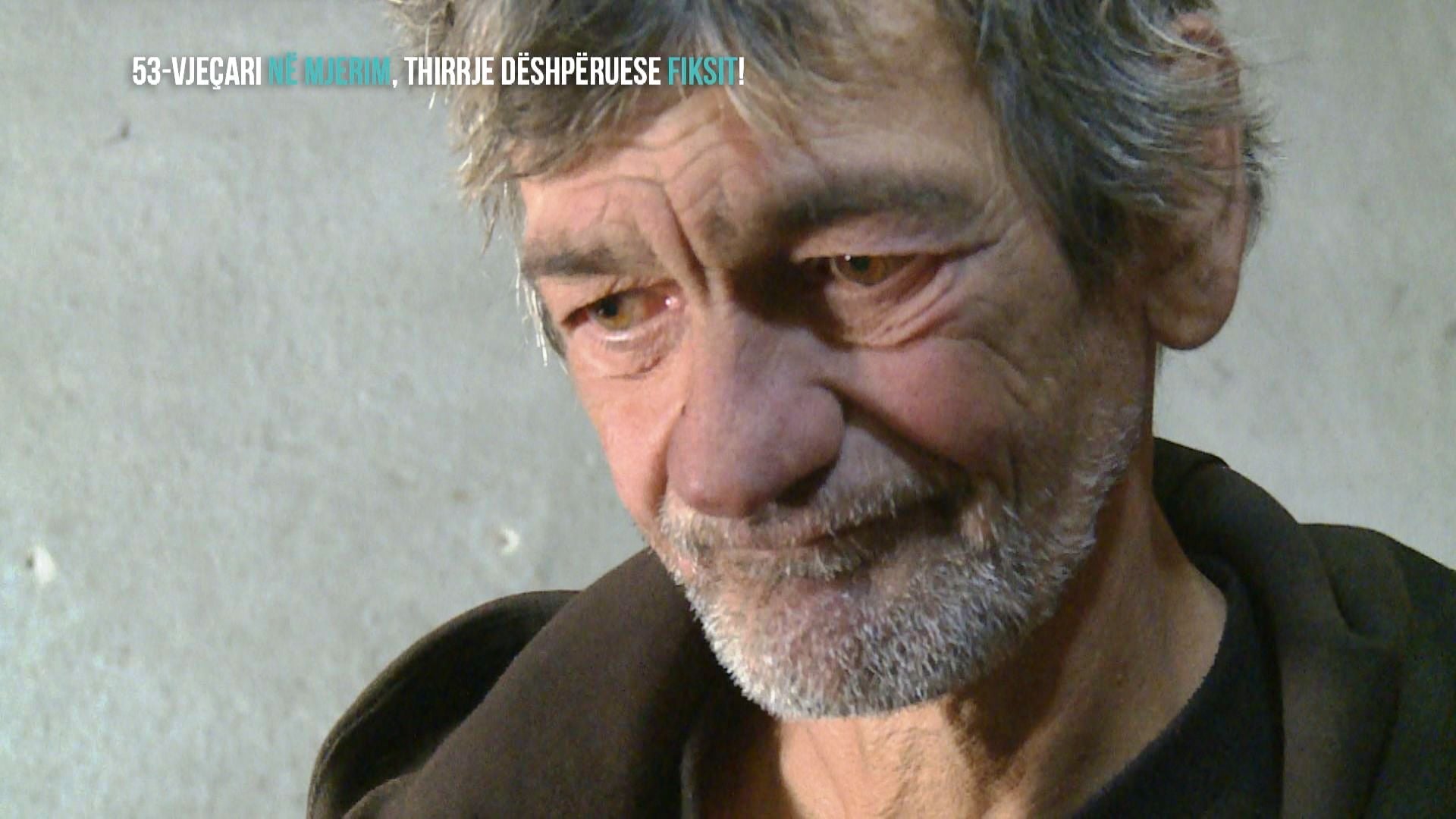
A 53-year-old man from the village of Kreshpanj, in the Administrative Unit of Pojan, is facing illness, lack of food and the inability to secure the treatment he needs on his own. The case once again highlights the gap between urgent need and the slow pace of social support mechanisms.
Living without income and with serious health problems
Aurel Zyfi, 53, is in serious economic and health hardship. He has no income and, according to publicly released information, lives in minimal conditions, without the support needed to cope with daily life.
After surgery for gallstones, he is also dealing with another health problem, a blocked vein, for which he needs further treatment in Tirana. But the lack of money has left him unable to pursue this medical care.
Food is lacking, help has not arrived
His condition is described as alarming even in terms of basic needs. The 53-year-old says he no longer has the strength to work, has no food and has no one by his side to help him cope with everyday life.
Under these conditions, the problem is not limited to medical treatment. It is also about the lack of bread and minimum care, while the economic support that should have come in such a case has still not materialized.
Family far away, the burden remains on one man alone
His family circle also does not appear to offer a solution to the situation. His children live far away; his two youngest daughters are in an orphanage, his son works, while his eldest daughter, who has started her own family, has said she does not have the financial means to support her father.
According to her, there are times when the 53-year-old does not even have bread to eat. This makes the case even more severe, as the lack of income and his health condition are compounded by social isolation.
Official version: aid was obstructed by procedures and the divorce
Representatives of the Pojan Administrative Unit, specifically the social service worker and the social administrator, have said they were aware of his situation and had tried to help him.
According to them, the procedures for receiving economic aid were blocked by the 53-year-old’s marital situation and the lack of divorce documentation. According to the same explanation, the divorce was finalized only a few days ago and an application for economic aid is now expected to be submitted.
However, this administrative reasoning leaves open the essential question: what happens to a sick person with no income when the need is today and the system’s response remains tied to paperwork and deadlines?
Beyond the documents and procedures, the case of the 53-year-old from Kreshpanj shows how fragile the social protection network remains for people who have neither income, nor health, nor family support.
While medical treatment and basic assistance appear urgent, he continues to live in difficult conditions, waiting for support that for the moment exists more in official explanations than in his daily life.