
Three drivers have been placed under criminal investigation in Durrës and Kavajë after, according to the official version of the Traffic Police, they tried to give money to officers in order to avoid administrative punishment. The case has been referred to the Prosecutor’s Office, while police speak of three separate episodes of suspected bribery.
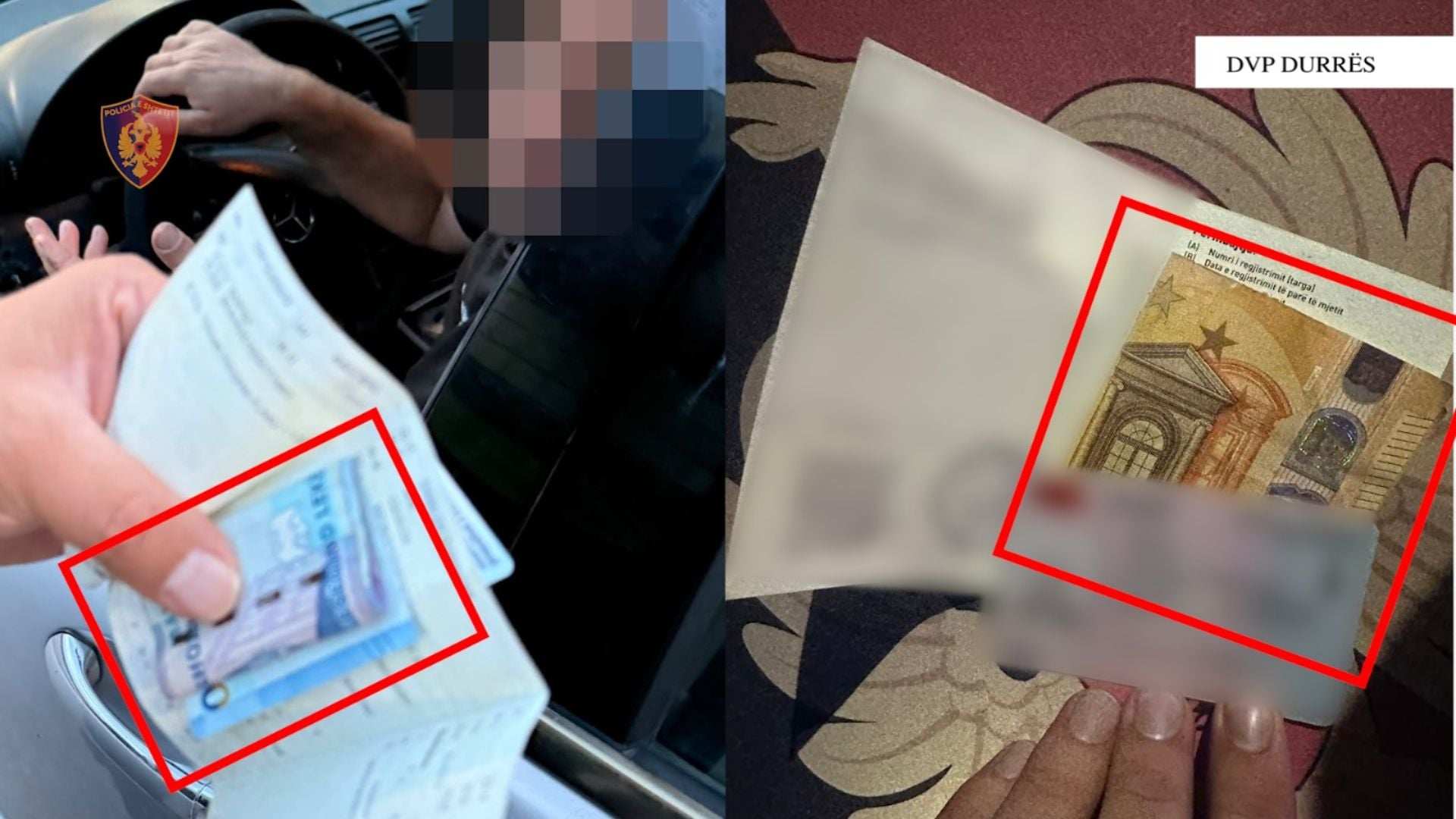
Three separate cases in Durrës and Kavajë
Durrës Police said that during Traffic Police checks, three cases were identified, two in Durrës and one in Kavajë, in which vehicle drivers stopped for detected violations allegedly attempted to corrupt police officers.
According to the statement, the drivers had irregular documentation and aimed to avoid the administrative measure.
Who are the individuals under investigation
For these cases, the materials were referred to the Prosecutor’s Office and proceedings were launched while the suspects remain free for citizens K. M., 47, and E. A., 30, both residents of Durrës, as well as A. K., 35, a resident of Peqin.
All three are suspected of the criminal offense of “active corruption of persons exercising public functions,” according to the classification made by the authorities.
What the police claim
According to the Traffic Police, the stops were carried out as part of intensive monitoring to identify and punish violators of the Road Code in the Durrës and Kavajë area.
The official statement provides no further details on the amount of money allegedly offered, the specific circumstances of each case, or the exact type of violations for which the drivers had been stopped.
The case files were sent to the Prosecutor’s Office
The procedural files were passed to the Prosecutor’s Office for further action. At this stage, the version made public remains that of the authorities, and the case is expected to be assessed by the prosecution body.
Police also called for strict compliance with traffic rules and for reporting violations to 112.
The proceedings against the three drivers come in a context where petty corruption on the roads remains a double test: for citizens who try to escape the law with cash in hand, and for institutions that must prove they respond with the same standard in every case.
For now, the authorities have made public only the criminal referral and the identities by initials of the people involved.