
The vote in favor of the new Territorial Map did not close the debate within the majority. On the contrary, Erion Braçe’s reaction made the political clash even clearer, as well as the way the MP’s conviction is being read in relation to the prime minister’s line.
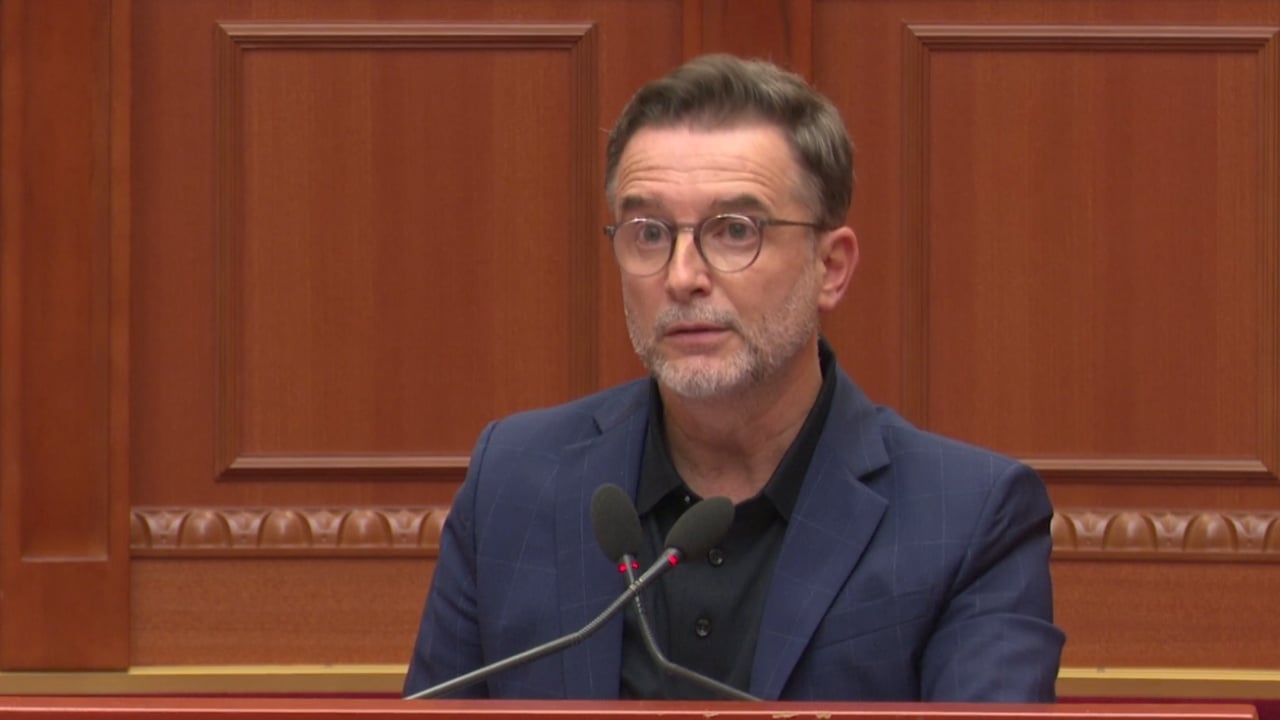
Braçe separates his vote from Rama’s message
Socialist MP Erion Braçe reacted after the comments that followed his vote in favor of the new Territorial Map, openly opposing the interpretation that, according to him, was given to it by Prime Minister Edi Rama.
Braçe presented the vote as a personal and political decision, linked to the obligation of representation he holds as an MP, and not as support for a personal or triumphalist reading made by others.
The core of the debate: not simply the map, but local government reform
In his reaction, Braçe argues that the position he took is not simply connected to changing administrative boundaries. According to him, the real issue is the need for a genuine reform of local government.
He calls for more decentralization, more financial autonomy, and more powers for municipalities, suggesting that without these elements, the debate over the map risks remaining merely formal.
Criticism of internal discipline in the Socialist Party
Beyond the issue of the Territorial Map, Braçe’s reaction also touches on the internal climate in the Socialist Party. He raises concerns about the way political discipline is exercised and about the pressure placed on an MP’s vote when it is interpreted as the property of the leadership.
This makes the reaction broader than a procedural clarification: it sounds like criticism of the way disagreements are managed within the majority, especially when the official line is presented as the only legitimate one.
“I stood by the work I was elected to do”
Braçe stresses that his vote is a responsibility to the citizens who elected him and that he does not accept it being used to justify political positions that are not his.
At the end of his reaction, he insists that he acted in line with the duty he holds as an MP. His message is clear: a vote cast in Parliament cannot be politically confiscated by anyone, even by the head of government.
The open clash between Braçe and Rama highlights that the debate over the Territorial Map has not been merely technical. It has also exposed tensions over representation, the centralization of decision-making, and the limits of party discipline within the majority.
In this context, Braçe’s vote is being read not only as a position on an administrative map, but also as a rejection of the idea that an MP must remain silent when the leadership speaks on his behalf.