
The European Union has hardened its tone toward Kosovo over any move affecting the Specialist Chambers, while at the same time pushing forward the enlargement agenda with candidate countries. In this climate, Albania is mentioned among the countries expected to hold an intergovernmental conference with the EU, but the message from Brussels remains clear: without political alignment, security and rule-of-law standards, the process will not move forward.
Brussels’ warning for Kosovo
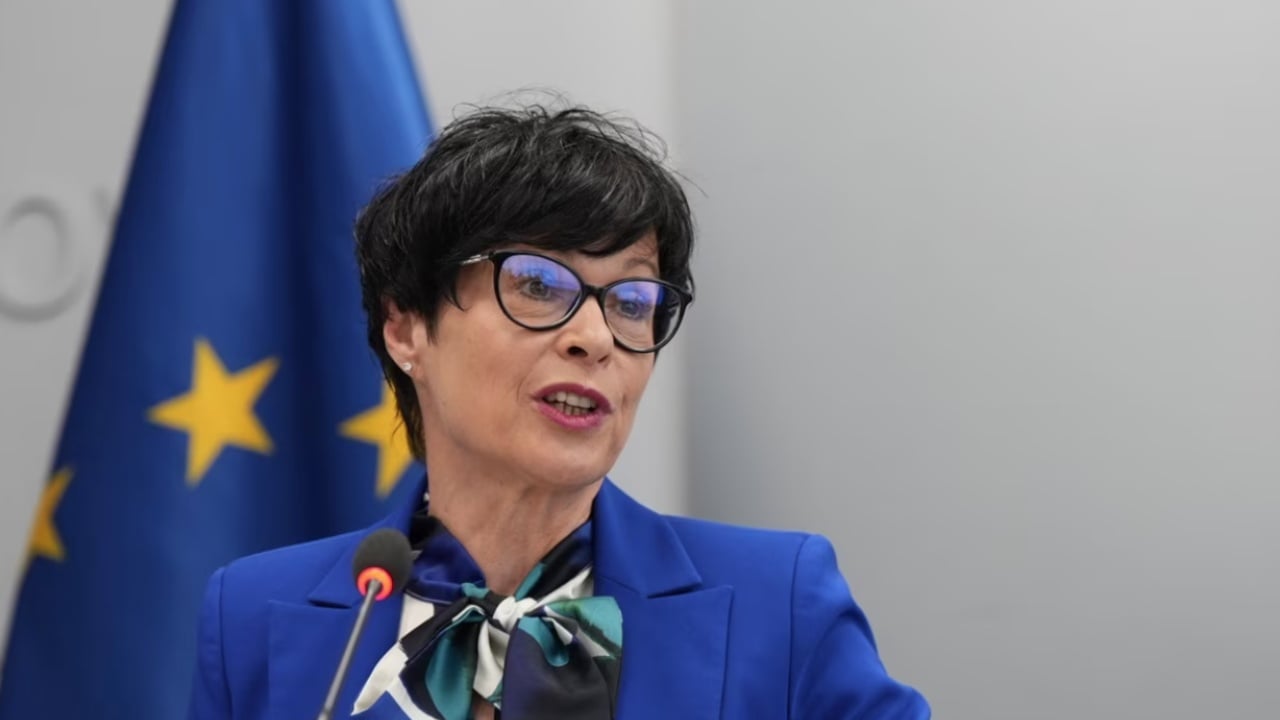
EU Commissioner for Enlargement Marta Kos said that changing the law on the Specialist Chambers in Kosovo is unacceptable and, according to her, runs counter to Kosovo’s fundamental obligations toward the European Union.
She stressed that changing the rules while judicial proceedings are still under way violates international rule-of-law standards. Her position places the issue at the political and institutional level, not merely a technical one.
Enlargement is moving ahead, but with tough conditions
According to the commissioner, the EU is holding intergovernmental conferences with Montenegro, Albania, Moldova and Ukraine, presenting this as a sign that the enlargement process is accelerating.
However, the message from Brussels is not an unconditional invitation. Candidate countries, according to the Commission’s official position, must deliver concrete results and avoid any backsliding on reforms, otherwise the path to membership could be blocked.
Security and strategic alignment at the center of the filter
Marta Kos placed emphasis on security, arguing that the EU cannot accept new members that do not strengthen the bloc. In this logic, strategic alignment is being treated as an increasingly important condition in the pre-accession process.
She linked this not only to foreign and security policy, but also to issues such as sanctions, energy and infrastructure. In other words, candidacy is no longer being measured only by internal reforms, but also by full geopolitical alignment.
The rule of law remains a political test for the region
The EU commissioner said that respect for international law and the rule of law remains fundamental in the enlargement process. She also linked this to developments in the Western Balkans, where, according to her, troubling nationalist tendencies have re-emerged.
Against this backdrop, the statement on Kosovo carries greater political weight: Brussels is signaling that it will not tolerate interference in the rules when it comes to sensitive justice processes.
Albania on the list of countries moving forward
Albania was mentioned among the countries expected to hold an intergovernmental conference with the European Union. This is seen by European institutions as part of the new pace of enlargement.
But for Tirana as well, the standard set by Brussels remains the same: progress is not measured by political rhetoric, but by meeting criteria, strategic alignment and consistency in the rule of law.
The message from Brussels is direct: enlargement can move forward only for countries that remain on the required political and legal line.
For Kosovo, the issue of the Specialist Chambers has turned into a clear test of relations with the EU, while for other candidate countries the warning is just as clear: any reversal carries political costs on the road to membership.