
Clashes outside the Ministry of Education have turned attention to how the protest was managed and to the responsibility of the top leadership of the State Police. At the center of the questions is Director General Skënder Hita, amid doubts over whether the structure he leads was truly prepared to prevent the escalation.
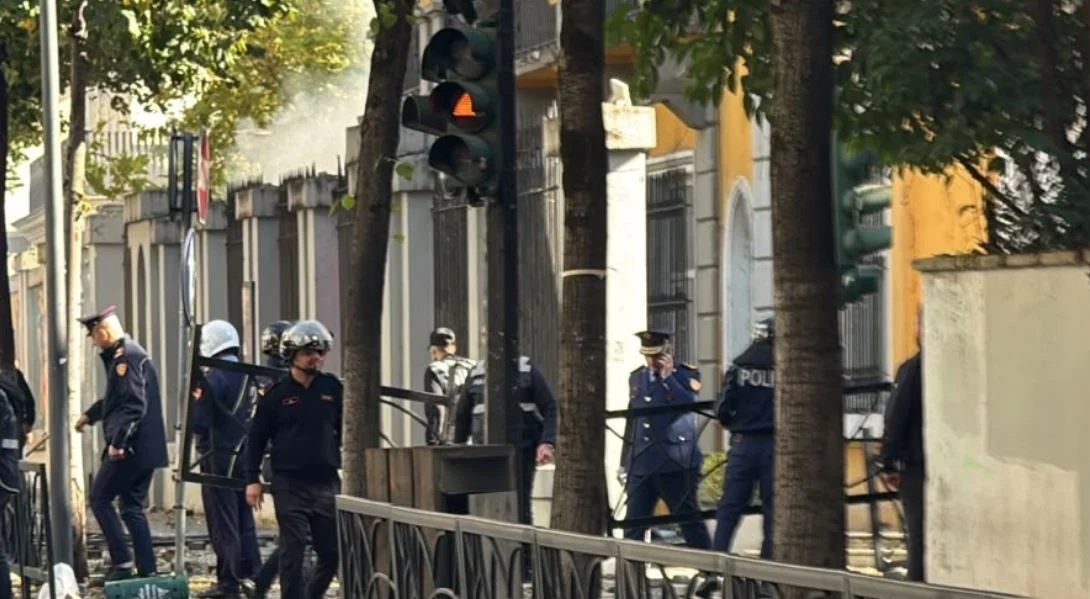
Incidents open debate over the chain of command
The events recorded during the protest are not being read simply as isolated episodes on the ground. They raise questions about the orders given, the organization of the operation and the way the chain of command functioned in a high-tension situation.
When there are clashes and suspicions of excessive intervention, responsibility cannot remain only with officers on the ground. Attention turns to the direction of the operation and to the standards by which the protest was managed.
Reaction after violence erupts is not enough
Managing a protest is not measured only by the number of forces deployed or by intervention after the situation has gone out of control. The real test is the ability to anticipate risk, reduce tension and guarantee public safety without further worsening the confrontation.
This is precisely where the main question arises: were the necessary measures taken to prevent violence before it erupted? So far, this remains an issue that requires public clarification and not only general institutional responses.
Transparency sought over orders and the use of force
For Skënder Hita, the pressure is linked not only to the police image after the protest, but to the obligation to explain how the operation was organized. It must be clarified whether procedures were respected during the intervention and whether there were cases of unjustified use of force.
A serious verification of the incident requires more than identifying individual responsibilities. It is necessary to see whether the problems began with the planning, supervision and control of the operation, where institutional responsibility becomes direct.
Public trust depends on accountability, not relativization
The authority of the State Police is not strengthened by softening failures or packaging them as ordinary incidents. Citizens’ trust is built only when violations are investigated, clarified and answered clearly in accordance with the law.
In this case, the test for police leadership is not only maintaining order. The challenge is whether the institution can show that it intervenes proportionately, respects citizens’ rights and takes responsibility when things fail.
The questions that emerged from the protest outside the Ministry of Education remain fundamentally open: was the police prepared, were the right orders given, and were standards respected during the intervention?
In the face of these doubts, accountability is not a matter of communication, but an institutional test for the leadership of the State Police.