
Tirana is going through a fourth day of tense protests, with roads blocked, damage to buildings and businesses, and clashes with police. Attention has not remained only within the country: some of the best-known international media outlets are reading the situation as a sign of broader discontent with the government, beyond the protest’s initial cause.
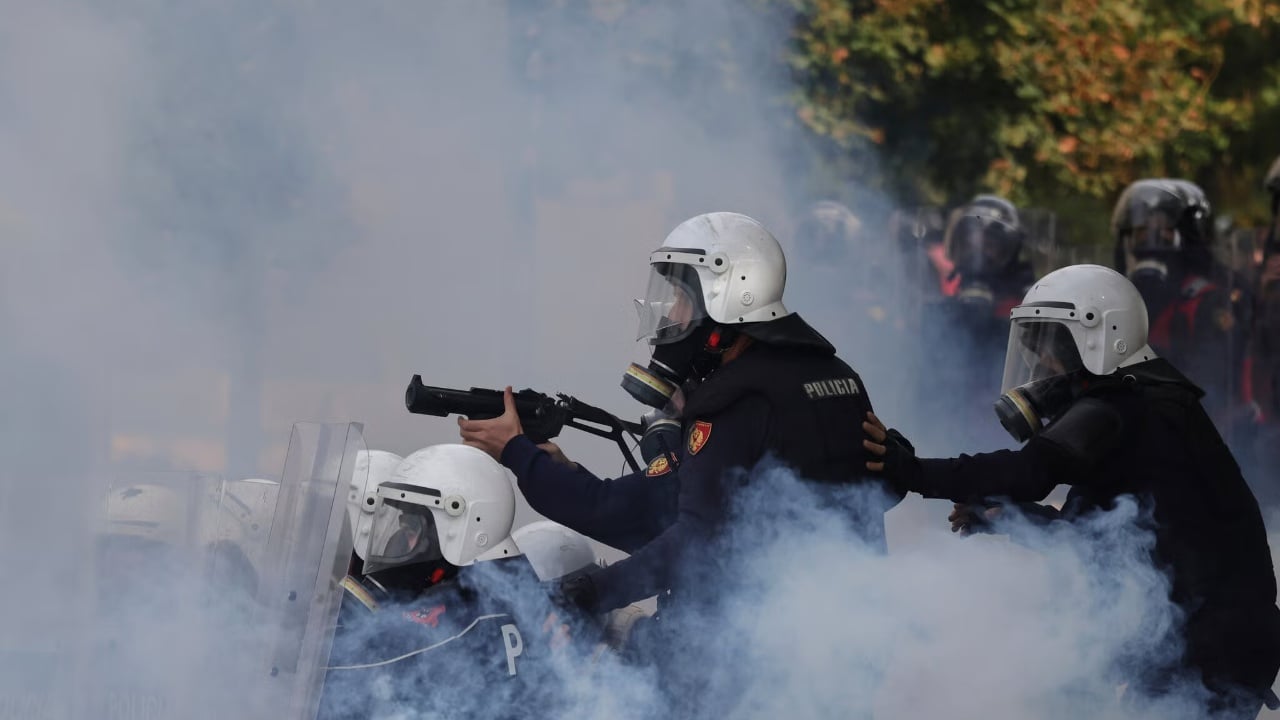
Escalation on the streets of the capital
Over the past four days, the protest in Tirana has been accompanied by road blockades, attacks on government buildings, banks and private businesses, as well as the burning of benches, trash bins and kiosks.
According to reporting cited by international media, the protest began with demands related to the cost of education and conditions for students, but later turned into a broader outburst of public discontent.
How “The New York Times” reads the crisis in Tirana
“The New York Times” links the anger on the streets not only to the high cost of education, but also to corruption, the rising cost of living and opposition to a luxury resort project in the south of the country.
According to the newspaper, thousands of students and citizens have paralyzed the capital, erected barricades and demanded the resignation of Prime Minister Edi Rama. Along the same lines, the article mentions accusations that the government has favored private interests, presenting the protest as a reaction to an accumulated climate of distrust.
The newspaper also cites voices from the protest, according to whom the movement has been continuing for months and the demand for the prime minister’s departure remains unchanged. One of the organizers mentioned says the situation has become difficult to control, as other groups of dissatisfied citizens have also joined the protest.
“The Guardian” and images of violence during the protest
“The Guardian” has also devoted space to developments in Tirana, publishing an article and footage on social media. Its reporting places emphasis on the clashes with police and on the expansion of the revolt beyond the issue of education.
According to this version, protests against rising education costs and corruption have escalated into violent confrontations. It reports arson against a government building and two banks, stone-throwing at law enforcement forces, as well as damage to businesses.
Also, according to reports summarized by the British media outlet, police intervened with water cannon trucks and tear gas to disperse the crowd.
BBC: tension continues on Thursday
The BBC reports that the protest continued on Thursday, describing the situation in the capital as highly tense. The focus of its reporting is on material damage and the police response to the crowd.
According to the BBC, some demonstrators smashed windows, set kiosks on fire and tore metal fences from sidewalks, while police used water cannon trucks and tear gas. According to the same report, the demonstrations began outside the Ministry of Education, with demands for better conditions at universities and more employment opportunities after graduation.
International media attention takes the crisis in Tirana out of the framework of an ordinary student protest and places it within a broader social and political conflict.
What stands out in these reports is that discontent over the cost of education is presented as closely linked to corruption, the cost of living and distrust of the government — a combination that makes the situation more serious than the usual official versions about “incidents” or “problematic groups” on the streets.