
On Friday, youth protests spread across several cities in the country, while in Tirana and Lezhë the situation turned into open clashes with Police. The preliminary toll points to injuries, damage to institutions and a climate of tension that is shifting from civic dissatisfaction to escalation on the ground.
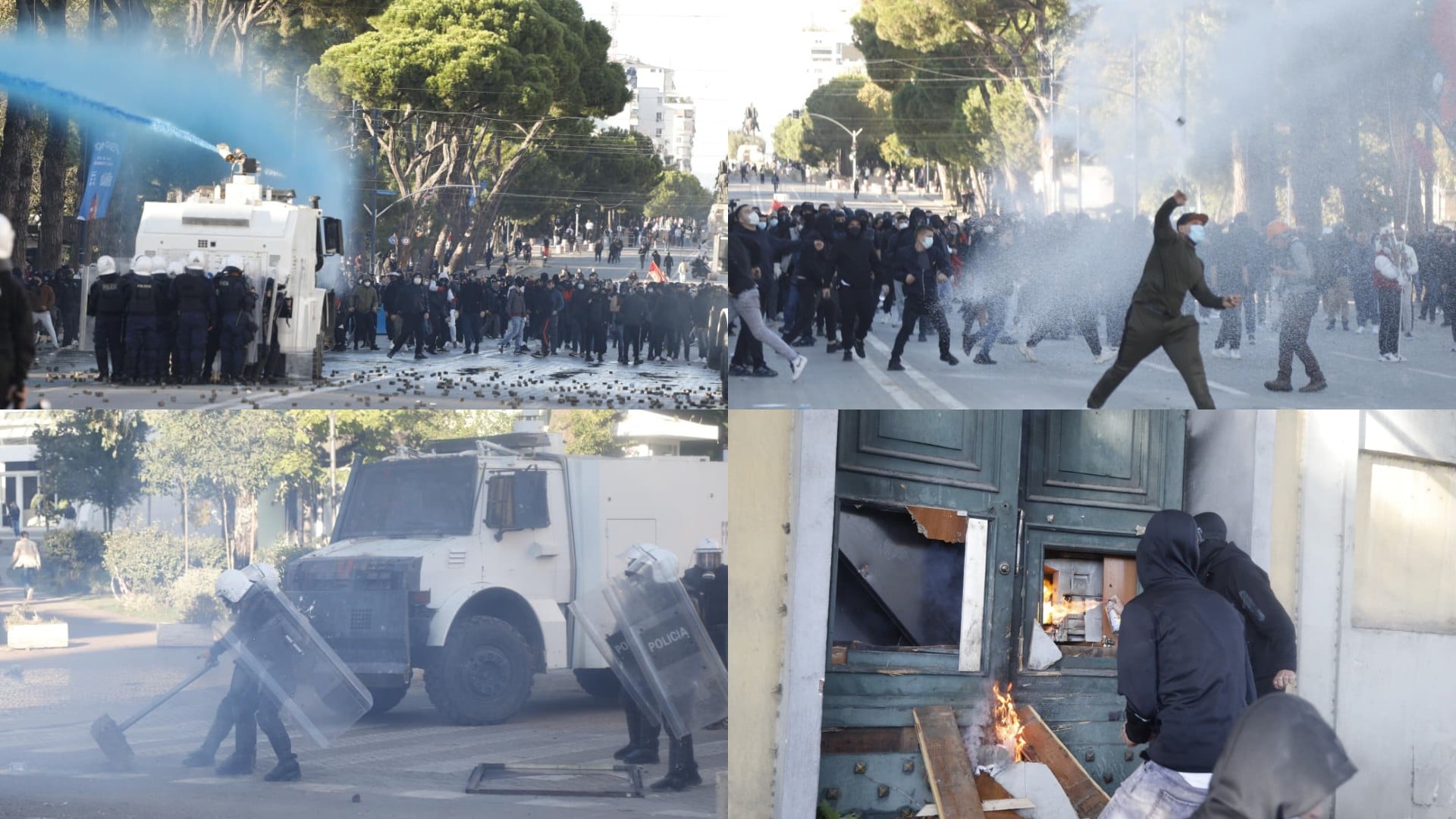
Protests in several cities, classes boycotted
Lezhë, Shkodër, Burrel, Laç, Elbasan, Korçë, Vlorë, Gjirokastër, Dibër and Pogradec were affected by protests that began in the early hours of the day.
Young people, high school pupils and university students took part in the protests, boycotting classes. In several district towns, the gatherings marked the second day of mobilization.
Lezhë, physical clashes and injuries
In Lezhë, the strongest tensions outside the capital were reported. According to published information, protesters and officers clashed physically, while there were injured police officers and one wounded female protester.
Stones were thrown toward a high school. Later, according to the official version, Police were ordered to withdraw in order to avoid escalation with the young protesters.
Tirana, protests at ministries and intervention with tear gas
In Tirana, protesters initially gathered in front of the Ministry of Education, where clashes with Police began. The crowd then moved toward the Ministry of Economy.
There, the building’s door was damaged and set on fire. After this, Police intervened with tear gas to disperse the protesters, turning the area into a major flashpoint in the center of the capital.
Businesses pull down shutters, one jailed
Against the backdrop of the escalation, businesses in areas affected by the unrest shut down operations out of fear of damage. The climate of insecurity was immediately reflected in movement on the ground.
Meanwhile, according to reports, the court has ordered jail for one of those arrested. So far, no further details have been made public about the case in question.
Rama visits damaged businesses, political messages from the majority
Prime Minister Edi Rama went to the businesses damaged by fires set the previous night in Tirana. He said that “this fire is not that of the students” and that the situation will be dealt with.
On the same day there were also political reactions from the ruling majority. Elisa Spiropali asked Rama for a “political solution,” while Arben Malaj called on protesters not to target private property. These positions show that, beyond public order, the political cost of the escalation has also been placed on the table.
The picture of the day highlighted not only the spread of the protest, but also the failure of institutions to keep the situation under control without allowing it to turn into violent clashes.
Amid official claims, political reactions and revolt on the ground, the central question remains how much of this crisis is truly being addressed and how much is simply being managed as a matter of public order.