
The debate over European Union enlargement has returned to the table in Brussels, while Albania is presented in international analysis as a country advancing in the process despite internal political tensions. An assessment published by the Financial Times suggests that the protests are not expected to shake Edi Rama’s hold on power, but that does not diminish the fact that public discontent is creating political costs and testing some of the government’s most controversial plans.
Brussels talks enlargement, Albania remains in focus
European leaders discussed EU enlargement this week in Brussels, in a process that for years has kept the Western Balkans waiting for a more concrete membership perspective.
Against this backdrop, Albania is presented as one of the countries that has moved forward by closing several negotiation chapters and that, according to the assessments mentioned in the article, is approaching a key EU rule-of-law standard known as IBAR.
Analysis: protests are not enough to shake the government
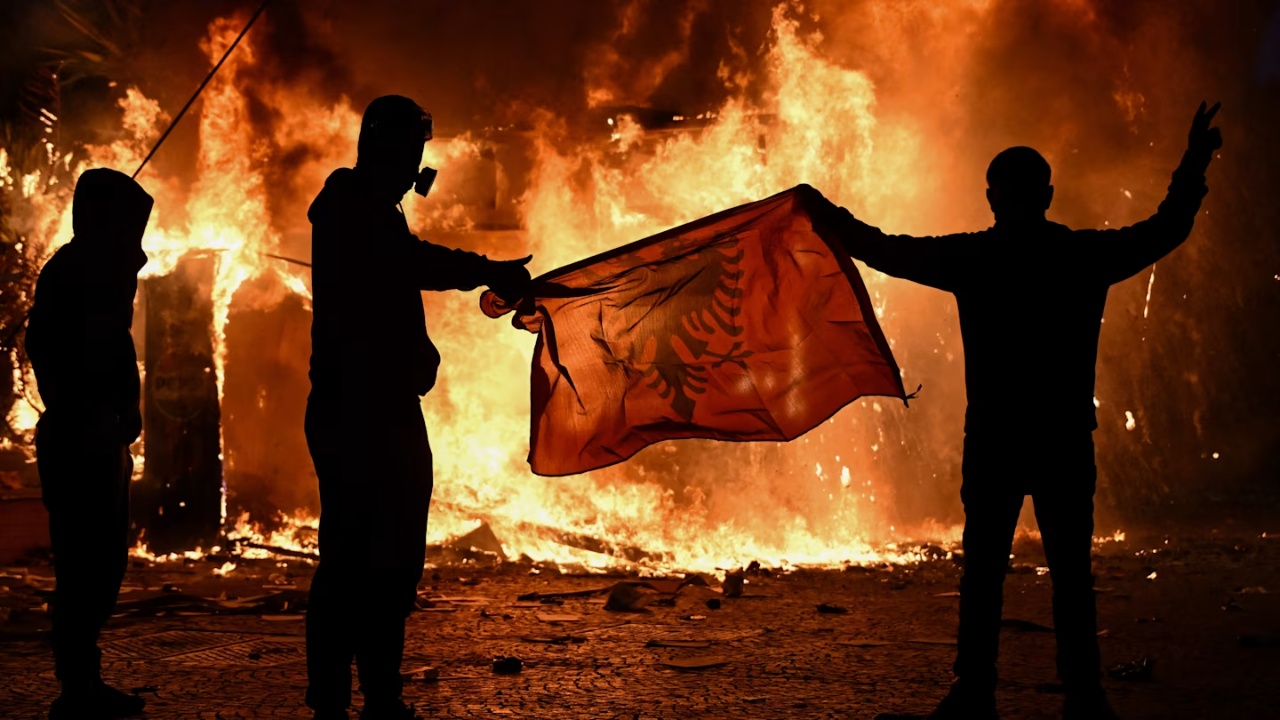
According to the analysis cited by the Financial Times, the protests represent the biggest challenge Rama has faced in 13 years in power, but they do not appear to have the strength to genuinely threaten his position as prime minister.
Mario Bikarski, a senior analyst at risk intelligence company Verisk Maplecroft, assesses that these developments are also unlikely to derail Albania’s bid for EU membership.
Consensus on the EU, but not a blank check for the government
In the analyst’s assessment, there is a strong public consensus in Albania that EU membership is seen as a positive development. That element, he says, keeps the country’s strategic orientation intact despite internal political crises.
However, that reading does not mean the government escapes without cost. The analysis itself acknowledges that pressure from protesters could force the prime minister to make concessions, including withdrawing from very costly and contested projects such as coastal development plans.
Rama’s resilience and the lack of a convincing alternative
According to the same assessment, Rama has in the past shown a strong capacity for political survival in the face of various crises and challenges.
The analysis also raises another familiar element of Albania’s political reality: the lack of broad trust in the opposition. In this reading, dissatisfaction with the government has not yet been matched by an alternative perceived as convincing enough to take power.
In essence, the picture that emerges is that of a government under pressure, but not necessarily in immediate danger. The protests may produce tactical retreats and political costs, while the country’s European course, at least according to this assessment, remains unchanged.
Beyond the optimism expressed in the analysis, it remains to be seen whether progress toward EU standards will be measured by tangible reforms and real accountability, or whether it will remain primarily a success narrated at the political level.