
Tirana is entering the fifth day of protests with another flashpoint in front of the Ministry of Education, where protesters have announced a new gathering. After four days of clashes, damage and rising tension, institutions have once again been placed on a defensive footing, while dissatisfaction with the government is being voiced ever more openly in the streets.
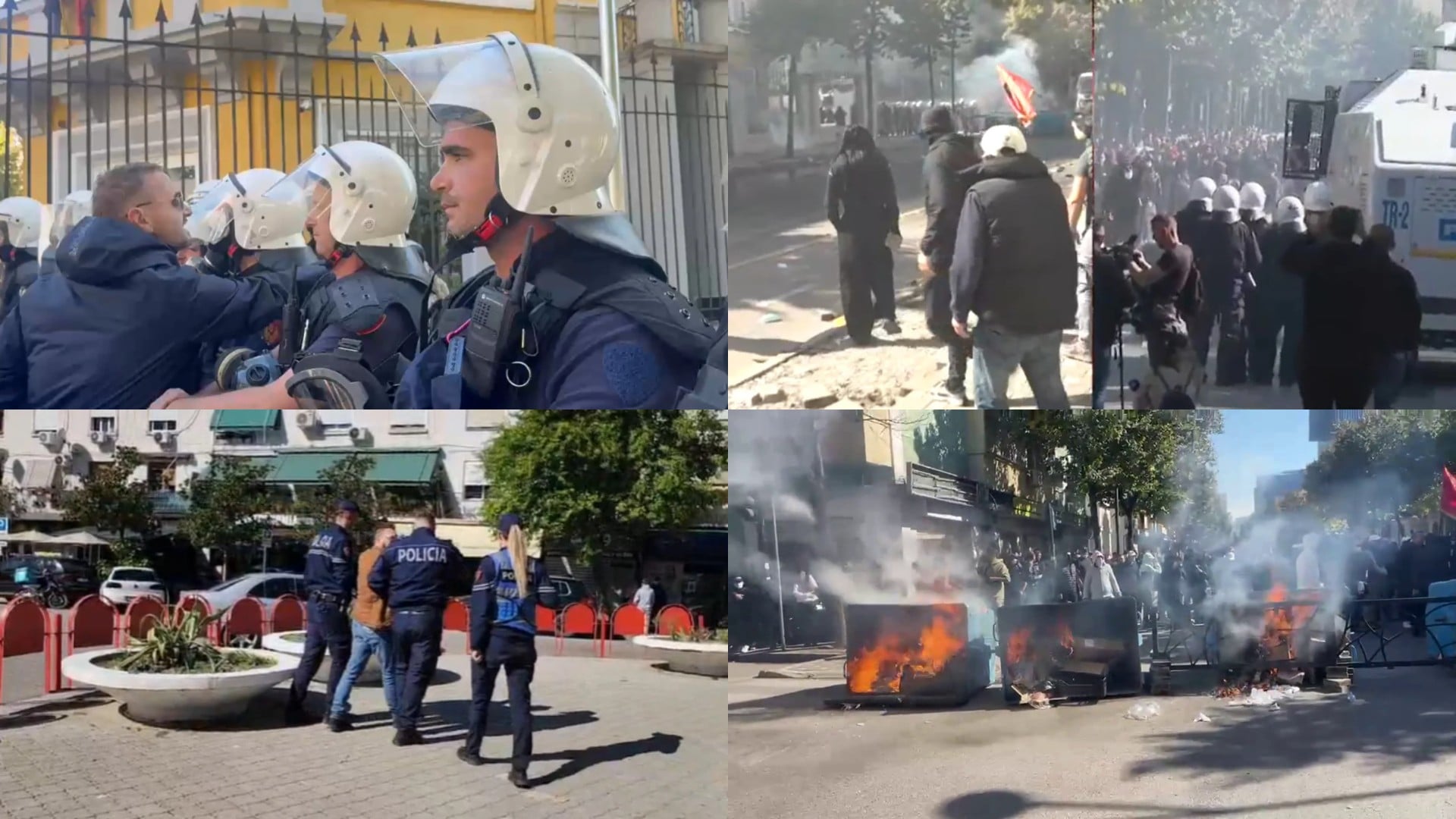
Attention returns to the Ministry of Education
This Saturday’s protest is once again focused on the Ministry of Education, which has also been one of the main points of mobilization in previous days. According to protesters’ announcements, Albanians coming from the diaspora are also expected to join the gathering.
The ministry building remains damaged from earlier incidents, showing that the situation has for days gone beyond the bounds of a symbolic gathering and turned into a public order crisis in the heart of the capital.
Police on the ground, increased measures around the institution
Police forces and water trucks have been positioned near the Ministry of Education, as part of measures taken by the authorities to manage the situation. The increased police presence shows that institutions expect further escalation, following the precedents of the last four days.
The official version speaks of security measures and territorial control, but on the ground the picture remains that of a tense confrontation between protesters and law enforcement.
After four days of tensions, the protest has spread beyond Tirana
The wave of protests began on Tuesday with a boycott of classes by pupils and students, but later expanded to other cities in the country. In previous days, clashes between protesters and police have been reported, as well as damage to public institutions and businesses in the capital.
The spread of the protest beyond Tirana makes it clearer that the dissatisfaction is not being confined only to an issue in the education sector, but is taking the form of a broader political and social reaction.
Political demands and accusations against the government
Protesters are expressing dissatisfaction with the government and are demanding the resignation of Prime Minister Edi Rama. At the center of the unrest are also accusations of corruption, as well as demands for changes in education.
These claims remain part of the protest agenda and not facts proven by the authorities, but their political weight increases whenever the government responds mainly with security measures rather than with a convincing public explanation of the causes of the crisis.
The fifth day of the protest is unfolding in a fraught climate, where the symbolism of student revolt has been replaced by an open confrontation between the street and the state.
Whether the tension will ease or enter another phase of escalation will depend not only on the behavior of the protesters, but also on how institutions choose to respond to a crisis that has now moved beyond routine control.