
A question about children subjected to violence during the protest placed Socialist MP Arbjan Mazniku before an issue that those in power usually try to relativize: the use of force against minors. In his response, Mazniku did not give a direct comment on the reported cases, but shifted the emphasis to violence at the protest and to the version that police intervention comes as a result of it.
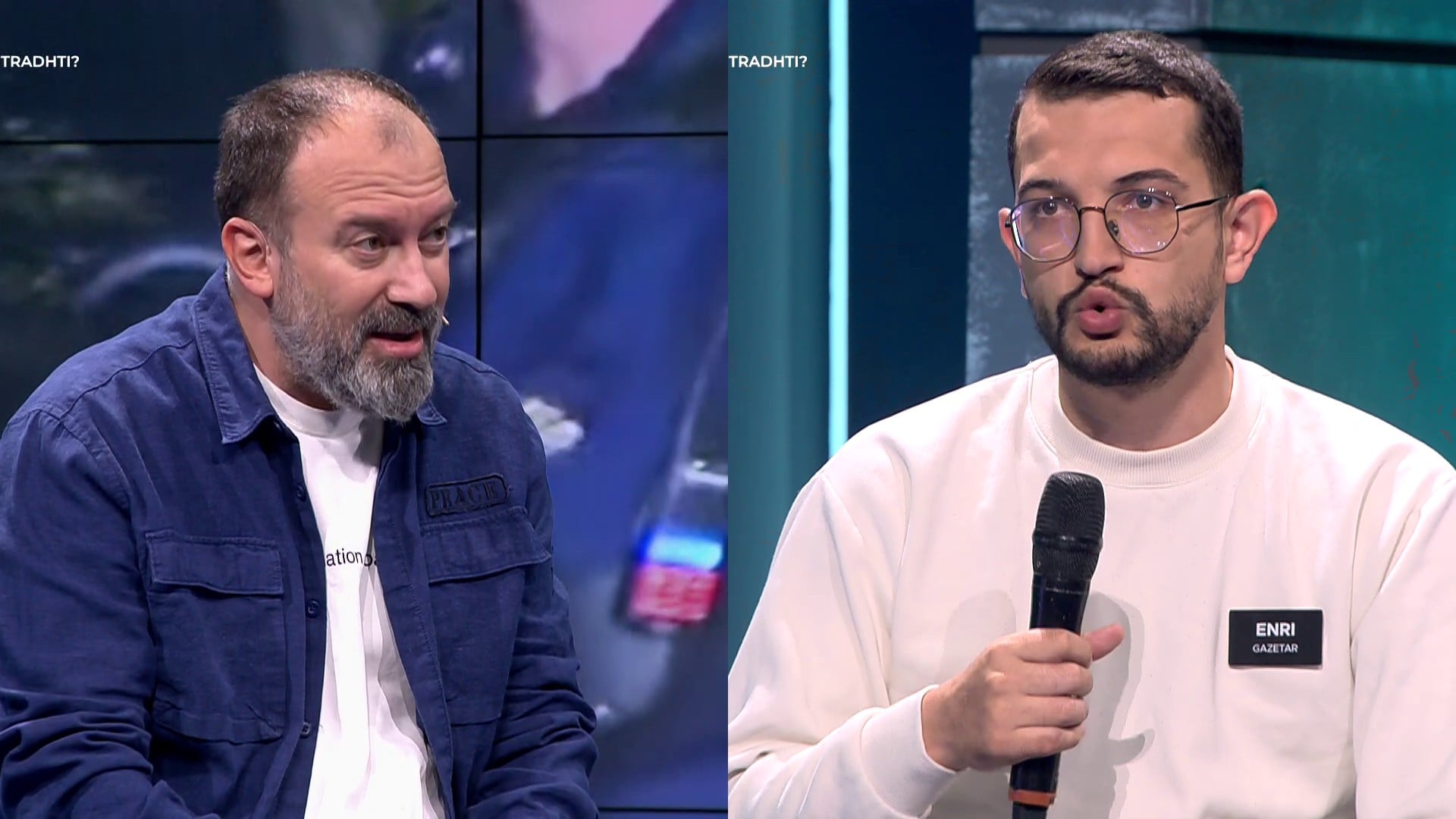
The question about children subjected to violence
During an exchange with young people on the program “Topin e Kam Unë,” a young man named Enri asked Mazniku whether he had a comment on children subjected to violence during the days of the protest.
The question was accompanied by a direct remark about the situation in the capital and the fact that, according to him, minors had been seen crying. He described this as an issue that should not be avoided.
Mazniku avoids a direct answer
Instead of taking a clear position on the allegations of violence against minors, Mazniku spoke about the need for “reflection from both sides.” He described the situation in Tirana as unusual and said the images of stones, police officers and burned buildings are troubling for anyone with ties to the city.
Further on, the Socialist Party MP asked that the issue be viewed “in its entirety,” placing on the same plane the use of force by police and the violence of protesters against public buildings.
Political message: justification for police intervention
According to Mazniku, in any country where violence is used against public buildings, the police intervene with force, regardless of age. This was the point at which he also made his strongest statement about minors involved in protests.
“If a 13-year-old threw stones and hit a police officer, then he should be taken in,” he said, essentially defending the approach of law enforcement in such cases.
The debate remains over proportionality of force
Mazniku’s statement leaves open precisely the most debated issue: not whether police have the right to intervene when there is violence, but whether the intervention against minors was proportionate and lawful in every case.
In the absence of a concrete response on cases of children who were injured or traumatized, the focus of the majority appears to remain on justifying the police operation more than on clarifying responsibility for the consequences affecting minors.
This is precisely where the core of the public debate lies: when institutions speak about order, the question that remains is who bears responsibility when force affects children.
The Socialist MP’s statement makes clear the government’s defensive line in the face of criticism over how the protest in Tirana was managed.