
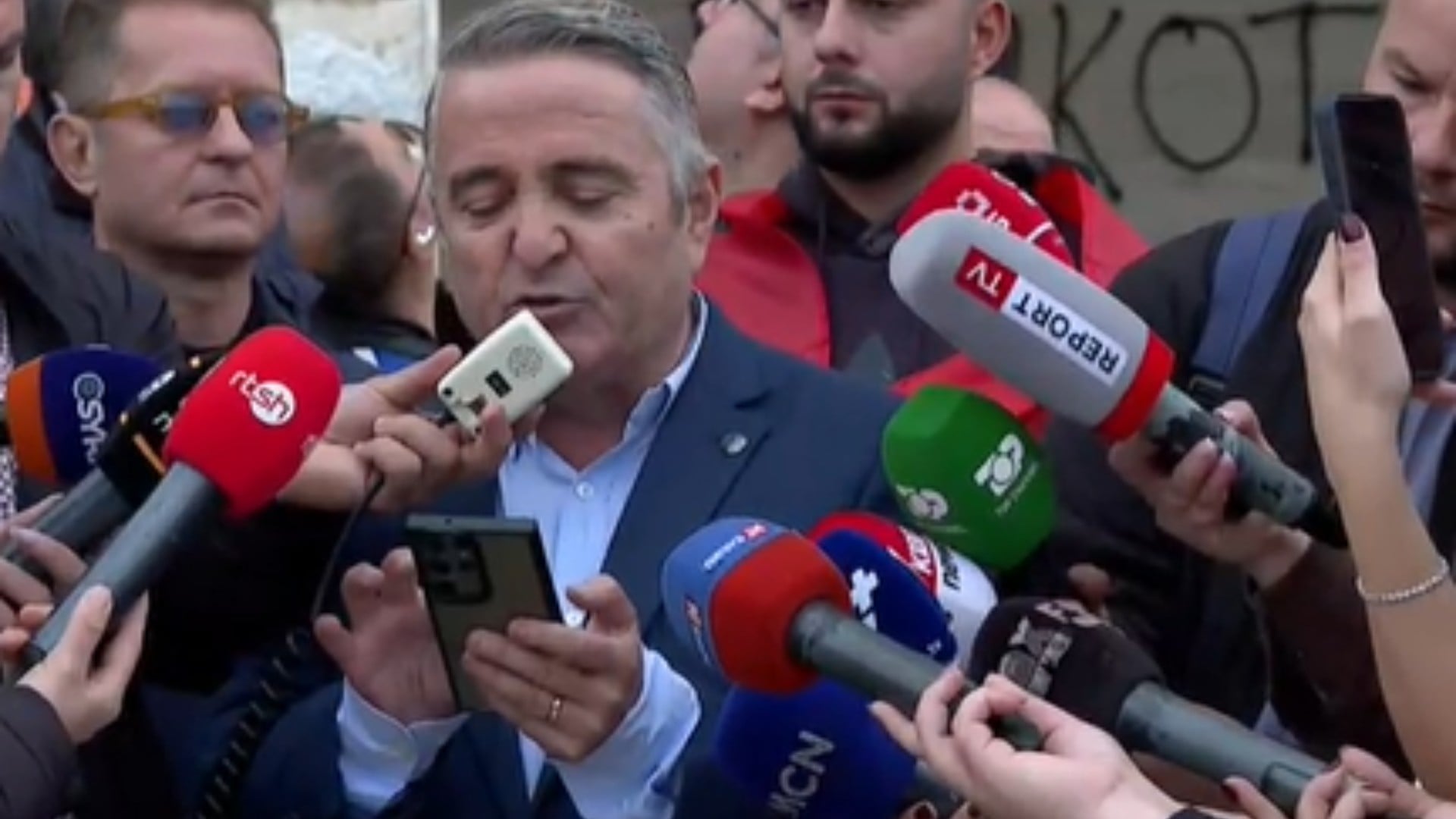
The lecturers’ boycott is continuing at universities across the country, while the Lecturers’ Union has hardened its position by linking a return to teaching with the fulfillment of students’ demands. According to a statement by the union’s head, Aleksandër Kovaçi, the academic protest will continue until further notice and was decided in solidarity with students who have been protesting for months.
The union’s decision: boycott at all universities
According to the announcement made by the head of the Lecturers’ Union, its leadership unanimously decided to declare a boycott at all universities. In the version presented by the union, this measure is linked to its stance on the treatment of protesting students and to the lack of a political response to their demands.
Kovaçi said the boycott began immediately and will continue indefinitely, until another decision is taken by the union.
Claims of violence and demands for accountability
The union claims that the students, who have been protesting for months, have faced institutional silence and violence. Based on this argument, the lecturers say they cannot continue the teaching process while students, according to them, are being subjected to violence in the streets.
The public statement called for an end to violence against students and peaceful protesters, as well as for those who, according to the union, ordered or carried out violence to be held accountable.
Return to lecture halls conditioned on a response for students
According to Kovaçi, the lecturers do not see this as a formal boycott, but as direct engagement alongside the students. He also announced daily participation in marches and protests, every day at 10:00.
The union also asked that no disciplinary measures be taken against lecturers who take part in the protest. In the same line, it said that a return to lecture halls will take place only when students receive the response they say they deserve.
Prime minister’s resignation part of the stated demand
The statement by the union’s head makes the boycott’s position even more political, as he openly included the prime minister’s resignation among the demands being supported. This moves the protest beyond academic issues and places it directly in confrontation with the executive.
The union also said lecturers will remain alongside students with teaching materials and that missed classes will be made up, while, according to the statement, the responsible institutions will be informed of this.
The union’s stance signals an escalation of the conflict between universities and the government, at a time when the student protest is receiving more direct support from the academic body.
For now, what remains clear is that the teaching process is being used as an instrument of political and institutional pressure, while the authorities’ response to these demands remains decisive for further developments.