
Students and lecturers gathered again in front of the Prime Minister’s Office, where they once more rejected the staging set up by Edi Rama in the name of “dialogue.” After marching from the Polytechnic University, the protesters threw out the chairs placed there and warned that the boycott and protest would not stop.
March from the Polytechnic to the Prime Minister’s Office
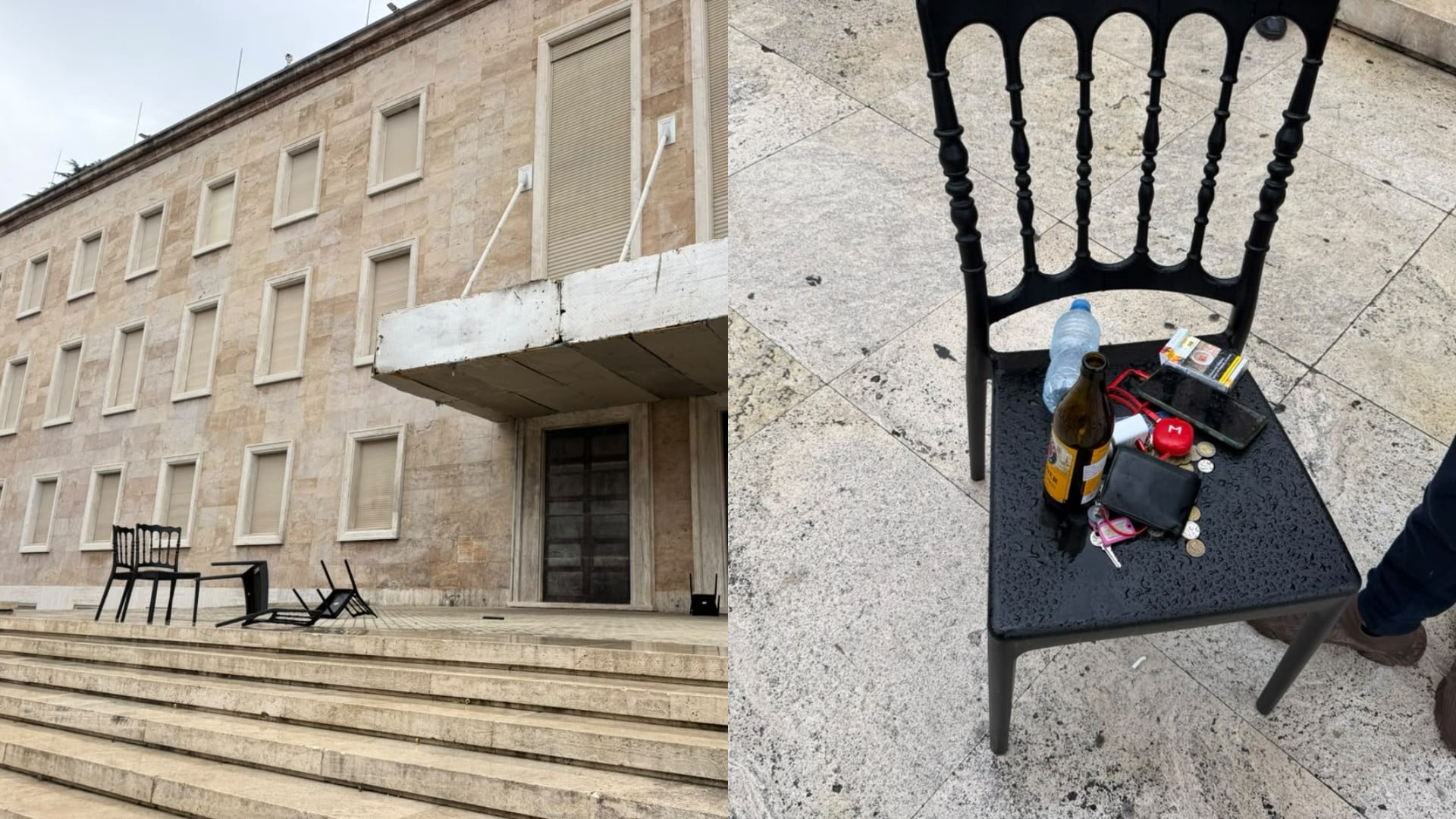
The gathering began at the Polytechnic University and then moved toward the Prime Minister’s Office building. Upon arrival, the protesters again intervened in the area called the “dialogue square,” throwing out the chairs placed there.
The action repeated the scene from a day earlier and made even clearer the protesters’ rejection of the way the government has tried to frame the confrontation with students and lecturers.
Calls not to fall for provocation
During the tension, lecturer Ilirjana Kuçana tried to stop the protesters. She called on them not to fall, in her words, into Prime Minister Rama’s trap.
Her intervention came at the moment when the crowd was moving and throwing out the chairs placed in front of the government building.
Symbolic messages on the chairs
Before removing them, some protesters placed personal items on the chairs, together with a bottle of beer. According to what was said at the protest, they were left there for Rama.
The symbolic language used at the gathering showed that the protest was expressing not only political opposition, but also open mockery of the forms of communication chosen by the prime minister.
The boycott continues, Rama’s resignation demanded
The protesters are continuing their stand in front of the Prime Minister’s Office and have made it known that the boycott will continue.
Their position remains unchanged: according to statements made at the gathering, the protest will continue until Edi Rama resigns.
Images from the protest show that the clash between the government and the protesters is entering an even sharper symbolic phase, in which the rejection of the “dialogue” offered from above is being expressed not only in words, but also through public actions in front of the seat of the executive.