
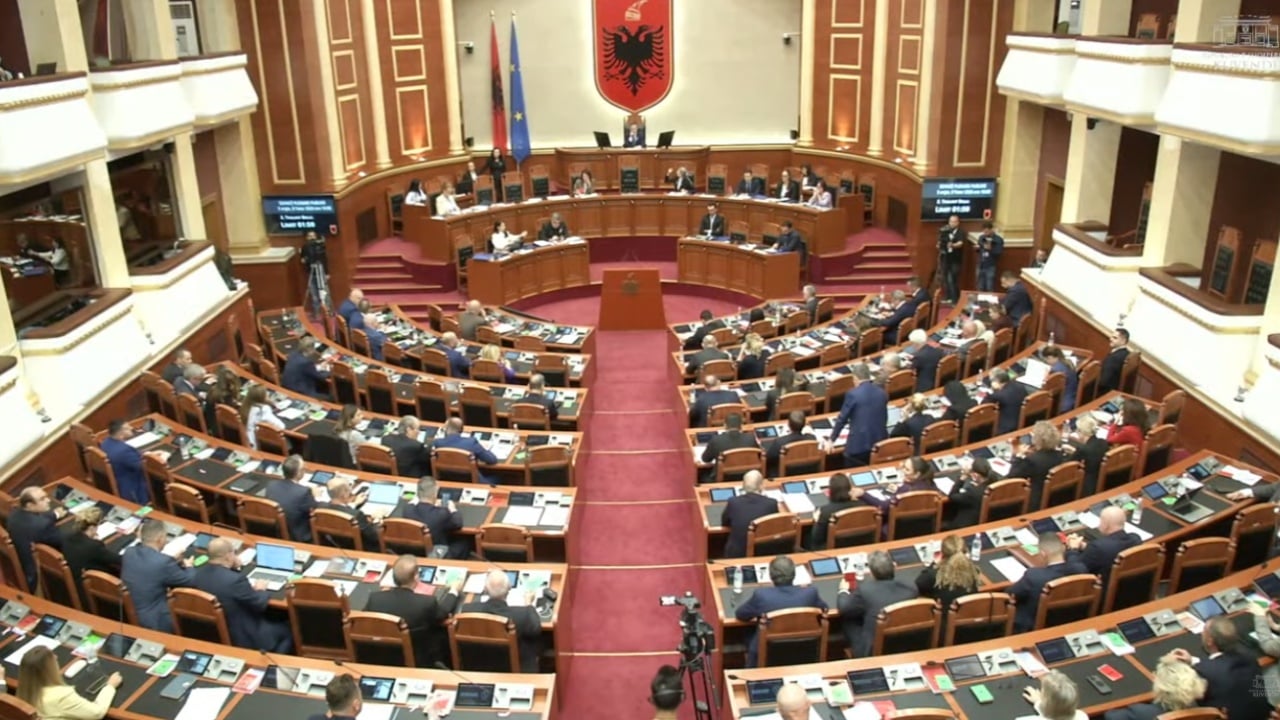
Albania’s Parliament is facing a direct call not to let this moment pass as well with empty rhetoric, party clashes and statements scattered across social media. Amid strong tones directed at the political class, the demand is that the next session should not be reduced to a formal agenda, but turned into a real confrontation with the political and institutional crisis.
Call for an extraordinary session, not parliamentary routine
The public position circulating ahead of the parliamentary meeting describes it as a positive development that MPs are expected to gather, but immediately raises the main question: will this session have real substance, or will it simply be another procedural facade?
According to this position, the country needs an extraordinary session, even if it lasts for hours, so that the political solution to the crisis can be discussed openly. The criticism directly targets the practice of recent years, in which parliamentary debates have often been perceived as a substitute for real debate, not a means of producing it.
Accusations of silence and sheltering behind parties
At the center of the criticism are the MPs themselves, who are said to be avoiding public responsibility by remaining silent or limiting themselves to brief media appearances and posts on social platforms. The message is clear: a mandate is not exercised from home, nor through symbolic statements that do not produce decision-making.
The attack on the logic of party discipline is just as strong. According to this argument, MPs should not behave like numbers ordered by parties, but as representatives with personal responsibility who must take a position by vote and by voice on every constitutional path out of the crisis.
Five demands for how the session should be conducted
The articulated position summarizes several concrete demands for Parliament. The first is that every MP should speak individually and not hide behind the parliamentary group. The second is that every possible solution should be put on the table and examined one by one, without vague formulas and without slogans.
It is also demanded that the entire session be broadcast in real time, minute by minute, as a test of transparency for an institution often accused of speaking for the public while deciding away from its eyes. Another point concerns the need for negotiations beyond party lines, with majorities even if only temporary, if this serves a concrete political solution.
Pressure on Parliament’s leaders and warning of responsibility
Along these lines, responsibility is addressed not only to individual MPs, but also to Parliament’s leadership, the heads of the parliamentary groups and the heads of committees. The name of Niko Peleshi is mentioned as part of the institutional burden to steer the session toward a solution and not toward moral preaching or the next round of political consumption.
The tone becomes even harsher with the suggestion that inaction is not simply a political failure, but a serious evasion of duty. According to this position, citizens have lost confidence in their representatives, and this adds pressure on the parliamentary session, which is seen as a direct test of the seriousness of politics.
Only a constitutional solution is demanded
One of the strongest lines of the message is the rejection of improvised solutions or formulas not supported by the Constitution. According to this view, the country needs a political and constitutional way out, not statements that may sound strong in public but in practice deepen the deadlock.
In the same spirit, the current government is also criticized, with the claim that it is failing to manage the crisis and showing no signs of understanding the weight of the situation. The final message to MPs is blunt: in the parliamentary chamber they must deliver solutions, not repeat the usual ritual of confrontation without results.
At its core, this is an open accusation against the way Albanian politics functions in moments of crisis: a lot of public noise, little real responsibility. And precisely there, the burden returns to Parliament.
If the session remains within the limits of routine, then the conviction will be further strengthened that the representative institution is avoiding the role assigned to it by the Constitution. If not, MPs have before them one of those rare occasions when the vote and individual position weigh more than the party order.