
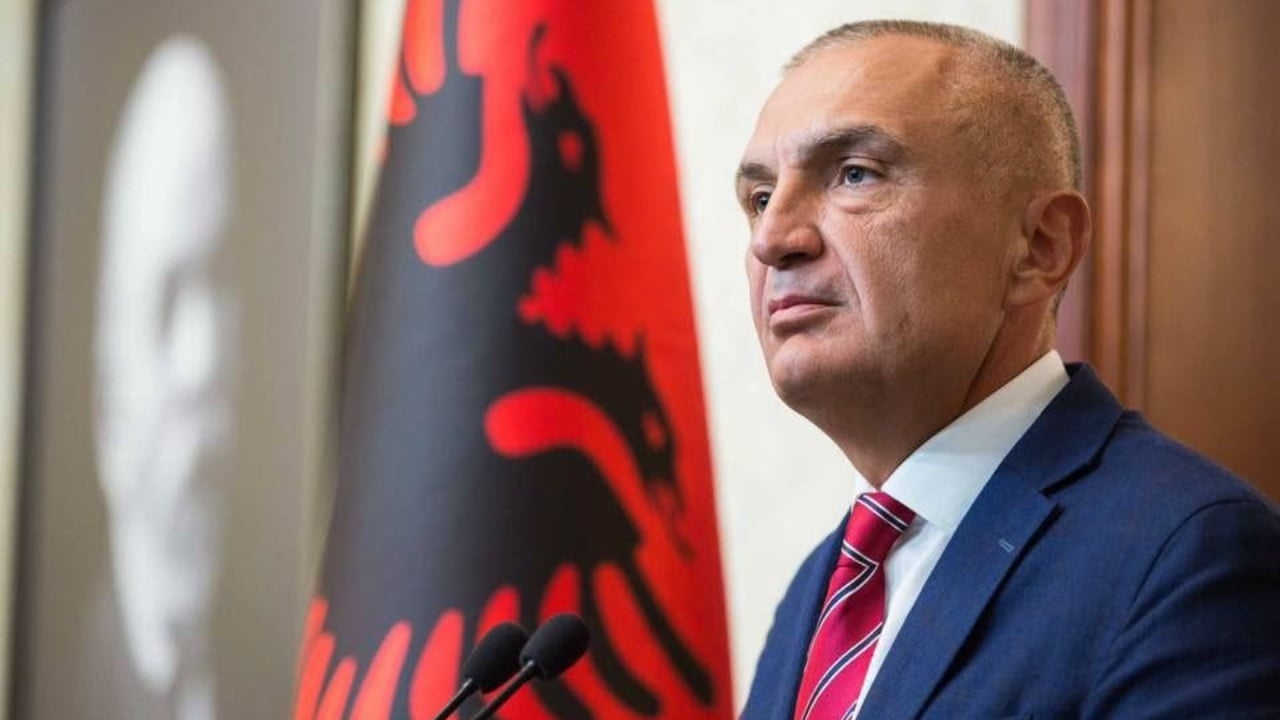
The decision of the Special Court to postpone once again the hearing against Ilir Meta and Monika Kryemadhi triggered a sharp reaction from the former president, who called the process directed and raised doubts about the real reasons behind the interruption of the trial. According to the version he made public, the hearing was blocked despite his request to defend himself, after which the court set October 29 as the date for the continuation of the proceedings without the presence of defense lawyers.
What the Special Court decided
The Special Court decided that the trial against Ilir Meta and Monika Kryemadhi will continue from October 29 without the presence of defense lawyers. The decision came after today’s hearing, which did not proceed normally and was postponed again.
This development comes amid tensions between the Special Court and the National Chamber of Advocacy, a clash that has affected the continuation of a series of court proceedings. It was precisely on this point that Meta built the core of his public reaction.
Meta: a prosecutor with no connection to the case appeared in the courtroom
In the reaction published on Facebook, Meta described the chronology of the hearing in strong terms. According to him, the hearing was delayed by about 40 minutes because none of the prosecutors assigned to the case were present at the scheduled time.
Then, according to Meta, a prosecutor who had no connection to the file appeared in the courtroom and, according to him, was there only to read the request of three colleagues for the hearing to be postponed and for the pretrial detention deadlines to be suspended. Meta claims he again asked the trial panel for the process to continue, arguing that the law and the European Convention on Human Rights give him the right to defend himself.
Why the hearing was postponed, despite his request to defend himself
According to Meta’s explanation, the court postponed the hearing not only because of the absence of his legal counsel, lawyer Bujar Musta, but also because two lawyers appointed by the court itself did not appear. The former president disputes the logic of that decision, insisting that the hearing could have gone ahead without a lawyer present.
He claims that he had expressed, both orally and in writing, his intention to represent himself and considers the further suspension of the process unjustified. Along the same lines, Meta also opposes the approval of the request to suspend the pretrial detention deadlines, presenting it as part of the same procedural mechanism.
Political accusations and the link to Parliament’s decision
In his reaction, Meta directly links the development at the Special Court to Parliament’s decision not to include in its work program the initiative submitted by Freedom Party parliamentary group leader Tedi Blushi. According to him, this shows that the conflict between the Special Court and the National Chamber of Advocacy is not merely institutional, but has a political background.
These remain political accusations articulated by Meta himself and not a position proven by the court or other institutions. Nevertheless, his reaction shifts the debate beyond his personal case, placing the focus on how procedures are being managed in the special justice system.
The chain effect on hearings and detainees
Meta claims that from September 1, 2026 until now, about 600 court hearings have been postponed, while only 6 of them are related to his case. Through this argument, he seeks to present the problem as broader than his personal file and as a situation affecting other defendants and other people deprived of their liberty.
This claim raises a sensitive point about how proceedings function under conditions of conflict with the legal profession: how many of the postponements are producing real consequences for pretrial detention deadlines, and how much transparency institutions are providing about this situation. Beyond political statements, this remains an issue requiring public and institutional clarification.
The next hearing has been set for October 29, when according to the court’s decision the proceedings are expected to continue with Meta representing himself and without the presence of defense lawyers.
The clash between the claims of the accused side and the way the Special Court is proceeding makes the debate over the standards of due process even sharper, especially when individual liberty and the extension of pretrial detention deadlines are at stake.