
After around five months of protests, some students are pushing the debate beyond lecture halls and the usual university demands. The message emerging from the square is broader: dissatisfaction is tied not only to education, but also to the labor market, emigration, public services and the way politics, in their view, has ignored them.
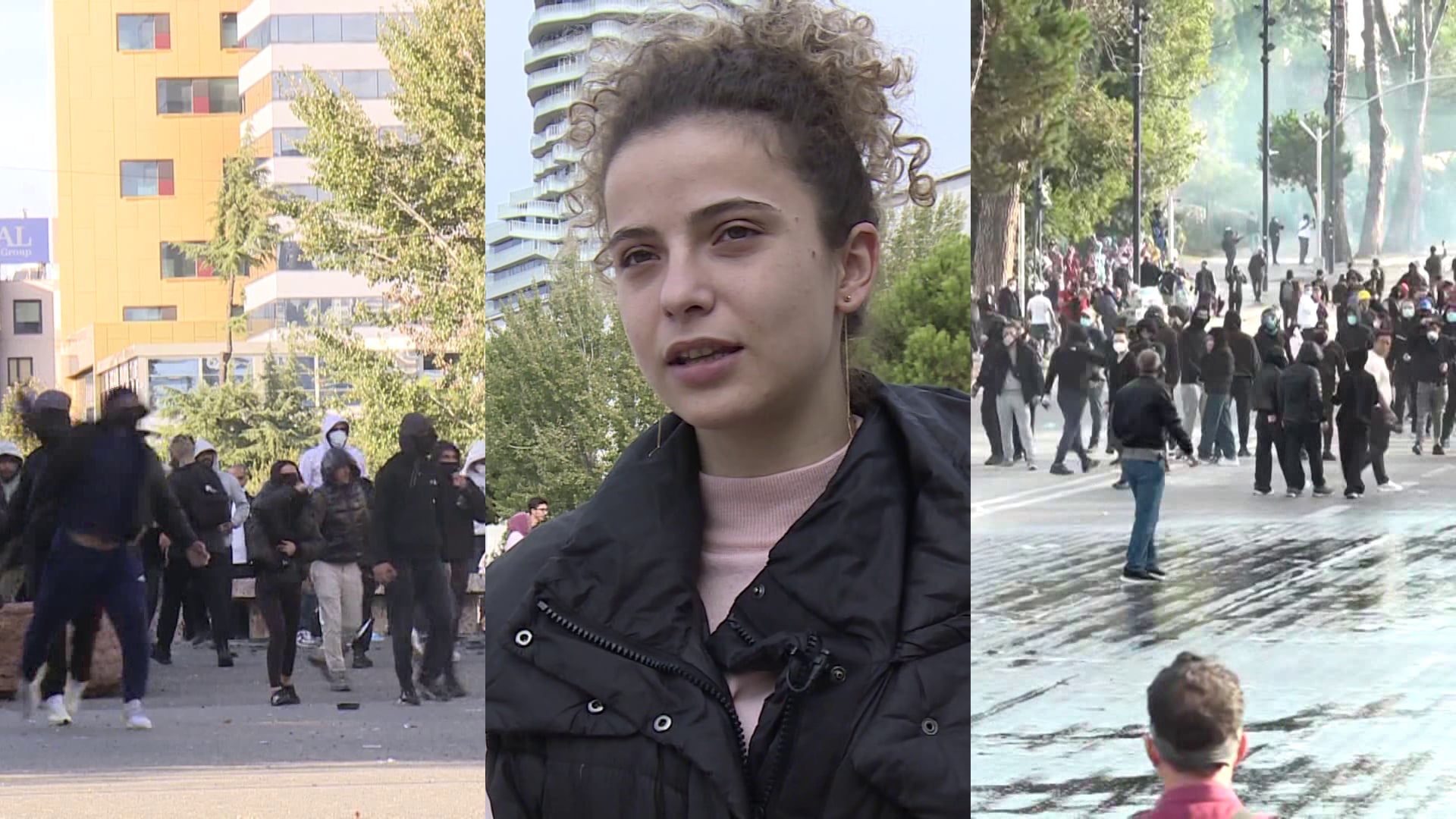
From the lecture hall to the square, at a personal cost
Iris Kola, 20, a student of Architecture and Landscape Planning, says she has put her studies aside to take part in rallies. According to her, young people are no longer protesting only over conditions at universities, but over problems that affect their daily lives and their future in the country.
She lists the labor market, conditions in hospitals and emigration as reasons, stressing that many young people see the protest as a reaction to a reality that is pushing them out of Albania. From this perspective, the protest is presented as a sign of social exhaustion, not simply student dissatisfaction.
From peaceful gathering to open revolt
According to the student’s account, the protest that began as a peaceful gathering changed form over the months, leading to physical clashes with police in October. She claims that the students’ demands were ignored by politics and that this has sharpened the tone of the response in the square.
In the protesters’ version, after 130 days on the streets, the dominant feeling is no longer expectation of dialogue, but revolt. Kola says students have also felt mocked by government officials, which, according to her, has replaced words with actions.
Political demand: the government’s resignation
If in June the focus was on laws that, according to the protesters, affected nature, the demand is now directly political: the resignation of Prime Minister Edi Rama and the government cabinet. Students are linking the crisis in education to broader institutional responsibility.
Among the criticisms they have articulated is the Ministry of Education, which in the eyes of the protesters bears particular responsibility for the state of the universities. This shifts the protest from a sectoral issue to an open confrontation with the government.
No declared leader, but organization on the ground
So far, the students have not presented a single leading figure. However, according to what the protesters themselves describe, their organization functions through a division of roles and tasks on the ground.
According to Kola, some handle medical treatment, others stay on the front line of the clashes, while others look after logistical support. She presents this as a structure that emerged organically, outside parties and other organizations.
The Serbian model and the idea of a new movement
One of the theses circulating among the most active students is that the revolt should not remain only in the square, but should take political shape. Kola links this to what she considers the victory of students in Serbia and sees it as a signal that young people in Albania should also aim for representation.
According to her, such a movement should be built by students and for students, without the involvement of political parties, NGOs or nonprofit organizations. This shows open distrust toward traditional intermediaries and an effort to turn the protest into direct political capital.
The message emerging from this wave of reaction is clear: some young people are no longer asking only to be heard, but to take a place in decision-making.
It remains to be seen whether this energy will remain street revolt or turn into a political project that truly challenges the status quo.