
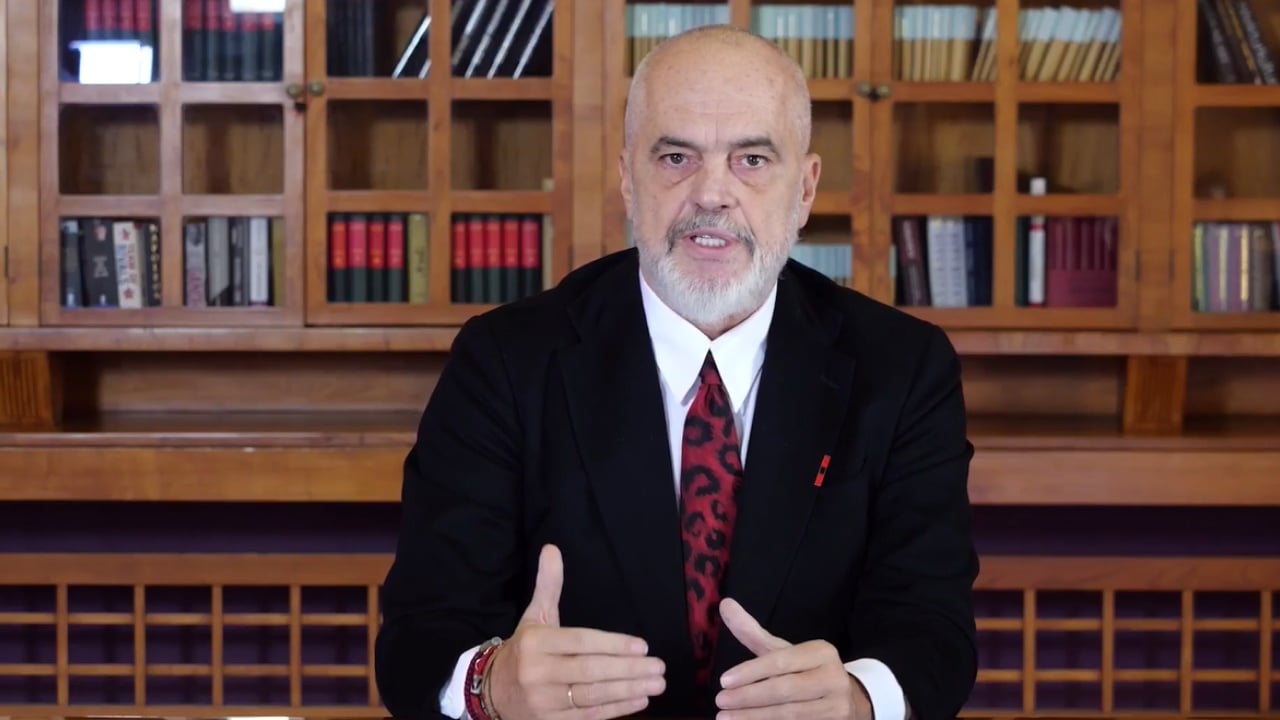
At the height of tensions after the protests, Edi Rama came forward with a new fiscal package that, according to the government, aims to reduce the burden on families while at the same time increasing taxation on profits and luxury assets. The political message was clear: a financial response to social discontent, but also an attempt to regain control of the public narrative.
What the new package contains
According to the prime minister’s announcement, the 2027 Fiscal Package is summarized in 10 main measures, with a focus on the taxation of dividends, properties and luxury vehicles.
At the core of the package are tax cuts for food and fuel, as well as a higher fiscal burden on dividends and coastal villas. Rama presented this as a correction in favor of ordinary families and against inequality.
The creation of a Specialized Bureau for income control was also announced, a new mechanism that the government sees as an oversight instrument for profits and financial declarations.
The government speaks of narrowing the social gap
Rama said the philosophy of the package is that “those who earn more, pay more,” linking this to the goal of easing the gap between the groups that benefit most from economic growth and those that bear the weight of the cost of living.
According to the official version, the new measures come as part of the 2027 Budget and the 2027-2029 medium-term program. The prime minister insisted that the economy has grown, that the state budget has exceeded 10 billion euros, and that public debt has fallen to historic levels.
However, the presentation of the package was accompanied more by political statements and self-praise about the economy than by a full public explanation of the concrete effects, costs and implementation of each measure.
The package was announced in a climate of political confrontation
The announcement of the measures did not come at a normal budget moment, but immediately after the protests and the sharp political clash that has dominated recent weeks.
In the same appearance, Rama used harsh language toward the protesters, describing them as a violent crowd and linking the developments in the streets to damage to the economy, tourism and the investment climate.
This places the fiscal package in another reading as well: not only as a financial instrument, but also as a political move to respond to social revolt with promises of economic relief.
Questions that remain open
From the political presentation, the general direction of the package became clear, but not yet the full mechanism of implementation or the real weight the changes will have in citizens’ pockets.
It is still not clear how much the tax cuts will affect the final prices of food and fuel, nor whether the increase in taxation on luxury and dividends will actually translate into more revenue for the budget.
Equally important is how the Specialized Bureau for income control will function, a structure that raises questions about powers, legal filters and oversight standards.
For now, the government is selling the 2027 Fiscal Package as a social response and as proof that there is room for greater redistribution.
What remains to be seen is whether the measures will produce a real effect on the market and on living costs, or whether they will remain mainly political packaging at a time of public pressure.