
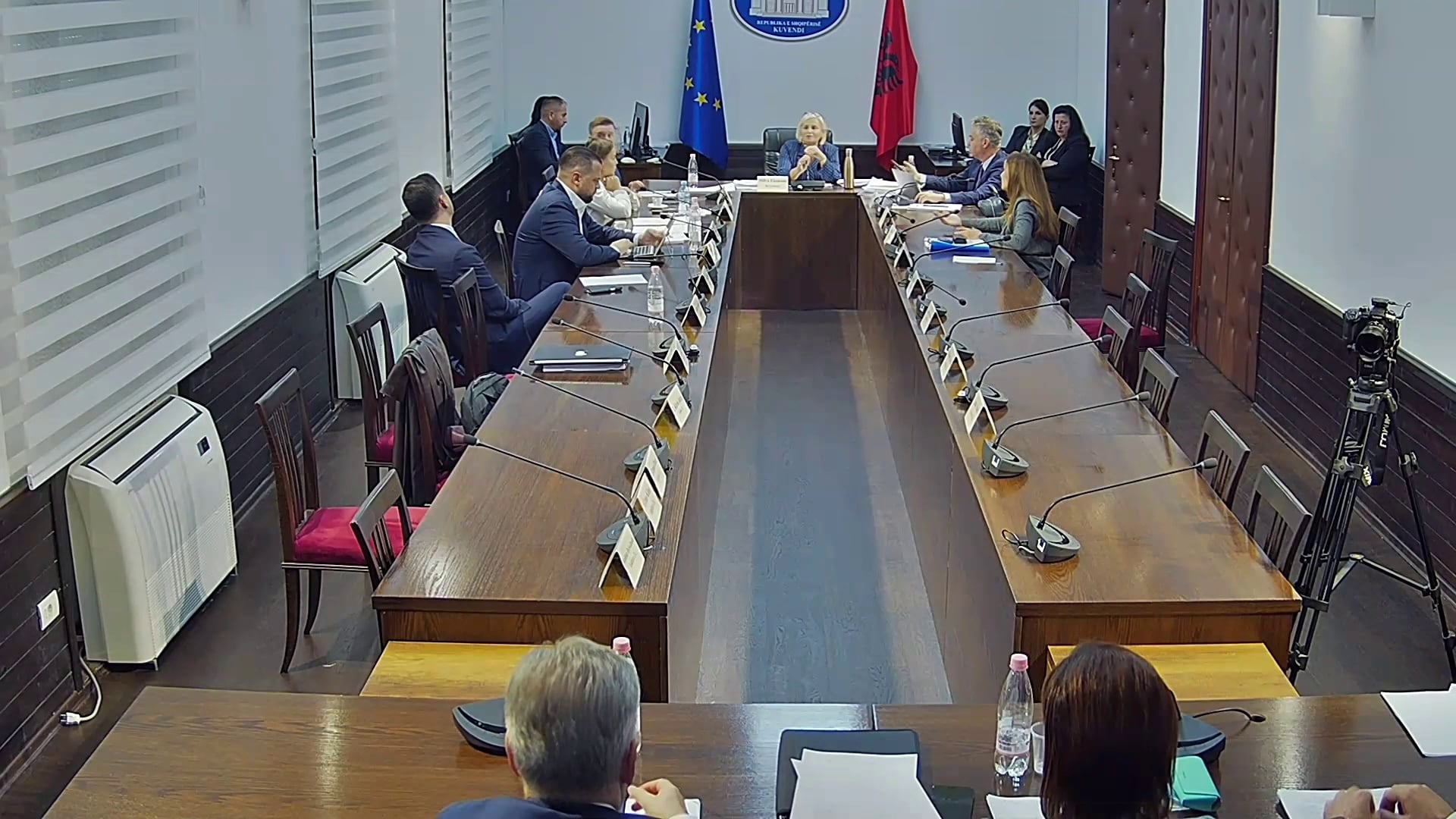
The draft 2027 budget has triggered clashes in the Economy Committee, where warnings from the Bank of Albania over pensions, debt and the management of public spending mixed with opposition criticism over taxes, the lack of support for production and the economy’s dependence on construction.
Bank sees a consolidating path, but raises red flags
In the assessment presented to the committee, Bank of Albania Second Deputy Governor Natasha Ahmetaj said the draft 2027 budget maintains a consolidating direction, with the deficit at 2.3% of Gross Domestic Product and public investment at 6.8% of GDP.
Alongside that assessment, however, the institution called for greater caution over the sustainability of the pension scheme, debt management and the efficient use of public money. According to the Bank of Albania, budget spending, and especially investment, should be planned and implemented more evenly throughout the year in order to avoid sharp fluctuations in liquidity and aggregate demand.
Pressure on pensions and public finances
The Bank of Albania signaled that social insurance and health insurance schemes continue to require considerable support from the state budget. According to the bank, population aging, emigration and the decline in the working-age population are expected to further increase pressure on these schemes.
In this context, Ahmetaj stressed the importance of continuing reforms and strengthening mechanisms for identifying, assessing and managing fiscal risks, in an environment that, according to the central bank, remains burdened by uncertainty and heightened risks.
Opposition attacks fiscal package and lack of breathing room for production
After the presentation of the opinion, the political debate shifted to the effects the new fiscal package could have on the business climate and investment. Opposition lawmakers sought more clarification on dividend taxation, the VAT threshold and the lack of support for productive sectors.
Democratic Party MP Eno Bozdo strongly opposed the direction of the package, claiming that the increase in the fiscal burden deprives businesses of room to invest and does not address emigration, especially in rural areas. He also raised the concern that the economy is being left to “brick and mortar” instead of supporting sectors that produce.
Along the same lines, the opposition argued that objections from business associations to the fiscal package are not accidental and that Albania is competing to attract foreign investment, making tax policy an even more sensitive issue.
Economic growth centered on construction, with questions also over money laundering
Jorida Tabaku sought clarification on the sources of economic growth and how they are distributed, raising concern that reliance on only a few sectors may be unsustainable. She emphasized the concentration of growth in construction and also sought fuller answers on the financing of the sector.
The opposition lawmaker also linked this discussion to suspicions of money laundering, calling for a more exhaustive position from the Bank of Albania on this exposure.
For her part, Ahmetaj said bank financing for the construction sector is within healthy parameters, but acknowledged that the base of economic growth needs to be broader. She added that agriculture also requires attention, while stressing that any changes in VAT will also depend on the efficiency of the tax administration and the level of oversight.
Bank distances itself from policymaking
At the end of the debate, the deputy governor underlined that the Bank of Albania’s role in this process is limited to giving an opinion on the draft budget and not to replacing the Ministry of Finance in drafting fiscal policy.
That institutional distance did not dampen the debate in the committee, where the draft 2027 budget was confronted with questions over the sustainability of pensions, the use of public money, the burden on business and the growth model being followed by the Albanian economy.
Between the central bank’s technical assessment and political objections to the fiscal package, the draft 2027 budget emerges with several clear warning signals: pensions under pressure, debt requiring more careful management and an economy that continues to raise questions over its dependence on construction.
It is precisely on these points that the political confrontation in the coming weeks is expected to focus over one of the year’s most important financial documents.