
Fatmir Mediu appeared this Monday at the premises of the Special Court Against Corruption and Organized Crime (GJKKO), where he testified in the trial over the “Partizani” case. On his way out, the former defense minister struck a defensive tone, arguing that the administrative files of that time should have been verified by the prosecution rather than being requested from him two decades later.
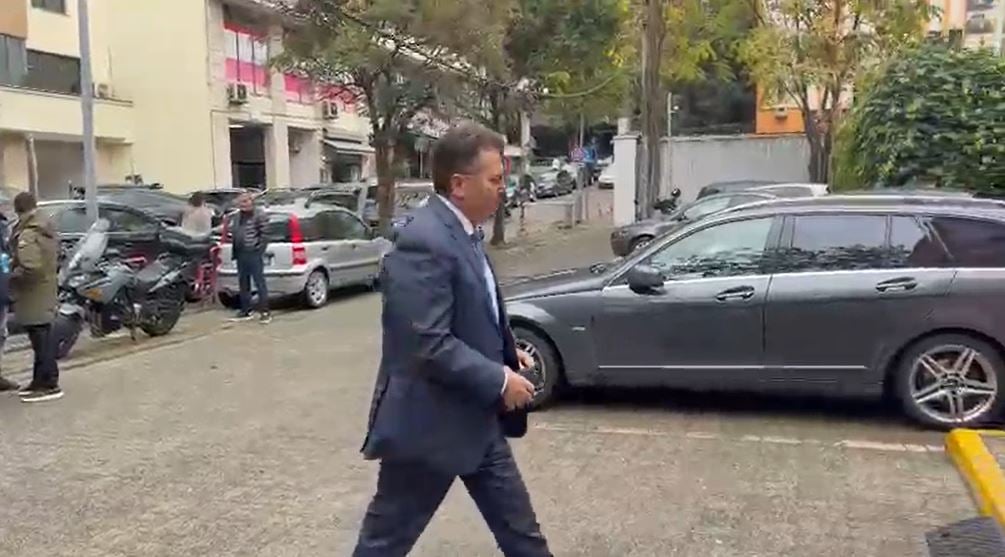
Appearance at GJKKO over the “Partizani” case
Mediu was seen entering the Special Court alone after being summoned to testify in the judicial process linked to the “Partizani” case file.
His presence at GJKKO brings renewed attention to a case that continues to generate public and institutional debate over how the procedures of that time were handled.
Mediu: I had no discussions with owners
After his testimony, Mediu said he had held no discussions with any owner over this matter. According to him, the process was moving toward privatization by the club and not by the owners, a path which, under his version of events, ran contrary to the laws of the time.
He added that the request had come from the Socialist government and that, in his capacity as minister, he had to preserve the administrative continuity of the file he found.
Correspondence between ministers and the role of the structures
According to Mediu, there had been correspondence between ministers in the Socialist government, initially sent to the outgoing minister at the time, Pandeli Majko, and later found by him when he took office.
He also claimed that there had been a request from the club to follow a file that had been left halfway through. In his explanation, the minister does not personally draft the position on such matters, but passes it on to the relevant structures, which prepare the material and the administrative memo.
Responsibility for the documents and accusations over lack of investigation
Mediu insisted that the content of the materials is not the minister’s personal responsibility, but that of the authorities that processed and proposed them in line with the rules.
At the core of his statement was also criticism of the prosecuting body: according to him, if the prosecution did not investigate the ministry’s documentation at the proper time, then he cannot now be asked to provide technical explanations about the file after 20 years.
Mediu’s statements seek to shift the burden onto bureaucratic procedures and the prosecution’s inaction, while the “Partizani” case remains a direct test of how the justice system is handling state decision-making from past years.
This is precisely where the heart of the public debate lies: if responsibility dissolves among ministers, structures, and old administrative files, then real accountability once again risks being left without a clear address.