
Prime Minister Edi Rama, speaking from Brussels, chose to frame the recent protests in Albania as part of a “revolution of expectations,” claiming that international attention also came because of the “shadow of Donald Trump.” The statement was made at the 2nd European Union Enlargement Forum, where the head of government presented the situation as evidence of a country that, in his view, has entered a new phase.
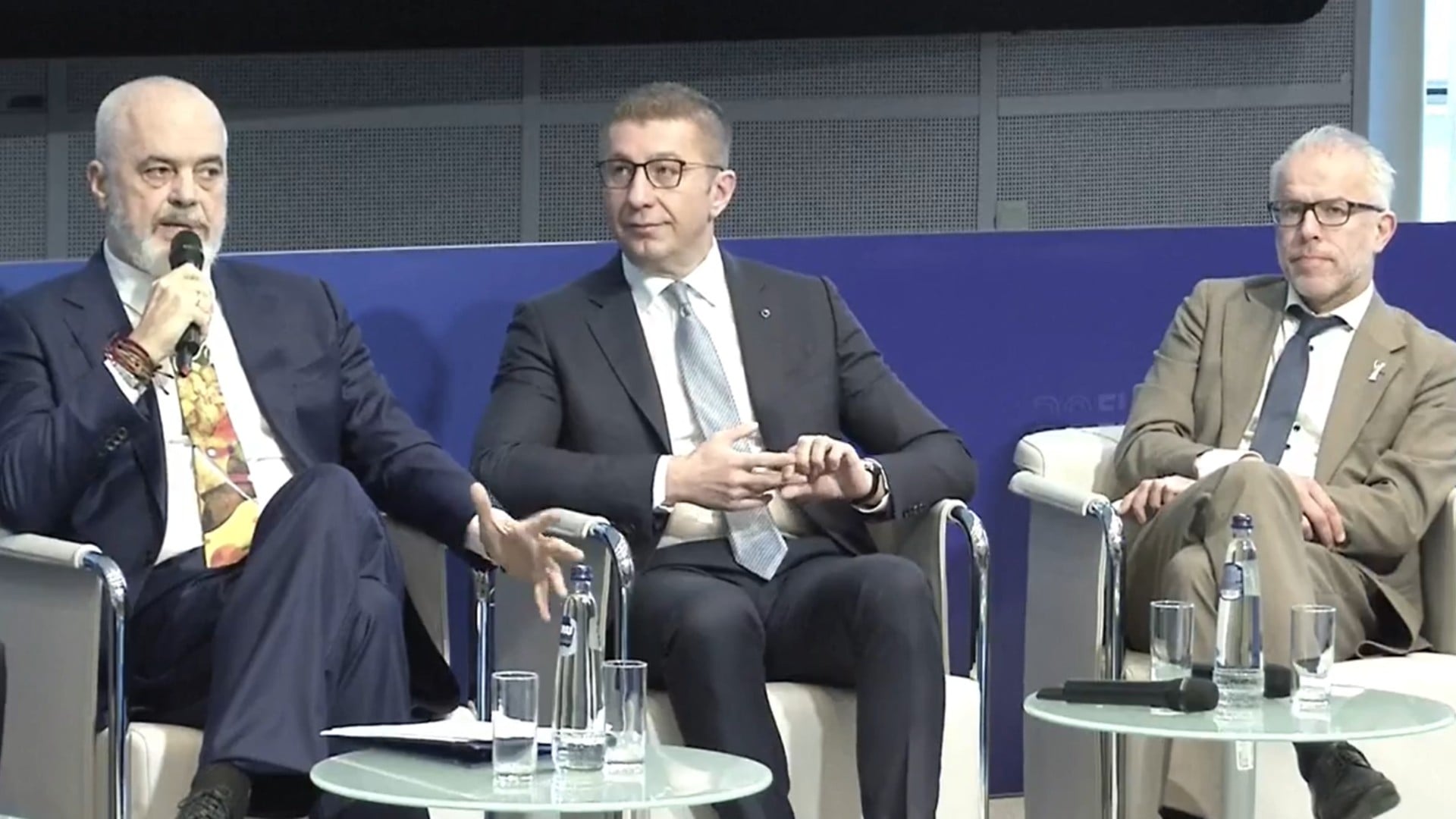
Rama’s link between the protests and Trump
During his remarks in Brussels, Rama said that what he called the “flamingo revolution” drew the world’s attention because, according to his version, behind it was “the shadow of Donald Trump.”
The prime minister suggested that without this element, the protests in Albania might not have received the same international echo. This was one of the strongest political points of his intervention at the forum.
The government presents discontent as rising expectations
Rama described the protests as a “revolution of higher expectations,” arguing that citizens are demanding more at a moment when, according to him, the Albanian economy is developing at a rapid pace.
This approach shifts the emphasis from the concrete causes of discontent toward a political reading more favorable to the government, in which protest is not seen as a crisis of confidence, but as a consequence of the country’s transformation.
“It is a new Albania,” the head of government said
At the forum, Rama declared that “it is a new Albania” and that people have the legitimate right to demand more attention and raise more questions about their place in this transformation.
He also linked this logic to Albania’s rapprochement with the European Union, presenting the relationship with the EU as part of the same political approach that, according to him, is leading the country.
The political message from Brussels
Rama’s appearance at the EU Enlargement Forum comes at a time when protests and public discontent are demanding more concrete answers than the usual political formulas.
Instead of offering an explanation of the reasons that have driven the public reaction, the prime minister chose to package the situation as a sign of the “new Albania” and of a society with higher expectations. This remains the line the government is also promoting before a European audience.
In essence, Rama’s message in Brussels was clear: the protests were not presented as a political alarm for the government, but as an argument in favor of its narrative of transformation.
It remains to be seen how convincing this interpretation sounds beyond the halls of European forums and in the face of the reality that citizens are articulating in the streets.