
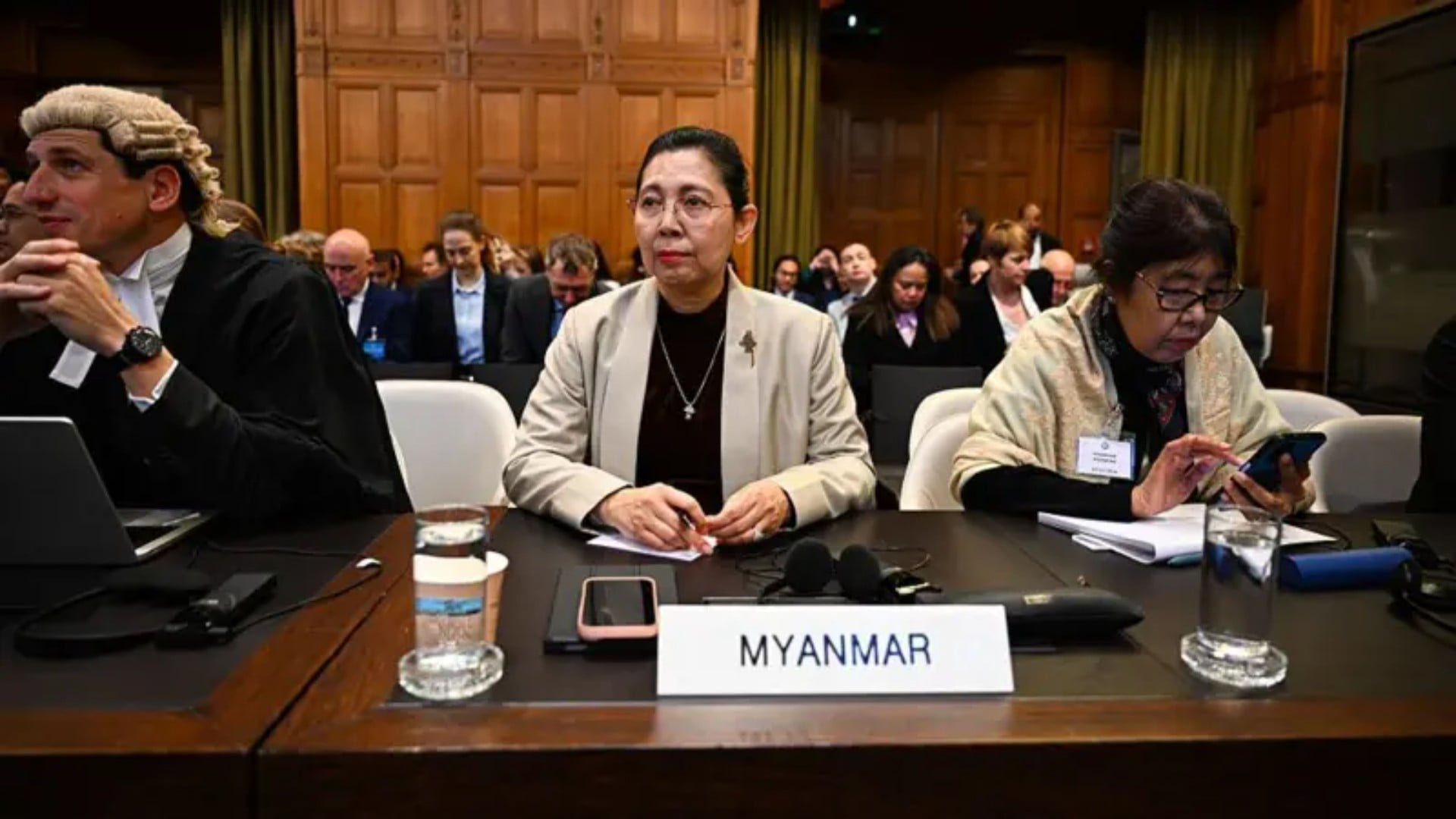
The International Court of Justice in The Hague has declared Myanmar responsible for genocide against the Rohingya Muslim minority, delivering a ruling of particular weight in international law. But beyond the court’s historic wording, the main question remains the one that often follows international rulings: will there actually be consequences for the accused state and for the victims?
A ruling that enters history
By nine votes to six, the UN’s highest court concluded that Myanmar committed genocide against the Rohingya. According to the information made public, this is the first time in the court’s 80-year history that a state has been declared responsible for genocide.
The ruling is expected to have an impact beyond the Myanmar case, as it is seen as an important precedent for how allegations of the gravest international crimes are handled. In this context, mention is also made of the case brought by South Africa against Israel over the war in Gaza, an accusation Israel denies.
What the court found about the military operations
The events that led to the case in The Hague are linked to the military campaign of 2016-2017, when Myanmar’s army carried out operations against the Rohingya community. During that period, killings of civilians, the burning of villages and mass displacement into Bangladesh were reported.
According to the court, large-scale killings, sexual violence and attacks on children show that the operations were aimed at destroying a substantial part of this minority. This undermines Myanmar’s official version, which had claimed that the army was acting against terrorist groups.
The court found that the military forces had made no distinction between civilians and fighters, a key element in the reasoning that led to a finding of responsibility for genocide.
From Gambia’s case to the political consequences
The case was brought to The Hague in 2019 by The Gambia, which asked that Myanmar be held responsible for violating the Genocide Convention. The move was seen at the time as an unusual challenge, as an African state took it upon itself to pursue a case involving a severe humanitarian crisis in Asia.
The ruling is now also being read in a broader political context. In the United States, according to reports, the Trump administration has criticized the court’s approach, while the US ambassador to the UN, Mike Waltz, has warned that a lower legal threshold for proving genocide could in future also be used against American soldiers.
Compensation on paper, uncertainty in practice
The court ordered Myanmar to compensate the victims, allow the safe and voluntary return of refugees, and restore their lost property. In legal terms, its rulings are final and binding.
However, this is where the real problem begins: the court has no mechanisms of its own to enforce implementation. If the state found responsible does not act, the political and diplomatic burden shifts to the UN Security Council, where the interests of the major powers often paralyze action.
Meanwhile, more than 1.2 million Rohingya continue to live in refugee camps in Bangladesh, in difficult conditions and without a clear horizon for return with safety, rights and citizenship.
One of the survivors, Murshid Alam, summed up the essence of the crisis beyond legal formulas: the refugees do not want to remain in camps forever, but to return to their homeland with dignity, rights and restored citizenship.
For the Rohingya, the ruling from The Hague is a belated recognition. The real challenge remains whether that recognition will translate into concrete justice and actual return, or whether it will remain yet another paper victory for the international system.