
20 November 2026 | Aktualitet.al
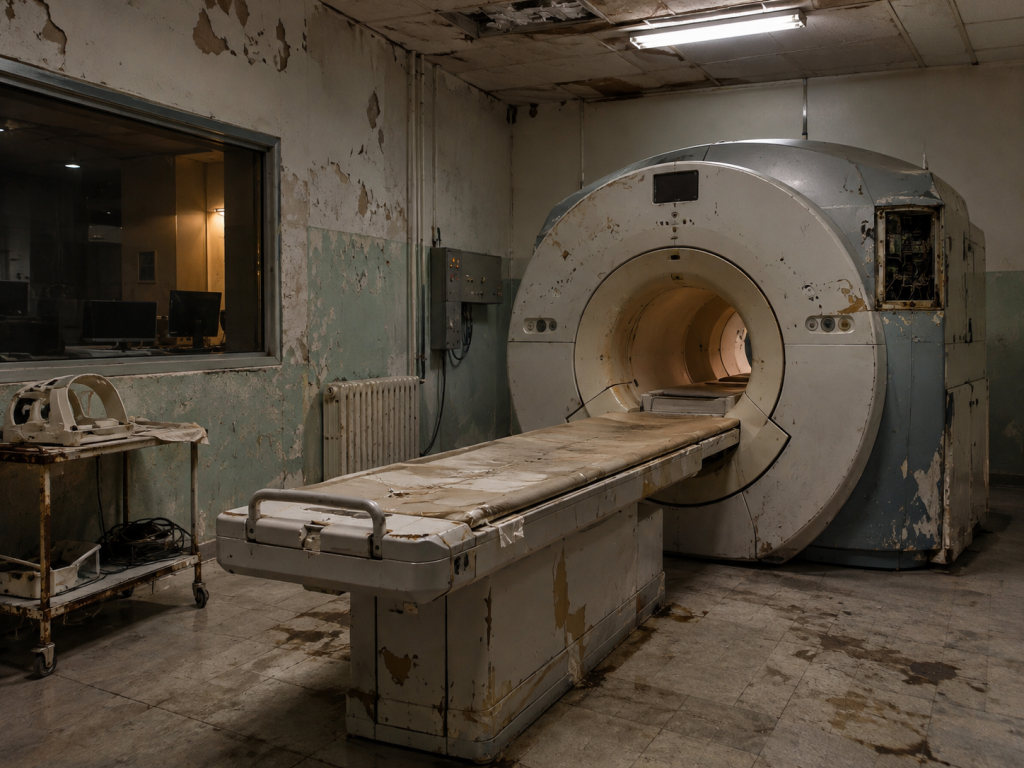
A serious scandal has engulfed Albania’s public healthcare system. Magnetic resonance imaging machines at the Mother Teresa University Hospital Center in Tirana and at the Regional Hospital of Durrës have gone out of service, leaving patients without one of the most important medical diagnostic services.
The situation has been confirmed by the Aktualitet.al newsroom, while a communication addressed to healthcare structures, obtained by the newsroom, shows that institutions have been notified of the suspension of examinations.
According to information obtained by Aktualitet.al, after problems emerged with the MRI service in Tirana, patients had been directed to the Regional Hospital of Durrës. But the machine at that hospital has also gone out of service, further worsening the situation.
Patients are now left with two alternatives: wait with no clear deadline for the service to be restored, or turn to private clinics and pay out of pocket for an examination that should be provided through the public system.
But does illness wait? Can a patient with suspected tumors, neurological problems or other serious conditions wait until the state repairs the machines?
The document exposing the situation
The communication obtained by Aktualitet.al explicitly states that, due to the MRI equipment at QSUNT and the Regional Hospital of Durrës being out of service, family doctors and patients with scheduled examinations up to 20 November 2026 must be notified.
It even requests that patients with examinations scheduled for today be urgently informed that these cannot be carried out and be advised not to come to the hospitals until further notice.
So instead of a solution, patients are being told not to go to the hospital. Instead of a date for their MRI, they are being offered more waiting.
The notice gives no concrete deadline for repairing the equipment, nor any clear alternative plan to guarantee continuity of examinations.
This is not simply a technical problem. It is a serious problem of public service administration and of the lack of backup capacity for an examination that, in many cases, is decisive for timely diagnosis and treatment.
Patients who have waited for months now face another obstacle
According to information gathered by the newsroom, there are patients who have waited from two to four months to undergo an MRI scan.
After enduring months of waiting, they now face the fact that the machines are not working.
For a patient seeking to discover the cause of an illness, every additional week can matter. For someone who needs to monitor the progress of a serious condition, a delay in diagnosis can directly affect medical decision-making.
And while patients wait, the financial and psychological costs of this situation weigh on them and their families.
Albanians pay taxes and health contributions, but when they need an examination, they risk facing the closed doors of the public service.
Millions for projects, but how much for the machines that save lives?
This scandal raises another unavoidable debate: the priorities of public spending.
In a country where public funds have been used for costly projects such as the Garden of Eden or the organization of international concerts, it is legitimate to ask whether healthcare and public diagnostics have received the attention they deserve.
How many MRI machines could have been bought, maintained or repaired with part of these funds?
How many patients could have avoided months of waiting if investment in diagnostics had been treated as a priority?
It is not enough to build hospitals, inaugurate new premises or publish photographs from official visits. A healthcare system is measured above all by its ability to serve the patient when the patient is in need.
And today, according to information confirmed by Aktualitet.al, two major hospital institutions are simultaneously facing a disruption of MRI services on the machines included in the notice.
Klodiana Spahiu, where is the solution for patients?
Political responsibility for ensuring the functioning of the public healthcare system falls on the Ministry of Health, led by Klodiana Spahiu.
The minister must give public answers to several essential questions:
- How long have the MRI machines at QSUT and the Regional Hospital of Durrës been out of service?
- What are the specific causes of the breakdowns and who is responsible for maintenance?
- How many patients have been affected by the suspension of examinations and how many of them have been waiting for months?
- When will the equipment be restored to full operation?
- What solution will be offered for patients who urgently need the examination?
- Will the state guarantee MRI examinations at other institutions, including contracted private facilities, at no additional cost to patients?
These are not political questions. They are questions related to the health and safety of citizens.
Because a machine can break down. But when two important hospital centers are simultaneously left without this service and patients are not offered a clear alternative, the problem is no longer only technical. It is institutional.
Illness does not wait for the ministry’s next notice
There is nothing normal about a patient waiting for months for an MRI and then, when their turn finally comes, learning that the examination cannot be carried out.
There is nothing normal about a public institution settling for informing patients of a service suspension without communicating a concrete solution.
And above all, it cannot be accepted that the right to timely diagnosis depends on the financial ability to pay for a private clinic.
Aktualitet.al is calling on the Ministry of Health, the QSUT administration and the administration of the Regional Hospital of Durrës for immediate transparency on the situation, repair deadlines and the measures that will be taken for affected patients.
Until then, one question remains unanswered:
If the state cannot guarantee even a timely MRI, what assurance does it give citizens that the healthcare system will be there when their lives are at risk?