
Another incident raising serious questions about urban safety in Durrës was recorded in the Currila area, where parts of the facade of a 15-storey building broke loose and fell onto a vehicle. According to the published information, pedestrians were also at risk, while footage shows that a girl escaped by just a few centimetres.
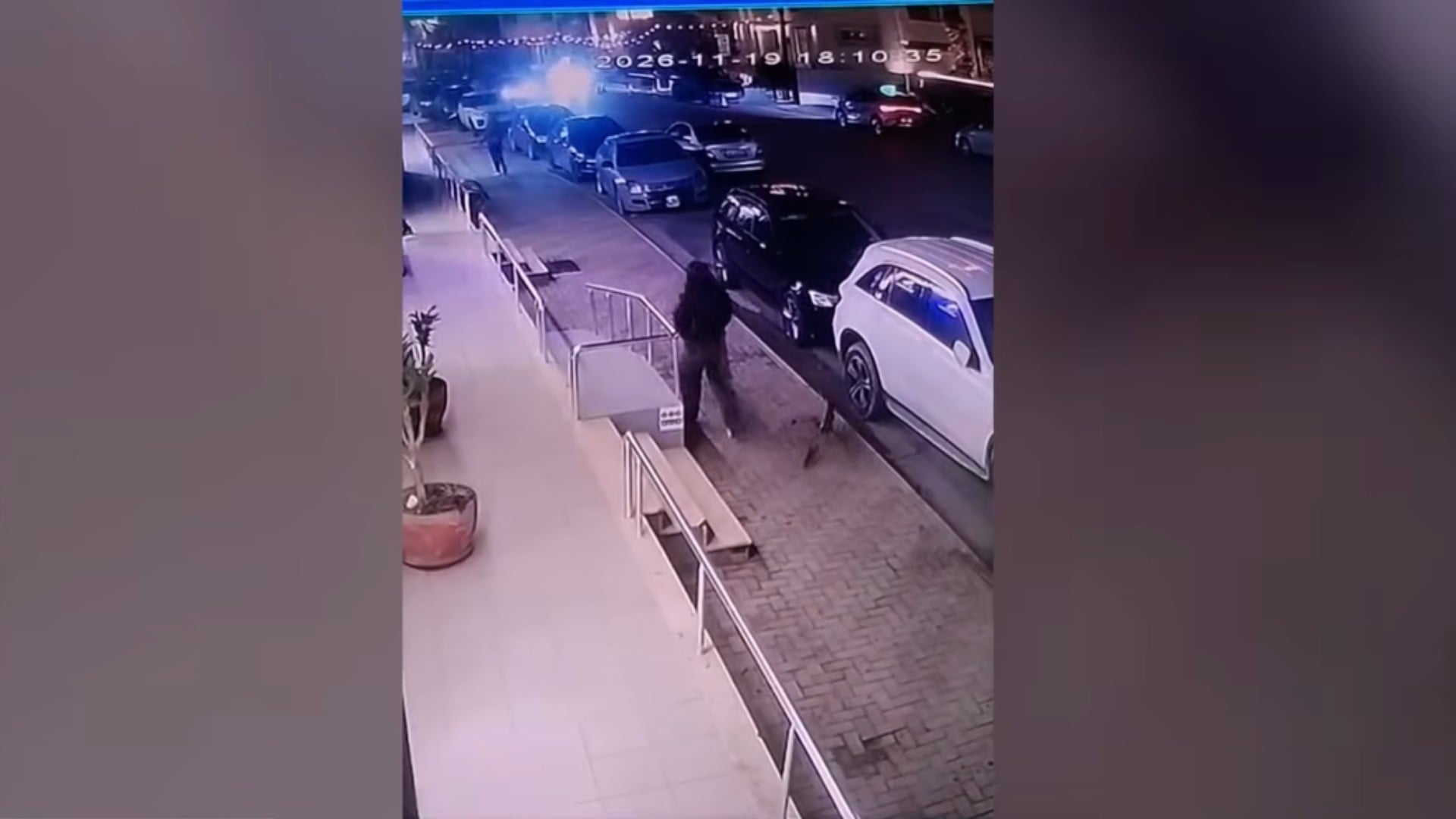
Facade collapse in a busy area
The incident happened last night in Currila, a well-known and busy area of the coastal city. Parts of the building’s facade fell from above and struck a vehicle, turning passage near the building into a real danger for residents.
Repeated cases of elements breaking away from facades are making the problem of maintenance of high-rise buildings in Durrës even more visible. When intervention comes only after an incident occurs, the main question remains who is responsible for prevention.
Footage shows the critical moment
The published footage captures the moment when the tiles break away from the building and fall to the ground. In those seconds, a girl moves away at the last moment, avoiding being hit by just a few centimetres.
This detail makes the event more than just material damage. The danger was not theoretical, but a direct threat to the life and health of people passing beneath the building.
Firefighters intervened the next day
This morning, the fire service intervened at the scene to remove other facade elements that could have broken loose at any moment. According to the official version, the aim of the intervention was to eliminate the immediate danger.
However, intervention after the pieces had already fallen onto a vehicle and put pedestrians at risk leaves open the debate over prior inspections of these buildings and the response of local institutions.
The problem of deteriorated facades remains unresolved
The detachment of parts from the facades of deteriorated buildings and high-rise apartment blocks continues to pose a threat in Durrës. The incident in Currila is another signal that building deterioration cannot be addressed only with temporary measures after an incident.
In the absence of full clarification on responsibilities and preventive checks, citizens remain exposed to a risk that could turn into a tragedy at any moment.
The case at the 15-storey building in Currila brings back into focus not only the condition of facades, but also gaps in safety oversight in urban spaces.
When such elements fall in a residential and busy area, the alarm is no longer linked only to one building, but to how public risk is managed in the city.