
Prime Minister Edi Rama has published on social media a video from a meeting with a group of students, presenting the conversation as a dialogue with young people who, according to him, believe in peaceful protest and not violence. But alongside the footage, the head of government also made known another element: the full debate will not be published for now.
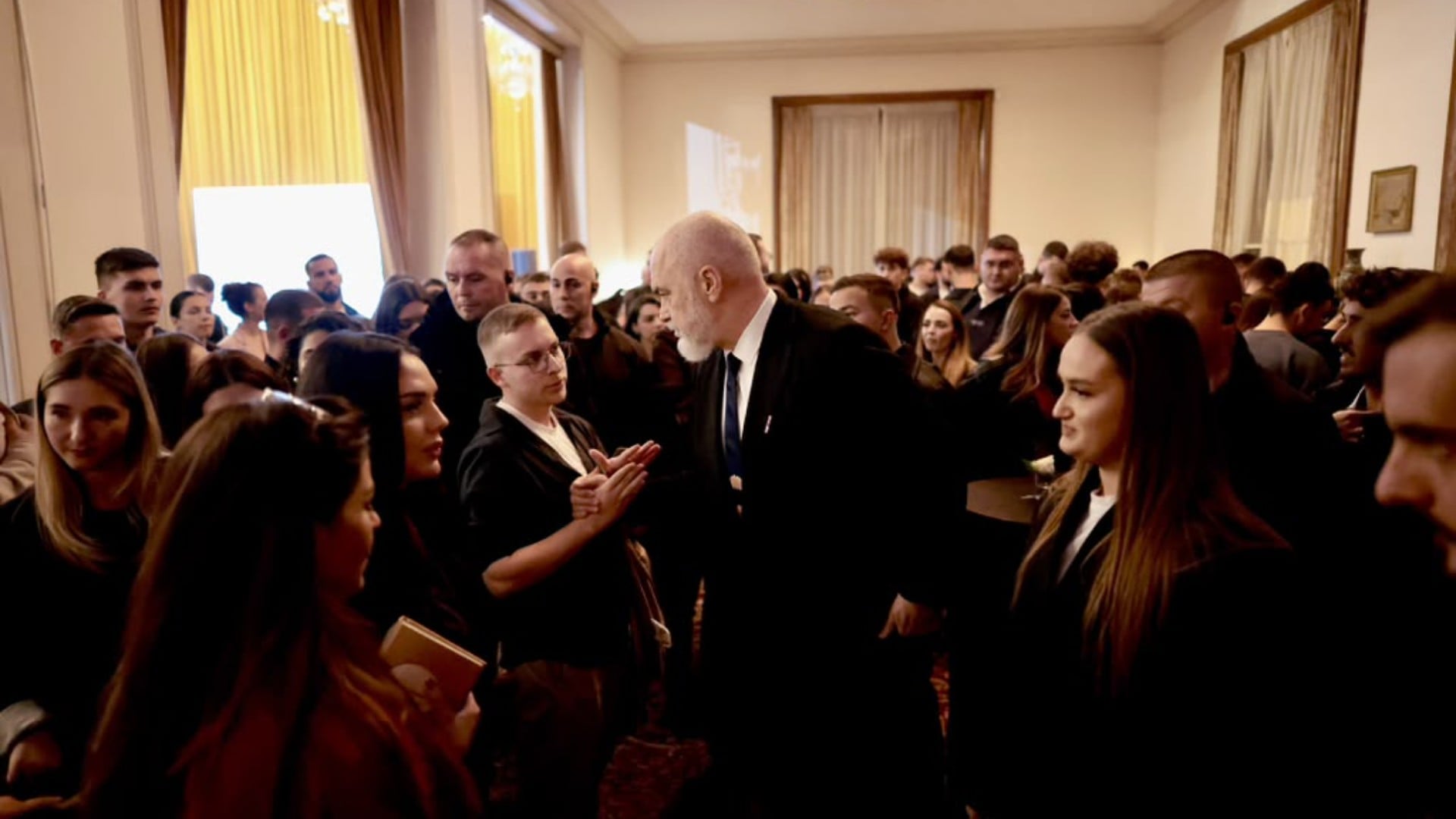
Only the footage is being published, not the content of the debate
In his post, Rama writes that it was agreed with the students not to make the debate public “for the time being,” but only the footage from the meeting. This means the public sees only the visual version chosen by the prime minister himself, without access to the full arguments exchanged in the conversation.
The decision to publish filmed excerpts, but not the content of the discussion, leaves open the question of what exactly was discussed and why it was preferred that the essential part of the meeting remain outside the public eye.
The political message of the post
In the text accompanying the video, Rama describes the students as young people who believe in protest and not in stones. The wording comes as a clear political message, at a time when those in power often try to distinguish between “acceptable” protest and that which is labeled violent.
However, the material published provides no further details about the topics of the debate, the students’ demands, or their concrete positions toward the government.
Thanks to the National Youth Agency
Alongside the video, Rama also thanked the head of the National Youth Agency, Sara Bodo, for what he described as work in bringing young people closer together regardless of their beliefs.
According to the prime minister’s version, this agency has become a “magnet” for girls and boys with different convictions. The post was also accompanied by a wish for a peaceful weekend.
The published footage offers only one controlled part of the meeting, while the most important part, the debate, remains outside public attention.
For a meeting presented as an example of dialogue with students, the lack of transparency about the full conversation remains the element that stands out most.