
A legislative initiative by Freedom Party MP Tedi Blushi to stop lawyers’ boycotts when they hinder court proceedings was rejected in principle by the Committee on Human Rights and Public Information Means. The vote was clear: 7 against, none in favor and no abstentions.
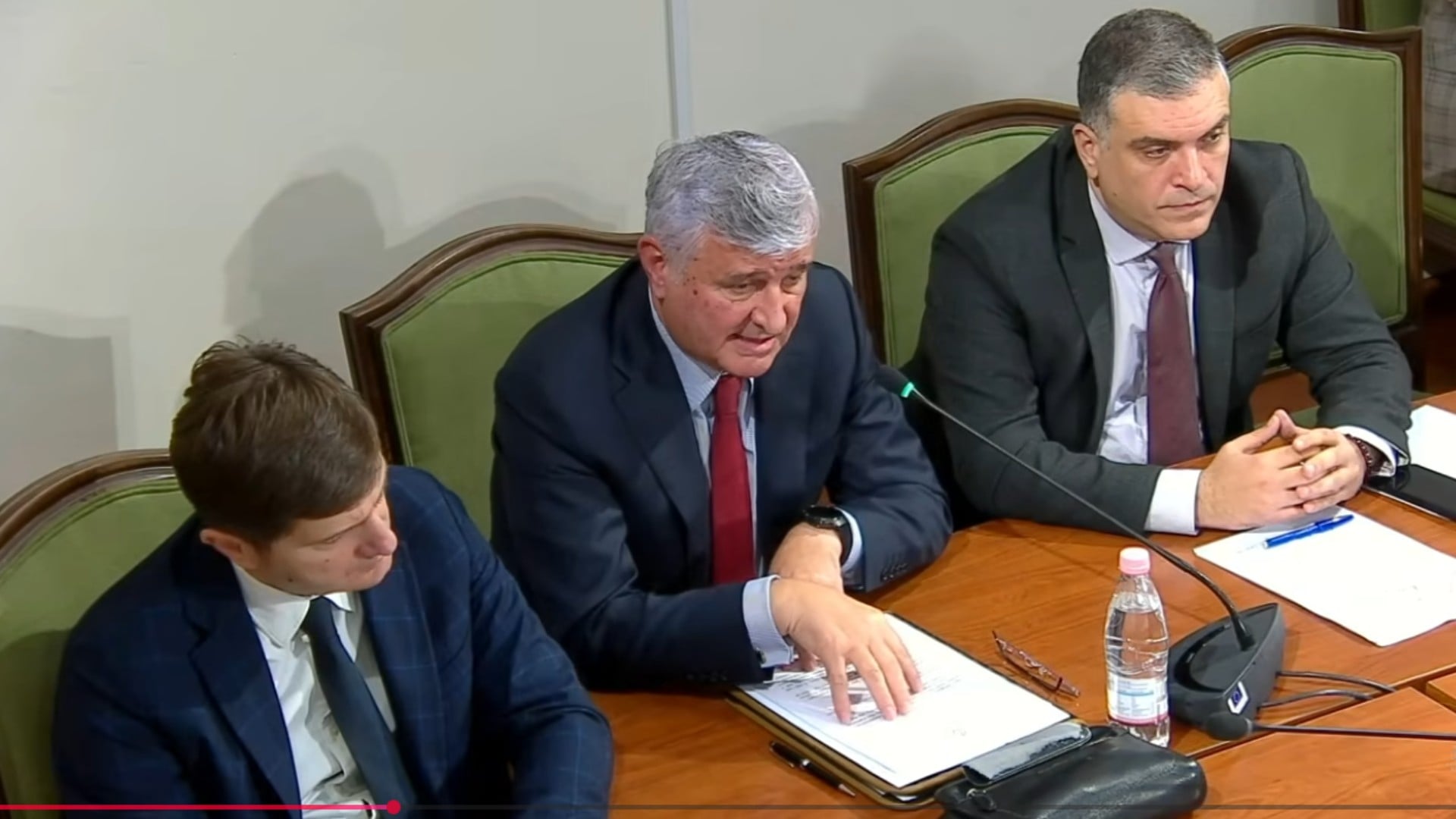
The bill does not pass even the first filter
The draft law provided for several additions to the law on the legal profession, with the stated aim of setting limits on boycotts in cases when they block court hearings.
According to Blushi, the clash between the Special Court and the Chamber of Advocacy led to the postponement of about 700 hearings, affecting the rights of people under investigation and detainees in pretrial detention. He argued that the initiative aimed to harmonize the independence of the legal profession with the obligation not to obstruct the functioning of the judicial process.
Blushi linked the initiative to consequences in pretrial detention
The Freedom Party lawmaker presented the intervention as a response to the consequences that, according to him, institutional conflicts bring to ongoing criminal cases.
In the debate, he also raised the case of Ilir Meta, claiming that the time limits of his pretrial detention have been suspended because of a conflict that, according to him, was not caused by the detainee himself. Blushi insisted that the initiative did not infringe on the independence of the profession and that the Chamber of Advocacy cannot behave like a trade union when proceedings are being blocked.
Haxhia against it: the problem is the cause, not the legal profession
The head of the Chamber of Advocacy, Maks Haxhia, opposed the initiative and shifted the debate to the way the conflict was managed by justice institutions. According to him, lawyers sought dialogue with the Special Court, the High Judicial Council and the President, but their requests were ignored.
Haxhia said the legal profession cannot be targeted because of the High Judicial Council’s failure to function, describing that institution as the “government of the judiciary,” which should manage the system rather than close its doors. He also argued that the current law has control instruments, recalling that the boycott was halted immediately after the interim measure by the Administrative Court.
According to him, this shows that the mechanisms already exist and that intervention in the law on the legal profession is not the first solution, especially when conflicts between institutions remain unresolved at their root.
There were also doubts in the committee about the initiative’s real effect
Committee chair Iris Luarasi acknowledged that the length of pretrial detention in Albania remains a serious problem, also referring to findings by the Council of Europe. She said the number of detainees in pretrial detention and the length of their stay are significantly higher than the European average.
However, Luarasi questioned whether Blushi’s draft law solves this problem without affecting lawyers’ independence. MP Arjan Ndoja also called for a broader institutional debate, involving the High Judicial Council, the Special Court and SPAK, to see whether changes are also needed to the Criminal Procedure Code.
MP Greta Bardeli proposed postponing the vote and continuing discussions in other committees, but the request did not win majority support.
In the end, the committee rejected the initiative in principle without a single vote in favor. The vote left open a broader conflict: not only over the limits of lawyers’ boycotts, but also over the way justice institutions are managing clashes whose cost is then borne by citizens and people in pretrial detention.