
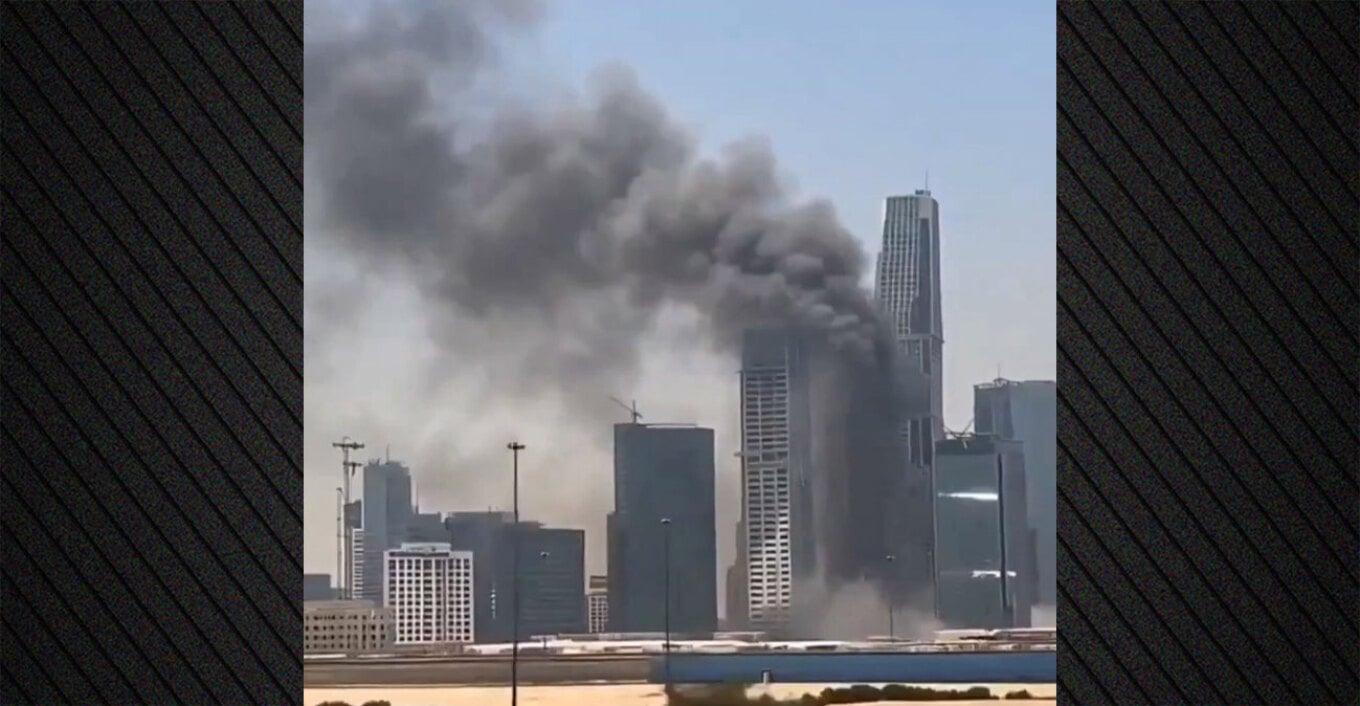
Riyadh’s tallest skyscraper has been hit for the second time in a week, in a development that raises serious questions about security in the Saudi capital’s financial district. According to Saudi authorities, at least 11 people were injured in the attack and damage was caused to the building’s facade.
The second strike on a symbolic site
Saudi authorities confirmed the incident and released photographs showing the damage to the building. The structure is considered one of Riyadh’s most important symbols and also houses major state offices, including Saudi Arabia’s sovereign wealth fund.
The fact that the same site was targeted again within just a few days makes the episode more than an isolated incident and exposes weaknesses in the protection of sensitive urban areas.
Official toll: 11 injured
Saudi Civil Defense said 11 people were injured in today’s attack on the tower in Riyadh’s financial district. So far, the toll published by the authorities refers to injuries and material damage, without providing further details on their condition.
The official version still does not provide a full picture of the extent of the damage or of how the attack managed to hit the same building again.
The same building was also hit last week
This is the second time in a week that the site has been attacked. Last Thursday as well, the same building was targeted by Houthi rebels, but at that time only material damage was reported and no injuries.
The repeated attack on the same site puts the spotlight not only on the continuing threat, but also on the real capacity of the authorities to prevent similar strikes in the center of the capital.
Regional escalation and concrete consequences
The Saudi-led military coalition, which supports Yemen’s internationally recognized government against the Houthis, described the strike as a “terrorist attack.” The Houthi rebels, backed by Iran according to the region’s known alliance lines, control large parts of western Yemen, including Sanaa, and have intensified attacks on Saudi targets.
The escalation is not remaining only on the military level. Several international flights to Riyadh have also been canceled, while Saudi authorities have been forced to postpone the Asian Football Cup, originally planned for this year and now delayed until December 2027.
The repeated attack on one of Riyadh’s most important buildings shows that tensions between Saudi Arabia and the Houthis are producing increasingly tangible consequences on the ground.
Beyond official statements, the question remains open as to how secure the Saudi capital’s financial center really is when the same site is hit twice within a matter of days.