
Donald Trump dominated the first day of the NATO Summit in Ankara with statements that directly affect U.S.-Turkey relations. According to the version made public from the meeting, the American president indicated that he supports Ankara’s return to the F-35 fighter jet program and wants the removal of U.S. sanctions imposed under the CAATSA law.
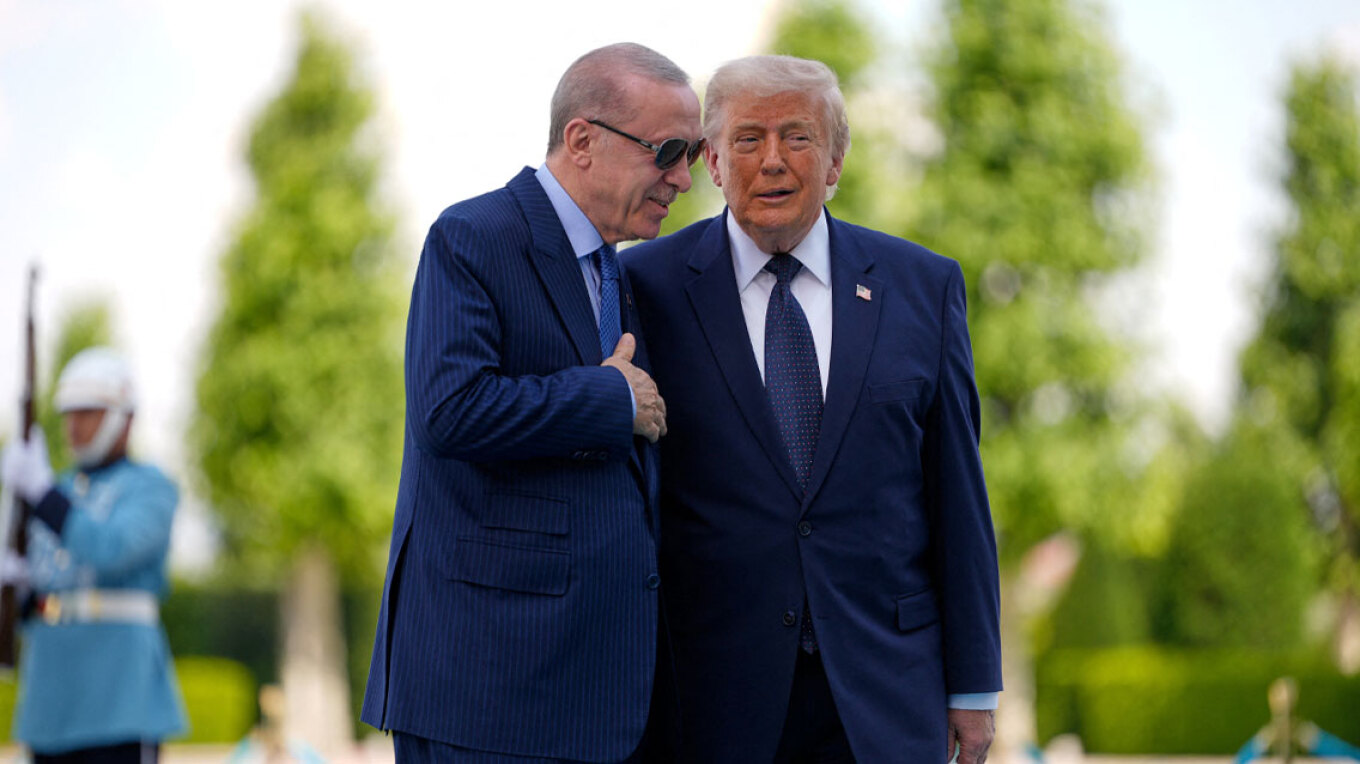
Trump’s message for Ankara
From the Presidential Palace, Trump said his administration is seriously reviewing Turkey’s return to the F-35 program. He described Turkey as a loyal ally and called the F-35 “the best aircraft in the world.”
The American president went even further when he said he wants the lifting of CAATSA sanctions on Turkey, arguing that sanctions should not be imposed on “friends.” This political line, however, remains at the declarative level for now.
Personal relationship with Erdogan at the center of the message
Trump described Recep Tayyip Erdogan as a “very close friend” and said the relationship between them is “very special.” He also praised the Turkish president’s leadership and Turkey’s military strength.
According to the official material from the meeting, the atmosphere in Ankara was presented as highly friendly from the airport reception, where Trump was welcomed by Erdogan.
Ankara seeks full return to the F-35
For his part, Erdogan said the F-35 issue is not new and that he expects the United States to keep its promise to return Turkey to the program. According to the Turkish president, he believes a positive decision will be taken on this file.
For Ankara, the issue carries broader weight than a technical agreement. Turkey is also seeking unconditional participation in the European defense program SAFE and deeper cooperation with the European Union in the defense industry.
Obstacles remain despite the optimistic tone
Despite the strong political statements, Turkey’s return to the F-35 program does not depend only on the will of the White House. The lifting of CAATSA sanctions also requires approval from the U.S. Congress, making the process more complicated than it appeared in the public statements.
This means the positive signals from the summit do not automatically translate into an immediate change in U.S. policy toward Turkey.
NATO summit and the defense agenda
Beyond the statements on Turkey, the summit is taking place under pressure to increase defense spending to 5% of GDP by 2035, military support for Ukraine, and strengthening the Alliance’s defense industry.
NATO Secretary General Mark Rutte also announced new agreements to purchase military equipment worth more than $40 billion over the next five years, speaking of the need for a “transatlantic revolution” in the defense industry.
For now, the summit has produced more political signals than tangible decisions. Whether Trump’s promises on the F-35 and the lifting of sanctions will pass the institutional filter in Washington remains the part that will truly determine the future of U.S.-Turkey relations.