Parliament reconvened to discuss the loan agreement with the United States for Albania, whose funds, according to the official version, are linked to the field of defense. The discussions began without the media present, a detail that raises questions about the transparency of an issue with public and political weight.
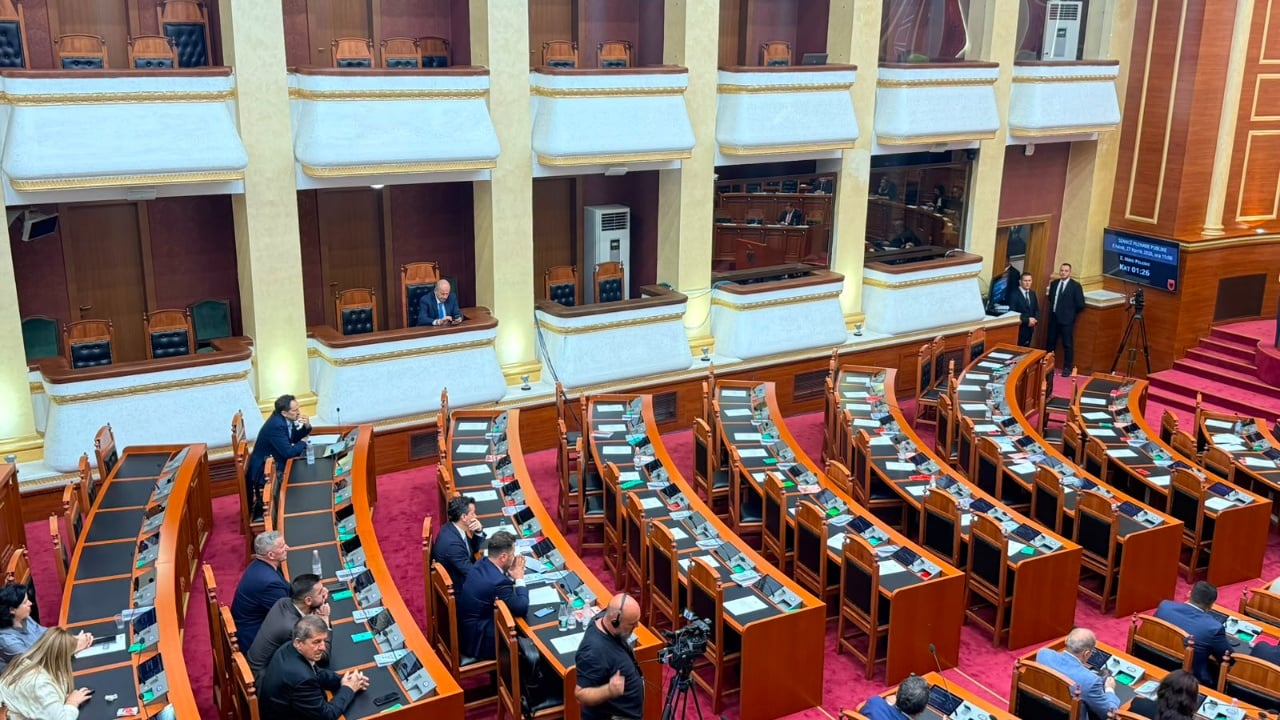
Discussions opened without the media present
The session began with discussions on the loan agreement with the United States, but without the media present. Meanwhile, the voting process is expected to take place publicly.
Closing the discussions to cameras and live reporting once again puts the debate over transparency standards in Parliament at the center, especially when financial and political commitments affecting the public interest are under review.
What the agreement provides
According to the announcement made during the session, this is a loan agreement with the United States for Albania, intended for the defense sector.
No other details have been made public at this stage of the discussion in the chamber, beyond the fact that the funds are linked to the defense sector.
The Democratic Party and allies maintain boycott
The Democratic Party and its allies did not take part in the proceedings, maintaining the position they had announced earlier.
The absence of the largest opposition grouping shifts the weight of the parliamentary debate, while the session is being held under conditions in which the public does not have full access to the discussions.
MPs from new opposition parties also in the chamber
MPs from the new opposition parties are present at the session.
This means that, despite the boycott by the Democratic Party and its allies, the meeting is continuing with representation from part of the opposition in Parliament.
The vote on the agreement is expected to be held publicly, but the way the discussion opened without the media remains the most politically sensitive element of this session.
For a loan linked to defense and passing through Parliament, the minimum requirement remains the same: as few closed procedures as possible and as much transparency for the public as possible.