
After the political uproar and protests that have accompanied the Socialist Party’s proposal for territorial reform, Prime Minister Edi Rama issued a public response in which he sought to lower the alarm over the objections, including those coming from within the Socialists themselves. In his version, dissatisfaction is permissible during the consultation phase, but final decision-making remains with Parliament.
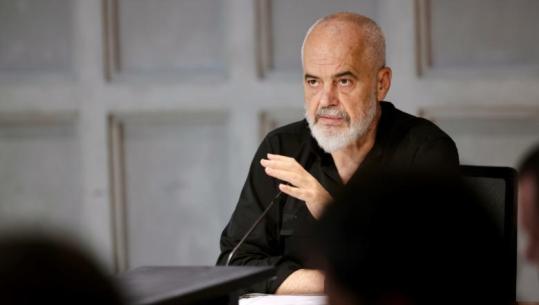
Rama downplays political tension
In his response, Rama mocked the narrative that the protests and objections to territorial reform are a sign of political crisis or a so-called “regime.” He presented that reading as political and media agitation, suggesting that the objections have been inflated beyond their real weight.
He accepts objections, but singles out the burning of party cards
The prime minister drew a distinction between expressing dissatisfaction and acts he described as unacceptable. He cited as a “shameful act” the burning of Socialist Party membership cards in one case, while acknowledging that there have also been Socialist MPs who have publicly taken unclear positions against the official line.
According to Rama, the rest of the reactions should be seen as normal and even welcome, at least at this stage of the process. This is an indirect admission that the proposal for the territorial map is not passing without political cost, either outside or within the majority.
The government refers to the 60-day consultation
Rama insists that the reform document is in the legally mandated 60-day public consultation phase and that this period exists precisely to hear positions for and against. In this way, the government is trying to present the tension as part of the procedure and not as political rejection of the initiative.
He also recalled the legal obligation that, according to the official version, mayors and municipal councils have to express their positions in writing. He likewise considered it understandable for objections to take other peaceful forms, as long as roads are not blocked and citizens’ daily lives are not disrupted.
Clear message: speech is allowed, Parliament makes the decision
The most political point of the response concerns the end of the process. Rama said Parliament will decide on the territorial reform, even though, according to him, everyone will be heard until then. This means the public consultation remains a declared listening phase, while decision-making weight remains with the parliamentary majority.
He added that during the 60 days of consultation the public will be informed more about the reasons for the proposals, dismissing arguments related to local history, the reputation of areas or other elements he called inappropriate for this debate.
Rama’s response confirms that the territorial reform is facing political and local resistance, despite the government’s effort to place the debate within the procedural framework of consultation.
In essence, the prime minister’s message is twofold: objections may be expressed, but the limits of protest are set by those in power, and the final decision is made by Parliament.