
The idea of merging the Municipality of Selenica with the Municipality of Vlora has triggered opposition from within the ruling majority. Socialist Party MP Vullnet Sina has openly come out against the project, questioning not only the criteria used in the reform, but also the way the central government distributes funds to local government units.
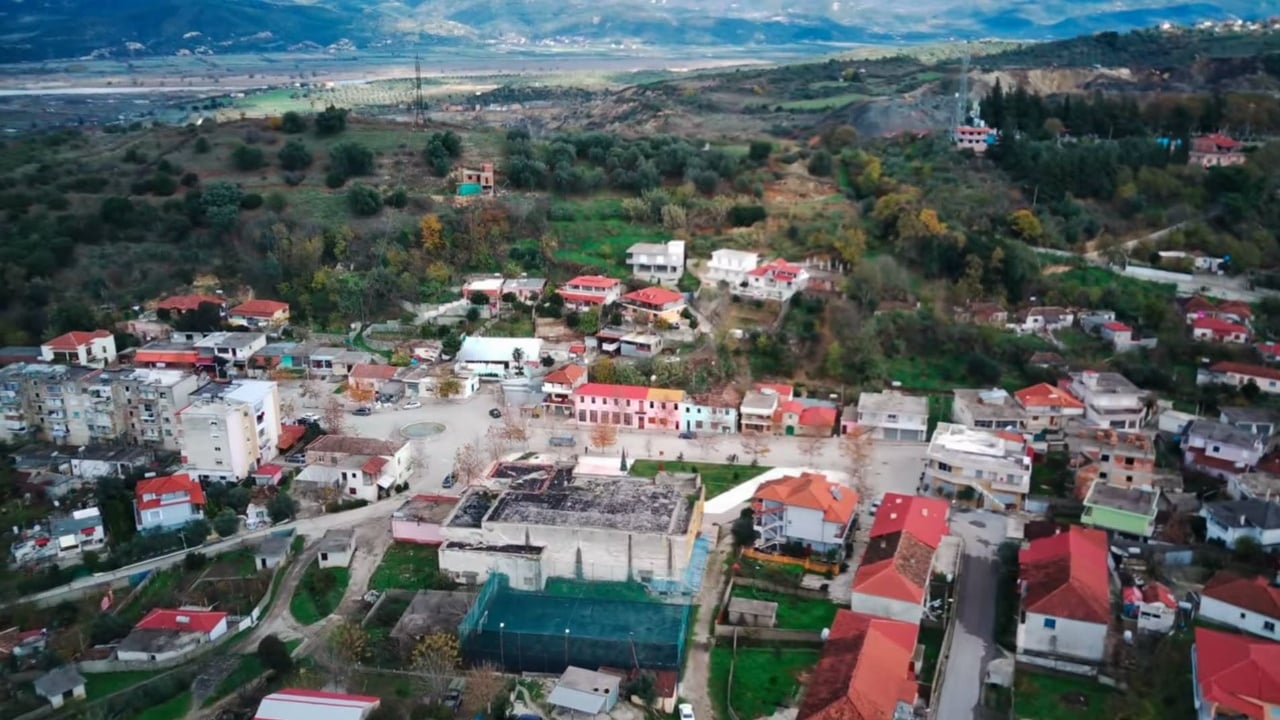
Open opposition to the merger with Vlora
In a lengthy public reaction, Sina argues that Selenica should remain a municipality in its own right and that decision-making should not rely only on experts, but also on the interests of citizens.
His position comes at a time when the new administrative-territorial reform project is reviving debates over local boundaries, representation and citizens’ access to services. The MP is calling on Parliament to hear the voices of residents before making any decision.
The debate shifts to money, not the number of municipalities
Sina rejects the idea that the problem lies in the number of municipalities. According to him, the real issue is the insufficient funding that local government receives from the central government.
He claims that around 90% of the budget is administered by the central government, while only 10% goes to the country’s 61 municipalities. Along these lines, he argues that a fairer distribution of the budget would make it unnecessary to reduce the number of municipalities and would allow for more investment, especially in infrastructure.
What arguments he makes for Selenica
According to figures he cites from the final report “Administrative-Territorial Reform 2.0,” the Municipality of Selenica ranks 29th nationwide in the Municipal Functionality Index with 57.3 points and also 29th in the Economic Performance Index with 42.2 points, above the national average.
He also mentions the average salary of 58,386 lek and the level of overdue obligations at 3.6%, presenting them as indicators that, in his view, support Selenica’s functioning as an independent municipality.
Sina acknowledges that one of the points that could penalize Selenica is the distribution of its population across many villages, but he uses precisely this as a counterargument: if the municipality is dissolved, services will move even farther away from citizens.
Mineral rent and accusations of unfair treatment
A central part of his opposition is linked to the area’s natural resources. The MP raises the question of why Selenica is presented as having weak economic indicators when the Selenica Mine and oil production in Gorrisht are located in its territory, which he describes as assets of weight for the national economy.
According to him, municipalities with natural resources receive back only 5% of the mineral rent, which in practice translates into 0.5% of the production value. He says that for four years he has tried to change this ratio, aiming to increase the benefit for municipalities from 5% to 30% of the mineral rent, but without success.
At this point, his criticism goes beyond the case of Selenica and touches the very logic of the reform: if the center keeps the overwhelming majority of revenues and then argues on the basis of municipalities’ financial weakness, then the criteria used remain debatable.
Political message to Parliament
At the end of his position, Sina insists that Selenica meets the criteria to continue as a municipality on its own and calls on Parliament not to pass this issue as a formality.
The decision of an MP from the ruling majority to come out against the project makes the debate more politically sensitive, because it shows that even within the Socialist Party there are reservations about the way the reform is being justified and about the relationship between local government and the central government.
The clash over Selenica brings to the surface a broader debate than administrative maps: who really decides over territory and how much weight citizens carry when funds, criteria and the balance of power remain concentrated at the center.
In this climate, Vullnet Sina’s opposition is not read simply as a local reaction, but as a challenge to the official reasoning with which the reform is being pushed forward.