
The chairman of the Democratic Party, Sali Berisha, has reacted after journalist Valon Bele was barred from entering Albania, portraying it as political interference against free speech. In his statement, Berisha linked the decision to the criticism the journalist has made of Prime Minister Edi Rama and accused institutions of selectively using their power.
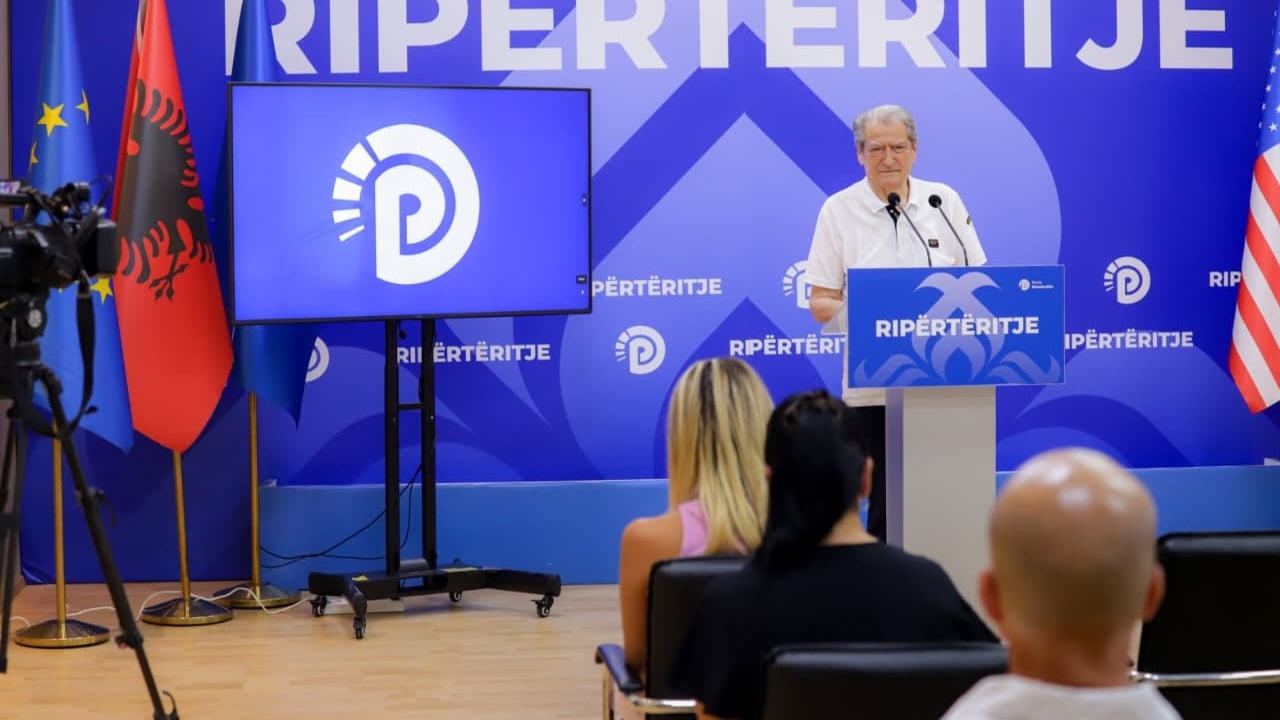
Berisha: The entry ban is a blow to the media
Berisha described the ban on Valon Bele as a serious act against freedom of expression and media freedom. According to him, a journalist cannot be penalized for his public positions or for criticizing the prime minister.
In his reaction, the DP leader claimed that the measure against the journalist was taken because of Bele’s denunciations and positions toward Edi Rama. This is the political version presented by the opposition, while no institutional clarification was made public in the same statement regarding the specific reasons for the ban.
Accusations against the government and the silence of associations
Berisha made direct accusations against the government, saying this is a violation of the journalist’s rights and an anti-democratic act. He also criticized journalists’ associations in Albania for the lack of a public reaction.
According to Berisha, the silence of media organizations in the face of such a case raises questions about their independence from those in power. He called for the issue not to be treated as a routine political clash, but as a test of the minimum standards of freedom of expression.
Call for an international response
In his statement, Berisha called on international journalists’ organizations to react to the ban on Valon Bele entering Albania. He described the decision as condemnable and contrary to democratic principles.
The rhetoric used by Berisha was harsh and full of political accusations against the government and officials he considers responsible for this decision. However, beyond the political language, one essential question remains at the center of the debate: on what basis was a journalist barred from entering the country, and how transparent is the institutional process in such cases?
The debate shifts from politics to institutional standards
The case of Valon Bele is being used by the opposition as an example of what it presents as pressure on critics of the government. In the absence of a full public explanation from the authorities, room for suspicion and political confrontation remains open.
When a journalist is barred from entering the country, the burden of proof falls on the institutions that made the decision. Without transparency, any such measure risks being seen not as a security or legal procedure, but as a tool to strike at public criticism.
Berisha’s statement has turned the issue into a direct debate over the limits of state power and the real protection of media freedom in Albania.
Beyond the political clash, the essence remains the same: such a decision requires a full public explanation, not institutional silence.