
Opposition to the territorial reorganization project is now emerging openly from the very units directly affected. In Divjakë and Selenicë, local councillors from the left and the right voted against the majority’s proposal to merge with larger municipalities, shifting the debate from central offices to a clash with local interests.
Urgent meetings and a vote against in both municipalities
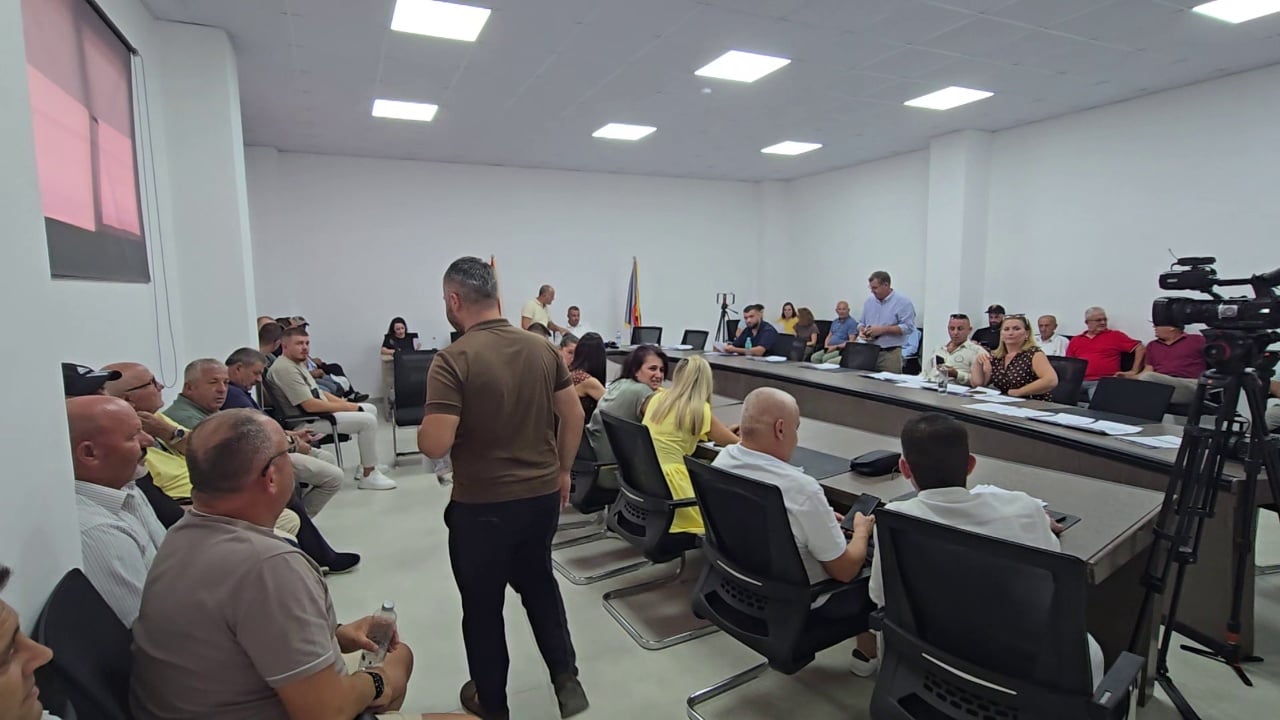
On Friday, the Municipal Council of Divjakë and that of Selenicë held urgent meetings to review the project which, according to the official version, aims to reduce the number of municipalities from 61 to 46.
In both cases, councillors from the left and the right joined their votes and opposed the proposal, signaling that resistance to this map is not coming only from the political opposition, but also from local representatives who are usually divided along party lines.
Clash after Rama’s debate in Kuç
At the Divjakë meeting, Mayor Josif Gorrea was also present, and referred to the debate two days earlier with Prime Minister Edi Rama at the meeting held in Kuç, Vlorë.
There, according to the reported event, two local leaders were removed, an episode that has deepened the climate of tension over the way this initiative is being pushed from the center toward local government.
The mayors’ reasons for opposing the merger
Gorrea explained his position against the Socialist proposal for territorial reorganization. On the same line was the mayor of Selenicë, Nertil Bellaj, who took part in the meeting with councillors and listed the reasons for opposing a merger with Vlorë.
The positions of the two mayors show that the clash is not being read simply as a technical debate over the administrative map, but as a decision with direct consequences for local representation and the weight of smaller communities.
Pressure shifts to MPs in Parliament
After the vote in the municipal councils, the political demand has shifted to Parliament. Councillors from the left and the right have called on MPs of all political sides to unite their votes to bring down the new territorial map with 46 municipalities.
This places the majority before a test that does not end with the administrative argument of reform. On the ground, smaller units are signaling that they do not readily accept a scheme that, according to its opponents, further weakens local voices.
The vote in Divjakë and Selenicë adds political pressure on the project and shows that opposition to the new territorial map is taking broader shape than an ordinary debate between the sides.
Whether this resistance will carry real weight in Parliament remains to be seen at the time of the vote, where such a reform moves from official justification to concrete political cost.