
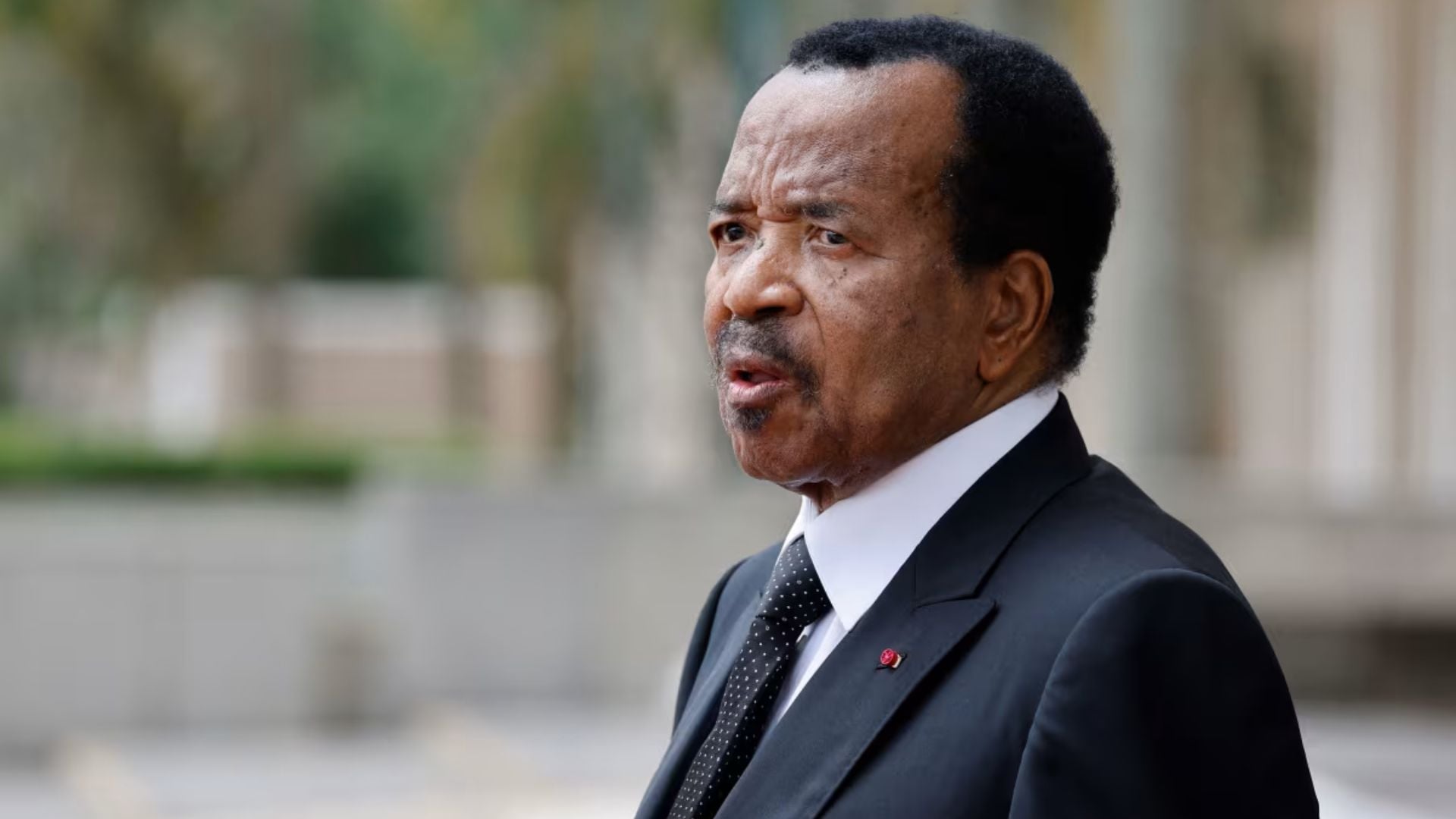
Paul Biya’s long absence from Cameroon is once again fueling doubts about his state of health and about how power is being administered in a country he has ruled for more than four decades. The 93-year-old president has been abroad since June 7, while official explanations have remained limited.
A “short stay” that lasted for weeks
The president’s office presented Biya’s departure as a “short private stay in Europe,” but the absence turned into his longest uninterrupted period abroad in recent years.
Last week, government spokesman René Emmanuel Sadi said Biya is in Geneva, Switzerland, and denied claims that he had been hospitalized because of a worsening health condition. The authorities, however, provided no further details.
More than four decades at the head of the state
Paul Biya took power in 1982 and won his first presidential election in 1984. Today he is Cameroon’s second president since independence and one of the world’s longest-serving leaders.
Last year he won an eighth term, a development that could keep him in the presidency until close to the age of 100. For a large part of Cameroon’s population, Biya is the only president they have ever known.
Opposition raises the issue of a vacancy, but the majority remains an obstacle
The prolonged absence has revived not only concerns about the president’s health, but also debate over the legitimacy of exercising power from abroad.
Opposition candidate Samuel Hiram Iyodi has asked parliament to examine whether this absence constitutes a vacancy in the presidency. However, such a step is seen as unlikely to produce results because of the control the ruling party holds over the institutions.
Decisions from abroad and questions over unresolved problems
Despite his physical absence, according to the official version, Biya has continued to make decisions, including a major military reorganization. The government also says he is “alive” and “will return soon.”
His critics link their frustration not only to the length of his rule, but also to the country’s continuing crisis: deteriorated roads, power outages, corruption, a lack of jobs for young people, conflict in the English-speaking regions, Boko Haram attacks in the north and economic hardship.
Discontent also over inequality in health care
The debate has also been intensified by criticism of the health system. Analysts and citizens point to the contrast between the lack of access to quality care for most Cameroonians and the ability of political elites to receive treatment abroad.
This perception has further fueled public anger toward a ruling establishment that, for many citizens, appears disconnected from the country’s daily reality.
From a symbol of hope in the 1980s, Biya now faces a strong climate of distrust, in which every prolonged absence is read as a sign of the deeper crisis of Cameroon’s political system.
The question is not only about his personal condition, but whether an entire state can be kept for decades around the figure of a single man.