
A massive wildfire in western Belgium has spun out of control and is pushing the fire front toward Germany. According to local authorities, around 30,000 hectares have burned so far, while hundreds of residents have left endangered areas.
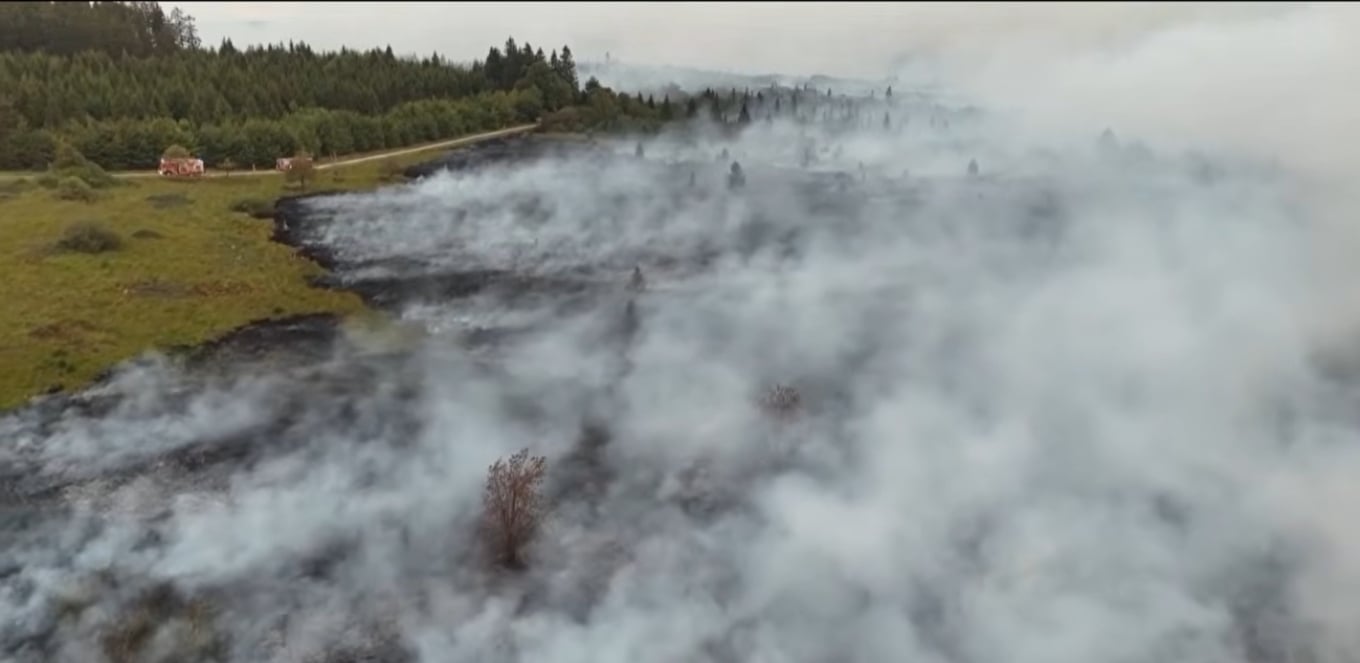
The flames are still not under control
The fire broke out on Friday in the Fann mountain natural park and, despite overnight intervention, emergency teams have still not managed to fully contain it.
According to the official version, this is the largest fire ever recorded in Belgium’s history, a clear indication of the scale of the crisis authorities are facing.
Unstable wind is complicating the response
Local authorities say the situation remains complicated because the intensity of the flames has dropped at certain moments, but the constant change in wind direction has prevented accurate forecasting of the fire’s spread.
This instability is making it harder not only to isolate the fire hotspots, but also to protect populated areas near the border with Germany.
Hundreds evacuated, focus on the front moving toward Germany
Hundreds of residents in surrounding areas have been ordered to evacuate as a precaution, while emergency forces are focusing especially on the fire line moving toward German territory.
According to authorities, hope rests on lower temperatures and increased humidity in the coming hours, conditions that could help slow the advance of the flames.
Cross-border intervention and EU support
Firefighters from across Belgium have been deployed on the ground, along with teams from Germany and Luxembourg. The army and local farmers are also involved in the operation, helping create barriers against the spread of the flames.
The fire has struck a sensitive area of peat bogs and pine forests, making the response more difficult and increasing the risk of further expansion. The European Union has also sent three helicopters and two firefighting planes from the Czech Republic, Sweden and the Netherlands.
As the operation continues, the most immediate danger remains the movement of the flames near the border with Germany and the exposure of populated areas to a fire that authorities are still unable to bring under control.
The scale of the damage and the difficulties on the ground are raising serious questions about emergency response capacity for disasters of this scale, at a time when the weather and terrain are working against any rapid intervention.