
One of the figures closest to Keir Starmer in the early days of the British government is now describing the heart of power as an environment filled with suspicion, information leaks and internal rivalries. Sue Gray says the atmosphere in Downing Street had become so heavy that she felt as though her conversations were being recorded and ending up in the media.
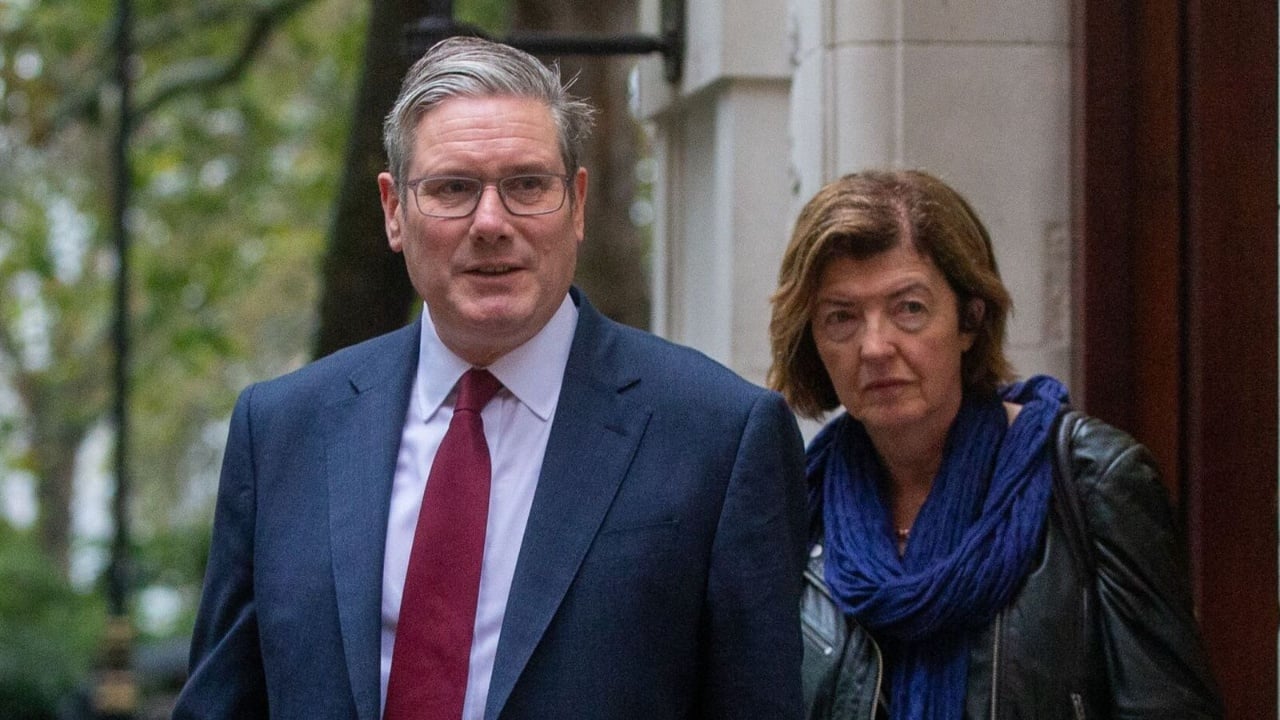
Serious claims about the climate inside the prime minister’s office
In an interview with the Political Currency podcast, Gray spoke at length about her short period as Starmer’s chief adviser, describing the atmosphere in the prime minister’s office as “unbearable.” According to her, the constant leaking of information created a climate of deep mistrust within the team.
She said there came a point when she felt that everything she said could be recorded and later passed on to journalists. In that vein, Gray suggested that the problem was not only communication with the media, but also the way the prime minister’s inner apparatus itself functioned.
Dissatisfaction also with Starmer’s response
Gray, who left the role in 2024 after only around four months as chief of staff, said she had spoken several times with Starmer about her concerns. However, she said she was disappointed that, in her version of events, not enough was done to stop the leaks.
Her remarks bring back into focus the tensions that accompanied the first months of Starmer’s government, a period when media reports repeatedly circulated about clashes, discontent and battles for influence around the prime minister.
The debate over McSweeney and internal clashes
One of the episodes that drew attention at the time was the claim that Gray had sought Morgan McSweeney’s removal from an office near Starmer. She denied that interpretation, saying she had only suggested a more suitable working space because of the high number of people in a small room.
McSweeney later replaced Gray in the post. Starmer himself has previously acknowledged that her appointment was a mistake, while his allies have voiced criticism about how the team had been prepared for the transition from opposition to government.
‘Boys’ club,’ but not without disagreement
Gray also spoke about what she described as a “boys’ club” culture in Downing Street. This is a claim that sheds light on internal power relations, but one that has not been accepted unanimously by everyone who worked during that period.
Some former female advisers have publicly challenged that version. One described the idea of deliberate leaks against Gray as “paranoia,” while another said she had not noticed the existence of such an environment during her time in Downing Street.
A transition that exposed weaknesses
Reflecting on what, in her view, went wrong at the start of the Starmer government, Gray argued that the transition from opposition to power requires more experience in key posts, especially in communications, policy and strategy.
She defended the work done during the preparation phase, saying there had been considerable engagement on several important files, from British-Irish relations to contacts with the European Commission and the US administration. Now a member of the House of Lords, Gray has for the moment ruled out a quick return to a senior government role.
Her account does not close the debate over what happened in the first months of the Starmer government. On the contrary, it once again highlights how fragile the internal functioning of power can be even when, outwardly, it appears consolidated.
At its core, the clash remains between two versions: one that speaks of internal sabotage and an exclusionary culture, and another that sees these claims as a reaction to a failed experience at the center of government.