
A test in Beijing is stirring the boundary between sport and technology. According to the organizers and the Chinese company Honor, the humanoid robot “Lightning” covered 100 meters in 9.32 seconds, a time that surpasses Usain Bolt’s historic 9.58 record, set in 2009 in Berlin.
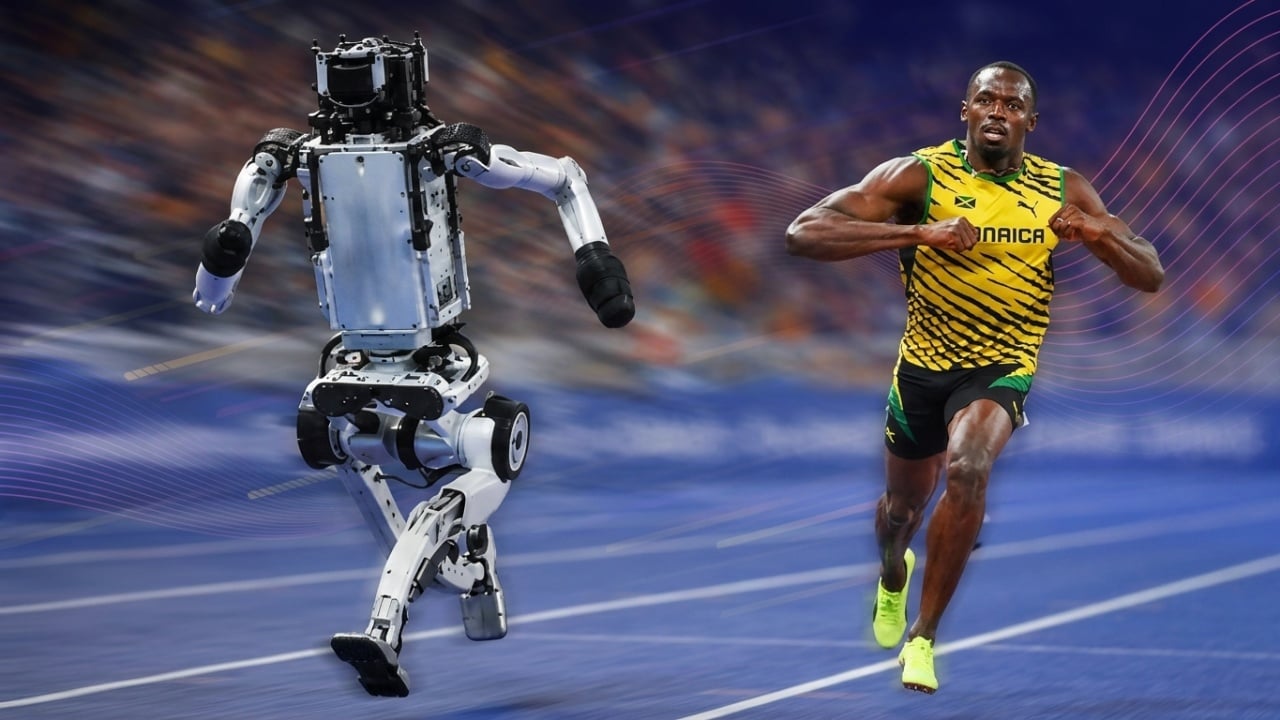
A result that challenges sprinting’s biggest symbol
The reported time is 9.32 seconds, while the top speed reached during the trials is said to have been 14.5 meters per second. If confirmed as presented, this would be a result that surpasses one of the most famous records in athletics.
The comparison with Usain Bolt is unavoidable, but also delicate: a robot does not compete under the same biological, sporting and regulatory conditions as a human athlete. For that very reason, the media impact of the 9.32 time is enormous, but the real debate remains how such a “record” should be interpreted.
The trial was held ahead of the World Humanoid Robot Games
According to the published version, the robot’s performance was recorded during a test event held on the eve of the second edition of the World Humanoid Robot Games, which opened on Saturday in Beijing.
The robot was developed by Honor, a Chinese company best known for smartphones, which appears to be investing heavily in humanoid technology as well. The model’s chosen name is “Lightning,” a branding choice that pushes the narrative of extreme speed even further.
From the half marathon to pure sprinting
“Lightning” is not appearing in the spotlight for the first time. In April, the same robot won the Beijing half marathon with a time of 50 minutes and 26 seconds.
This shows that the project has not been limited to a single spectacular demonstration, but has appeared in several different trials. Still, the 100-meter sprint remains the strongest symbolic test, because that is where the comparison with human records becomes immediate.
Physical changes before the 100-meter test
In the previous phase, the robot was reported to have been 169 centimeters tall and to have had legs measuring 95 centimeters. For the 100-meter speed trials, engineers lengthened its legs by another 10 centimeters.
This detail shows that performance is linked not only to programming and motor function, but also to direct interventions in the robot’s physical structure. So, alongside the excitement over the “record,” it remains clear that this is not sport in the traditional sense, but an engineering contest in which the parameters can be redesigned.
What was achieved in Beijing represents a major technological step, but it also raises an essential question: when machines enter the territory of sporting records, are we still talking about athletic competition or about an industrial demonstration? For now, “Lightning’s” 9.32 seconds remain more a signal of engineering power than a replacement for the history of human sport.