
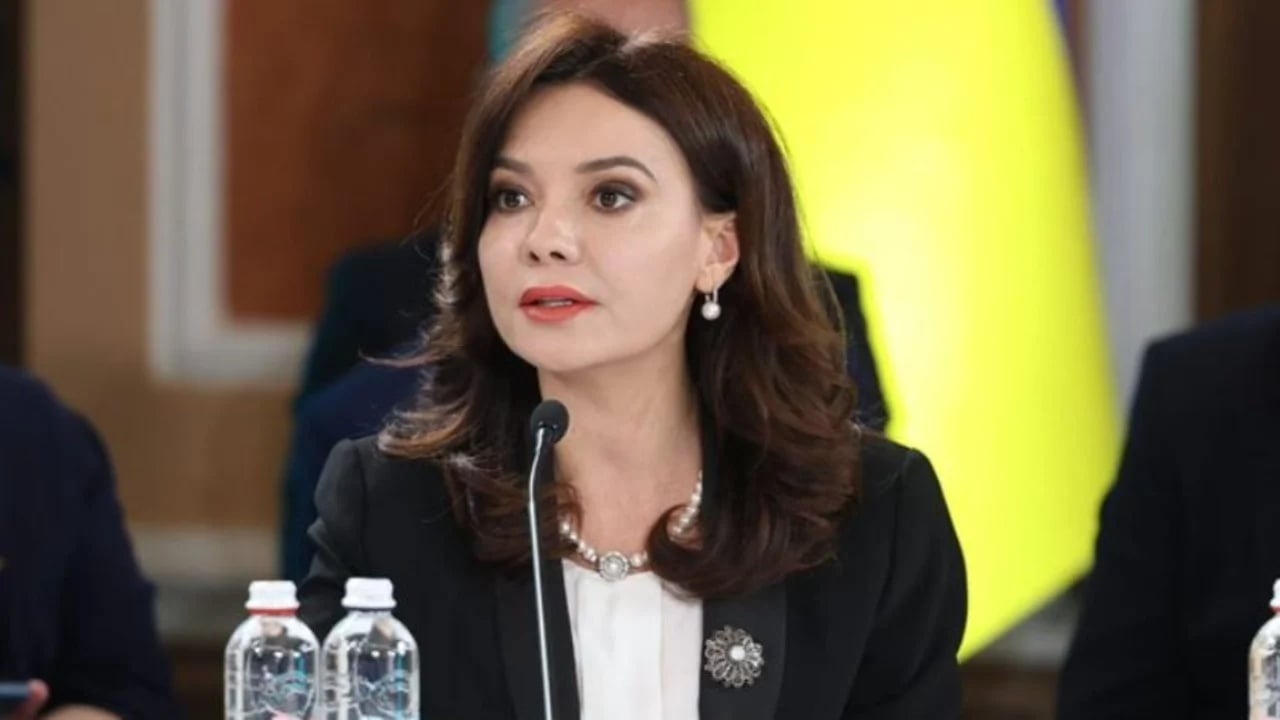
Elisa Spiropali has published a motion submitted to the National Assembly of the Socialist Party, putting forward several theses that directly affect the way power is exercised: a nationwide proportional system with open lists, a clearer separation between the party and the state and, in her version, a need not to treat protest as noise to be ignored. The document comes as a call for internal debate within the Socialist Party, but it also touches on issues that go beyond the ruling party.
What the published motion contains
According to the document published by Spiropali, the core of the proposal is to open a National Dialogue on what she calls the “New Agreement for Albania.” The text lists as priorities increasing representation, more internal democracy, more meritocracy and institutions stronger than individuals.
One of the politically strongest points is the proposal for a nationwide proportional system with open lists, accompanied by more democratic processes within the parties. The document also calls for a clearer separation between political organization and the state administration, a sensitive issue in a country where accusations of mixing party and state have been constant.
Protests and discontent, from the street into the Socialist Party text
The motion acknowledges that protests and public discontent should not be ignored. According to Spiropali, the civic energy seen on the streets of Tirana, especially among young people, should be read as a demand for representation and not as a disturbance to be suppressed or sidelined.
This is a politically weighty formulation, especially as it comes from the governing majority. However, the document remains at the proposal stage and is not accompanied by concrete institutional steps, deadlines or clear mechanisms for how this “reflection” will be translated into real changes.
The Socialist Party says reform must start with itself
The document argues that no new agreement with citizens can be credible if it does not begin with the Socialist Party itself. Spiropali calls for party forums not to function simply as approval structures, but as spaces for debate, while political functions should not be treated as permanent privileges.
The text also emphasizes the role of young people in decision-making, political careers built on work and integrity, and the need for the administration to serve the law and citizens, not political cycles or powerful individuals.
Criticism of the 2008 model and the promise of a new phase
The motion also takes a position on the 2008 political agreement, which it says served the stability of the time, but whose limits have now become clear. According to the document, the closed system no longer produces the same space for competition, contest and representation.
Spiropali presents this as the need for a new phase of democracy, not a new transition. The text speaks of greater control over power, returning Parliament to the center of democratic life, fighting corruption and institutions that, according to the wording used in the motion, should gain more authority than individuals.
Spiropali herself clarifies that the document was not originally intended for the public, but for internal debate within the Socialist Party, and that she made it public because of media interest.
Beyond the rhetoric of reform, it remains to be seen whether this initiative will produce concrete changes in the electoral system and in the relationship between the ruling party and the state, or whether it will remain a political text within the boundaries of party debate.