
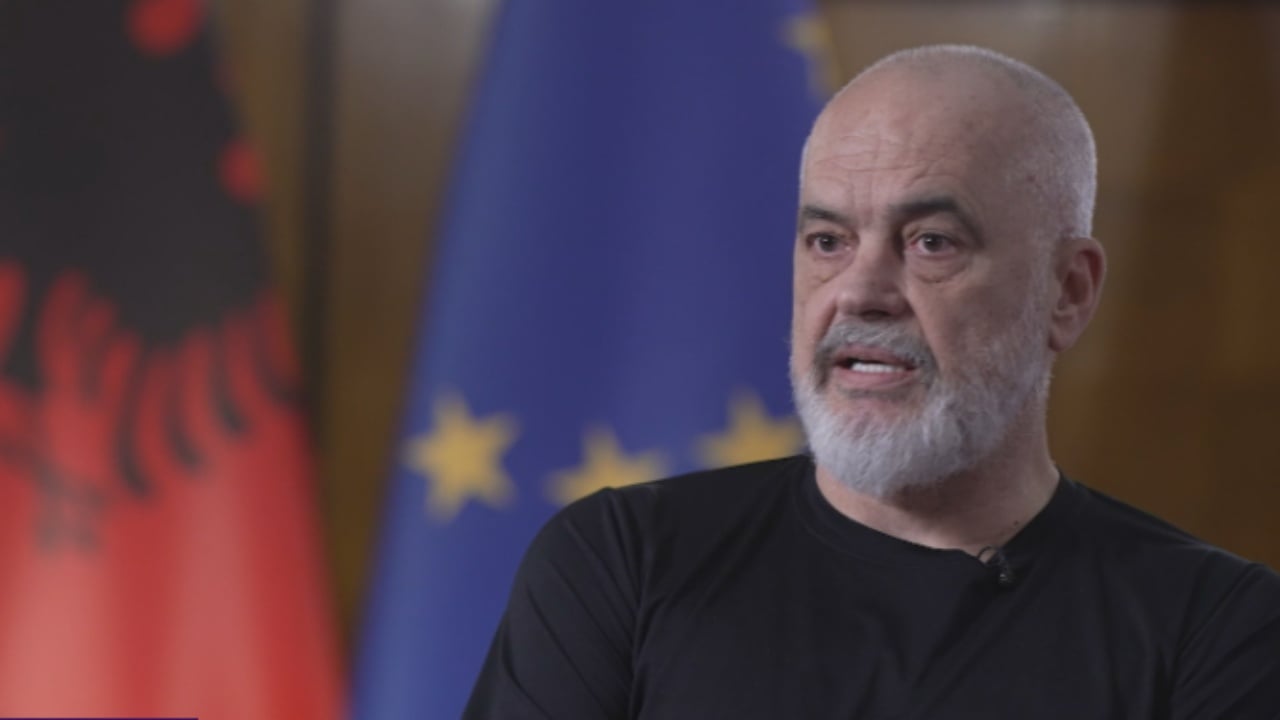
Prime Minister Edi Rama has come out in defense of the controversial project in Zvërnec, calling it “absurd” to suggest that the government could move forward with an investment that does not comply with European standards. In the interview with Channel 4, Rama insisted the project is intended for “regeneration,” not damage, but the most contested issue remains that environmental and procedural concerns are being addressed mainly with political assurances rather than exhaustive public answers.
The government’s claim: the project does not destroy, but “regenerates”
According to the prime minister’s version, the project in Zvërnec is not intended to destroy the area, but to regenerate it. Rama said well-known architects and landscape designers with experience in wetland areas have been involved, while an independent environmental impact assessment is also being carried out.
He insisted that the idea Albania could move forward with a project outside European Union standards is “unacceptable” and “absurd,” linking that argument to the country’s EU negotiation process.
Questions over bulldozers and permits remain at the center of the debate
The point at which the interview became more concrete was when the journalist raised doubts about work carried out on the ground before final approvals. Rama denied that the project itself had started, saying these were only preliminary preparations before the permit, linked to environmental, geological and hydrological assessments.
On the use of bulldozers, he said they had been used to open access for the community and to create roads through private property. However, questions over the logic of physical interventions in a sensitive area before all assessments are completed remain without a full institutional clarification.
Sazan, Kushner and the effort to separate the two projects
In the interview, Rama tried to separate the issue of Zvërnec from that of Sazan. He declared that for Sazan “there is neither a project nor an agreement,” calling it unnecessary to include the island in the same debate.
On the other hand, he acknowledged that Jared Kushner had expressed interest in investing after a later meeting in Davos. Rama presented this as a normal development and described the possible investment as a project of extraordinary weight, while minimizing the value of materials published earlier, saying they were only preliminary presentations.
The protests, according to Rama: a sign of higher expectations
On the protests, the prime minister struck a more political than explanatory tone. He called the protests an indication that the country has reached “another level” and a reflection of what the government should consider.
Rama also said people take to the streets not necessarily because of the facts, but because of higher expectations. Here too, he gave no clear signal of a policy review, but instead insisted that the public reaction should be based on facts rather than alarm.
The interview produced a strong political defense of the project, but not necessarily full clarity on the doubts raised over the interventions on the ground, environmental standards and the way such a sensitive area is being handled.
This is precisely where the real test remains: not in declarations that everything will meet European standards, but in the documents, procedures and transparency that institutions must make publicly available.