
A major fire put several villages in Finiq Municipality under pressure, as the flames approached homes, tourist resorts and large areas of olive groves. According to the official version from authorities on the ground, the fire was caused by an electrical spark, but the damage left behind and the delayed response on the ground are raising serious questions among residents.
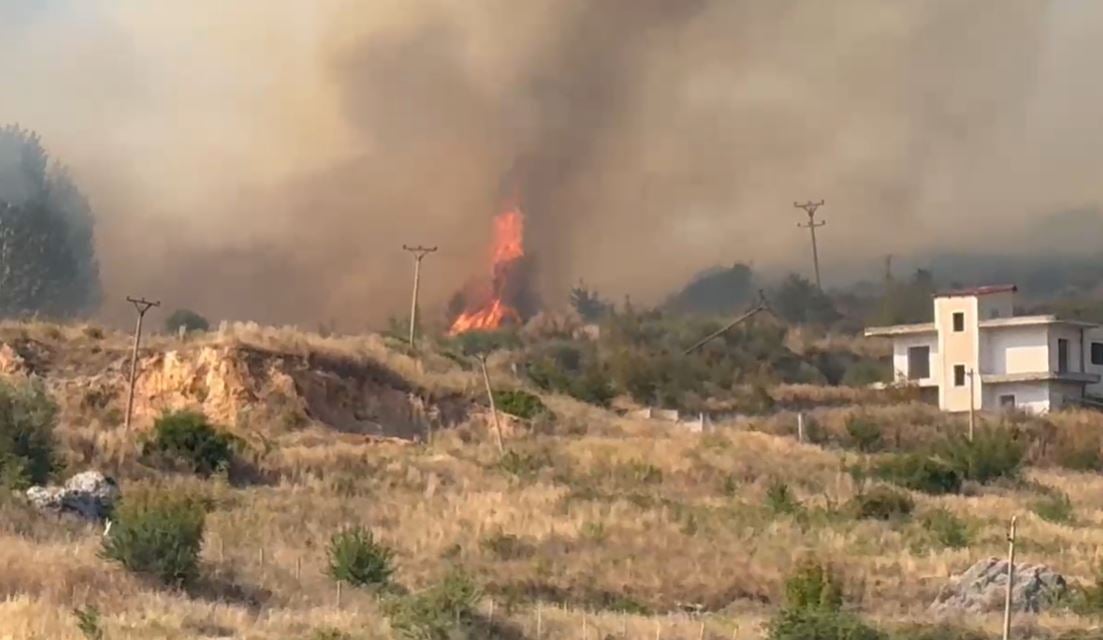
The flames moved close to residential areas
The fire spread quickly from the hilly area of Matomares toward Kostar, Mesopotam and Vllahat, driven by strong winds. The situation became critical as the flames descended to the edge of residential areas, forcing efforts to focus on protecting lives and homes.
In some areas, the danger did not remain only on the outskirts of the villages. In Kostar, the flames reached house yards, while residents tried with improvised means to stop their advance.
Residents and firefighters on the ground for more than six hours
For more than six hours, residents fought side by side with firefighting forces to protect their properties. Only the aerial intervention with three Cougar helicopters managed to curb the spread of the fire in the most dangerous hotspots.
A problematic situation was also reported in Mesopotam and Vllahat, where firefighting forces were deployed near homes to stop the flames. Alongside ground vehicles, repeated water drops from the air were considered decisive in preventing further escalation.
Authorities give the cause, but questions remain over prevention
On the ground were the regional prefect, the general director of the fire service and mayors, who stated that the fire was caused by an electrical spark. So far, this remains the official version given at the scene.
However, the fact that the flames reached the vicinity of homes and that aerial intervention proved decisive once again puts the focus on preventive measures, land clearing and preparedness to deal with fires at the height of the season.
Heavy damage to olive groves, residents demand compensation
Although the danger to homes has been averted, the consequences on the ground remain severe. Large areas of olive groves have been burned, leaving significant losses for residents of the area.
Residents are demanding not only compensation for the damage suffered, but also concrete measures for land clearing and infrastructure improvements so that such situations are not repeated.
The preliminary toll shows that the danger to lives and homes was avoided at the last moment, but the cost to the local economy and agricultural properties remains high.
Beyond the cause cited by authorities, the Finiq fire has once again brought to the center of debate the responsibility of institutions for prevention and a timely response to such emergencies.