
Drones, better known for military uses and security tensions, could take on a new role in the European Union. The European Commission is considering changing rules that currently place strict limits on aerial pesticide spraying, opening the door to wider use of unmanned aircraft in agriculture. But behind promises of efficiency and modernization, serious data gaps and concerns remain over the real impact on the environment and health.
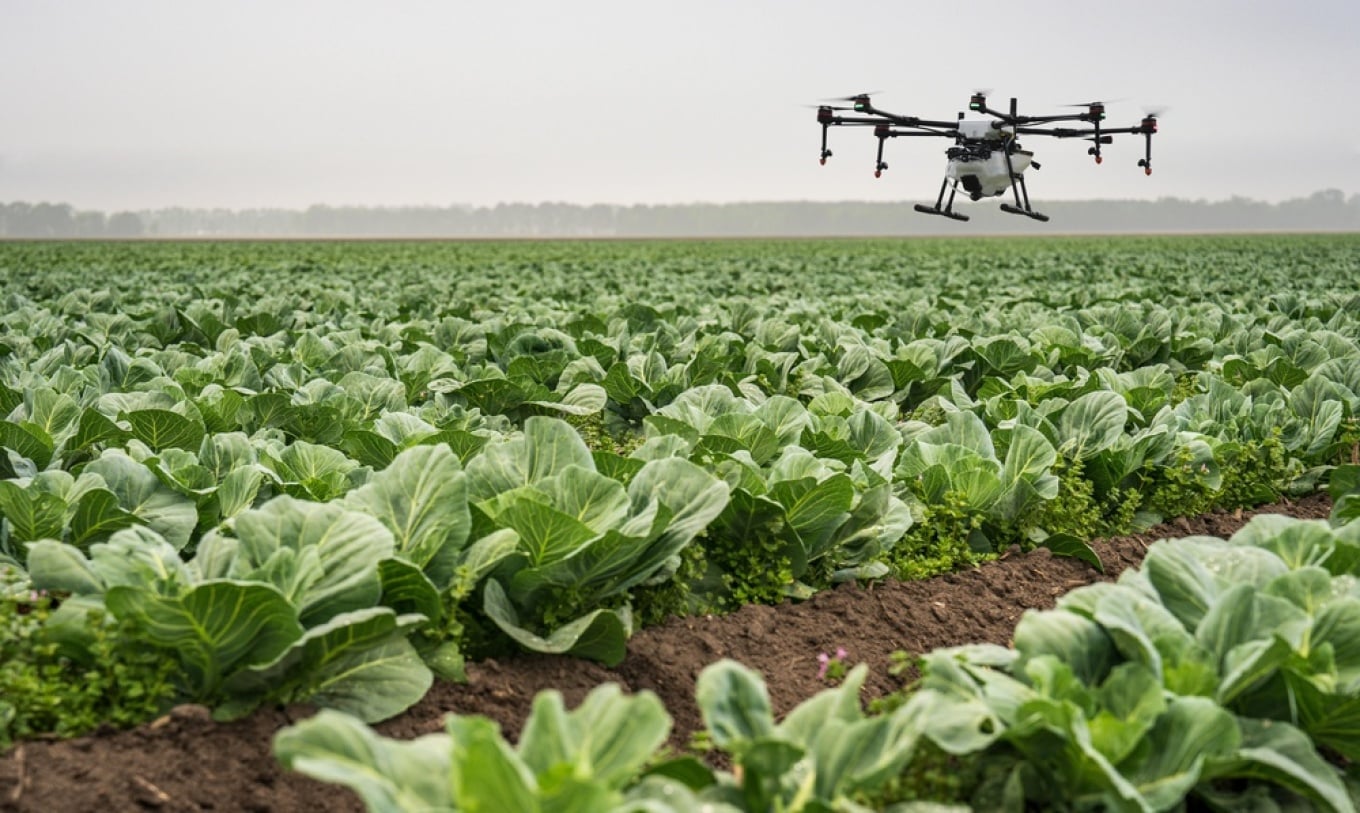
The Commission seeks to soften an old ban
According to Politico, the change is being examined as part of a broader review of EU rules on plant protection products. In its current form, the European framework restricts the use of unmanned aerial vehicles for pesticide spraying.
The existing rules are also linked to the 2009 Directive on the sustainable use of pesticides, which imposed restrictions on aerial spraying because of the risk of uncontrolled chemical drift, environmental pollution and human exposure to pesticides.
At present, national governments can grant permission only in special cases, when conventional tools are difficult or dangerous to use. Examples include terraced vineyards in Portugal, orchards in South Tyrol and flooded areas where tractors cannot enter.
The case in favor: less pesticide, more precision
Supporters of the technology argue that drones can reduce the amount of pesticides used by accurately identifying areas affected by pests or disease and applying the product only where it is needed.
According to this argument, that could reduce costs for farmers and limit the impact of chemicals on the environment. The crop protection industry, through CropLife, also supports the idea that battery-powered drones may produce lower emissions than traditional agricultural machinery.
European Commissioner for Agriculture Christoph Hansen has publicly backed the push toward digital agriculture, linking the use of drones to the goal of greater productivity and less bureaucracy.
Enthusiasm collides with lack of evidence
However, the European Commission itself acknowledges that there are “significant knowledge gaps.” The main questions concern the distance pesticides can drift in the wind and the types of drones that can apply substances more safely and more precisely.
In practice, current restrictions have also hindered the collection of enough data to fully assess this technology. That means the push for liberalization is moving forward in parallel with the lack of complete evidence, a contradiction expected to fuel political and technical debate.
Environmental groups are calling for greater caution and clearer scientific evidence before the rules are relaxed. They raise concerns not only about the environment, but also about privacy and the risk that expensive technology could widen the gap between large farms and small producers.
Political pressure is growing in the EU
Pressure to change the rules did not begin now. In December 2024, 15 member states, including the Czech Republic, asked the Commission to draw up a new proposal on the use of drones in agriculture.
Under the proposal under discussion, member states would be able to authorize drone spraying more broadly, provided it is assessed that this method poses no greater risk than traditional ground application.
The issue, however, does not end there. The change is part of a broader package of reforms, and its approval depends on a wider compromise among member states on other more contentious topics.
On paper, drones are presented as a symbol of precision farming and the modernization Brussels wants to promote. But beyond technological optimism, decision-making will be tested by a fundamental question: how proven is the safety of this solution before the way is opened for wider use of pesticides from the air?
That is precisely where the next debate in the EU is expected to focus, between pressure for productivity and the obligation not to turn innovation into an experiment with unclear consequences.