
The 84th day of the protest in Tirana brought to the surface not only dissatisfaction with those in power, but also cracks within the gathering itself. The march began with tensions, objections among participants, and with some protesters choosing not to follow the movement through the streets of the capital.
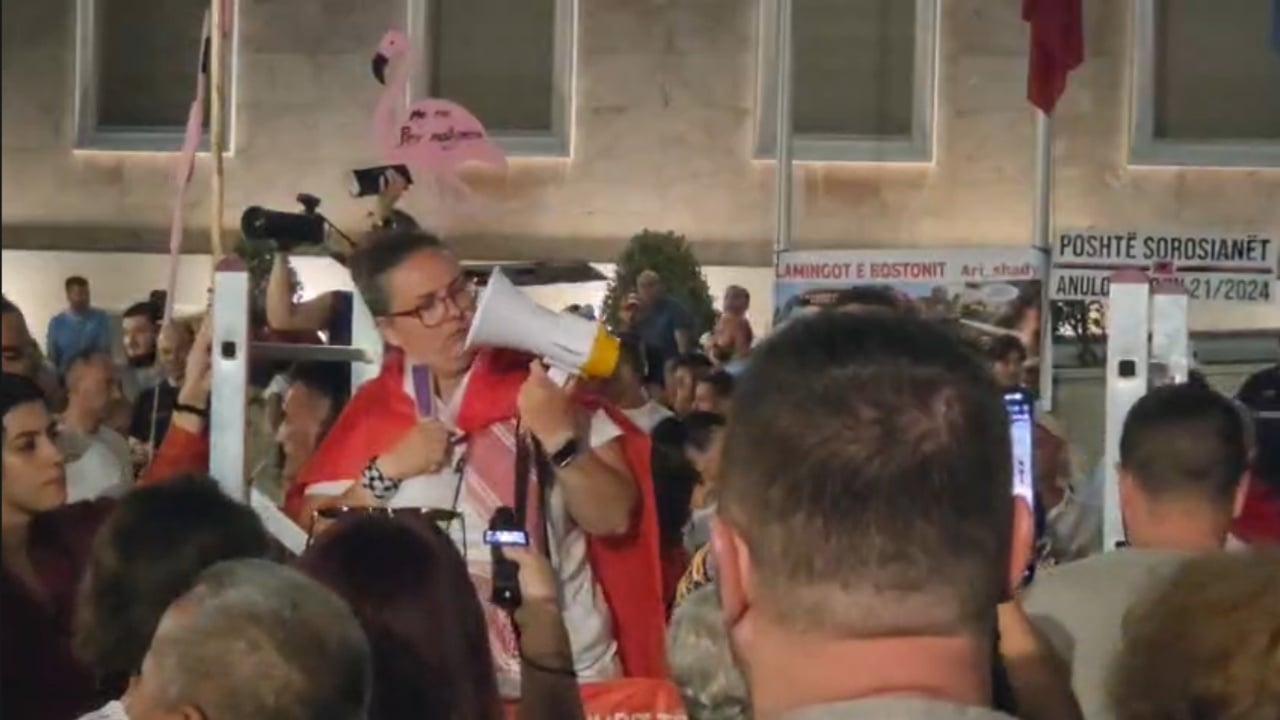
Tensions in the first minutes of the march
At the start of the protest, two women took the megaphone to address those present, but were opposed by part of the crowd. At the same time, one of the organizers signaled the start of the march, shifting attention from the speeches to movement on the ground.
For a few moments, the situation was accompanied by debate among participants. Later, the situation calmed down and the protest continued with the march through the streets of Tirana.
Protester: I was not allowed to express my support
One of the protesters who was not allowed to speak said her aim was to express support for the movement and for the participants who, according to her, are facing personal costs for their continued presence at the protest.
She said that some participants have been there almost every day and that one of the women involved even risks losing her job. According to her, citizens have the right to take to the streets and protest, while she described the situation as a new form of dictatorship.
Message from the diaspora and reference to the “Flamingo Revolution”
In her remarks, the protester introduced herself as part of the Albanian diaspora and said she had come to support the voice of the protest. She said she was proud of the engagement of the diaspora and that she had been called by part of it to be present at the gathering.
According to her, the support will continue whenever the “Flamingo Revolution” asks for their presence. She described their role as a megaphone for the voice of the protesters.
Not everyone joined the march
Despite the start of the march, some protesters did not follow the movement and decided to remain in front of the Prime Minister’s Office. This split on the ground suggests that the protest is entering a more fragile phase also because of internal disagreements.
Today’s clash comes only a few days after another incident among protesters, in which one of them was physically attacked. This makes it even clearer that the tension is not being produced only by the confrontation with those in power, but also by the way the protest itself is being managed.
The protest continued through the streets of the capital, but day 84 showed that beyond the pressure on the government, the gathering is also facing open questions about organization, representation and control of its internal voice.
When a movement begins to clash over who speaks and who is excluded, the tension no longer remains only in relation to institutions, but also appears at the heart of the protest.