
Canada is trying to sell a major economic shift at a difficult moment for trade with the United States. Prime Minister Mark Carney aims to attract up to C$1 trillion in investment over the next five years, as his government seeks to reduce dependence on the US market and convince global capital to enter new projects, not simply buy existing companies.
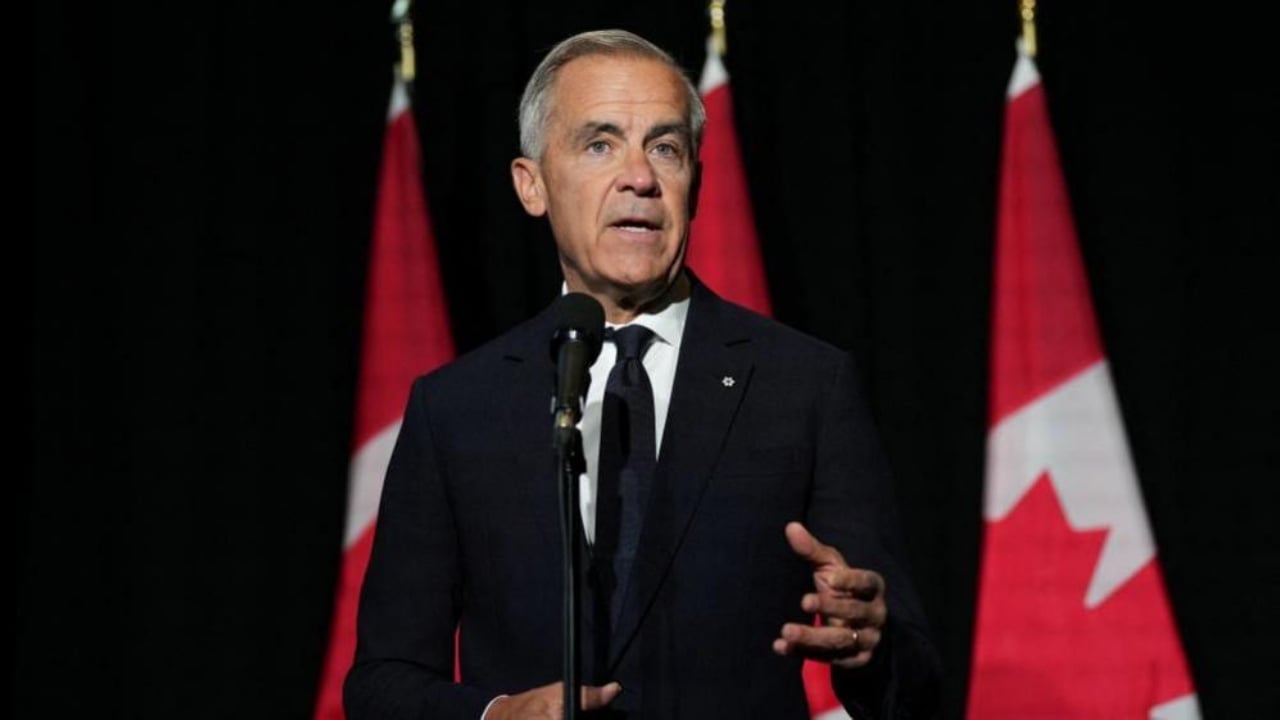
Toronto, the Canadian government’s main showcase
Dozens of major international investors have gathered in Toronto for a two-day summit, where the Canadian government is presenting more than 160 investment projects in sectors it describes as strategic. The list includes mining, energy, transport, infrastructure and technology.
Among the participants are executives from some of the world’s largest financial institutions, including BlackRock, Blackstone, Temasek and APG Groep. According to the government, their presence is intended to open negotiations and partnerships, but not necessarily immediate deals.
An ambitious target, but deals do not appear close
According to a government source, the summit is expected to serve mainly as a starting point for discussions, while major investments could take 12 to 18 months to materialize. That places Carney’s stated goal in the realm of a political and economic plan with many unknowns.
Carney himself has said that investors managing more than C$120 trillion in assets are coming to Canada. However, the real weight of that interest remains to be measured in the projects that are financed, not in the fund-management figures used as a political argument.
Technology, data centers and mining in focus
A large part of the package being promoted is tied to technology. The government’s list includes 96 data centers under development, as well as potential investments in quantum computing at Xanadu and in large data centers geared toward artificial intelligence.
In the mining sector, one of the most prominent projects is Crawford Nickel, presented as a low-carbon nickel production project for batteries and green steel. The government is pitching this as part of Canada’s positioning in new industrial and energy supply chains.
Major infrastructure and an effort to break away from the US
The project package also includes a high-speed rail line between Calgary and Edmonton, which requires about C$900 million in financing. The government is placing infrastructure at the center of its growth plan at a time when the economy is facing the consequences of trade tensions and US tariffs.
Carney’s strategy aims to reduce dependence on the United States and expand economic ties with Europe, Asia and the Middle East. The move comes as Canadian exports are threatened by the trade clash with the country’s largest economic partner.
Investment figures are rising, but not necessarily in the real economy
Government data show that foreign direct investment in Canada has increased since 2022. Average quarterly flows reached about C$23 billion in 2024 and 2025, while this year they are estimated at around C$20 billion so far.
But the picture is not as straightforward as the government presents it. A large share of those investments is tied to mergers and acquisitions of existing companies, while investment in new projects such as factories and depots has not recorded strong growth since Carney came to power.
Market skepticism is also present. BMO Capital Markets chief economist Doug Porter has warned that attracting new investment into a mature economy like Canada’s may be difficult, despite the ambitious packaging surrounding the Toronto summit.
Meanwhile, Canadian banks and financial institutions have announced new commitments to the economy, including C$1.4 billion from Royal Bank of Canada for technology companies, up to C$70 billion from Bank of Montreal for critical sectors, as well as C$2 billion from CIBC and C$5 billion from Sun Life.
For the Canadian government, the challenge is not only to attract capital, but to direct it toward projects that increase production, technology and infrastructure. That is precisely where it will be measured whether the C$1 trillion target is a feasible plan or more of a strong political message in the face of pressure from the United States.