
The Albanian Ambassadors’ Council has come out openly against the political and historical reading of the first-instance judgment in The Hague against four former leaders of the KLA. In its reaction, KASH expresses disappointment with the decision and raises concerns about how the process was conducted, from its length to the proportionality of the sentences.
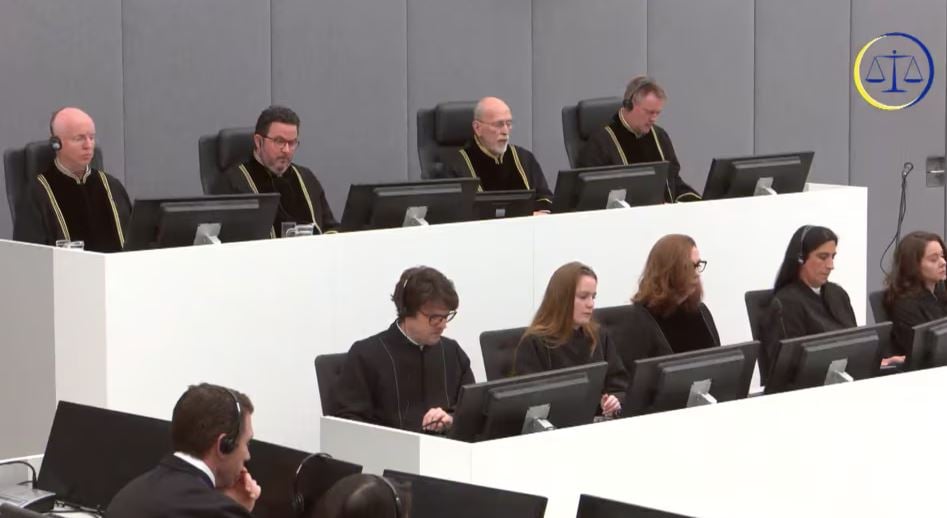
Strong reaction after the first-instance ruling
According to the position made public by KASH, the decision of the Kosovo Specialist Chambers has caused deep concern, while the organization says it respects the principles of the rule of law and the independence of judicial institutions.
At the same time, the Council expresses disappointment with the judgment and points to several issues that, in its view, remain problematic: the extraordinary length of the proceedings, the years-long pretrial detention of the accused, the proportionality of the sentences, and the standards followed during the trial.
KASH rejects equating the KLA war with the crimes of the Serbian regime
In its reaction, KASH insists that the KLA war was a war of liberation linked to resistance against oppression, ethnic cleansing, and the systematic violence of Slobodan Milosevic’s regime.
The Council recalls that the crimes of the Serbian state apparatus in Kosovo have been documented and that senior leaders of that regime were tried and convicted by the International Criminal Tribunal for the former Yugoslavia. For this reason, according to KASH, these crimes cannot be relativized or placed on the same moral plane as Kosovo’s war for freedom.
“Kosovo’s history cannot be rewritten”
One of the main emphases of the reaction is opposition to any interpretation that extends the decision beyond individual criminal responsibility. According to KASH, the judgment against the four former KLA leaders cannot be read as a condemnation of the people of Kosovo, of the KLA itself, or of its war for independence.
The Council argues that no court ruling can undo the sacrifice of the war’s victims and martyrs, nor overturn the fundamental distinction between aggressor and victim. In this vein, it stresses that Kosovo’s history and the liberating character of its war cannot be rewritten.
Appeal and call for the same standard regarding Serbian crimes
KASH calls for the appeal stage to examine with impartiality and rigor the evidence, legal conclusions, the way responsibility was determined, and the proportionality of the sentences. According to the Council, the fact that this is a first-instance ruling means that legal remedies have not yet been exhausted.
At the same time, the Council calls on the international community to apply the same standards of justice to the mass crimes committed by Serbian state forces in Kosovo. The reaction underlines that justice remains incomplete as long as many of those responsible for massacres, expulsions, sexual violence, destruction, and enforced disappearances continue to evade accountability.
KASH’s reaction comes at a time when the ruling has sparked debate and objections in Kosovo and in the diaspora.
At the end of its statement, the Council expresses solidarity with the people of Kosovo and with the families of those convicted, calling for calm, unity, dignity, and the use of legal avenues.