
Pandeli Majko reacted with strong emotion after the verdict on the former KLA leaders, calling it a dramatic decision that, in his view, does not overturn history but could influence how it is interpreted. The former prime minister during the Kosovo war spoke of a human and political wound that, in his reading, touches more than the individual fate of those convicted.
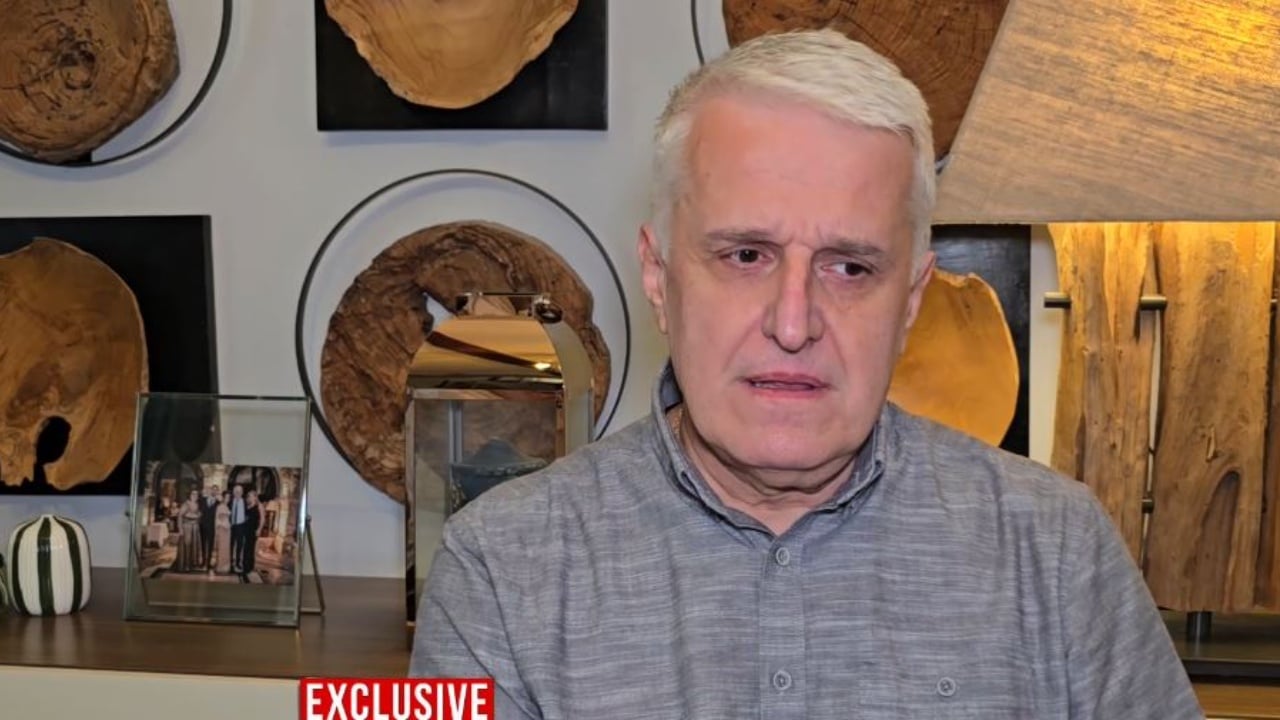
Majko: The ruling does not change history, but unsettles it
Majko described the Hague court’s verdict as a dramatic development, openly showing his emotions. According to him, although there is a claim that the KLA emerged untouched as a structure, the real weight of this process remains far heavier for historical memory and for the way the Kosovo war will be perceived.
He argued that, in his reading, history is once again being placed under the pressure of interpretations aimed at distorting it. For Majko, the fact that figures linked to the KLA have been killed or convicted makes it impossible to read this process in a simplified way as a clean political and moral closure.
Call for dignity, not a clash with justice
In his reaction, Majko called on Kosovo and Albania to avoid outbursts against justice and to maintain a dignified stance. He said anger at a court ruling does not constitute political strength, but weakness.
His comments came in a climate of strong emotions after the decision, as he also mentioned images of people crying, including former KLA soldiers and relatives. For him, the human dimension of the issue cannot be left in the shadows by the formal language of judicial proceedings.
The process does not end here, attention turns to the appeal
Majko stressed that the legal battle is not over and that the appeal stage still remains. He called for the development not to be seen simply as the personal fate of a few individuals, but as a blow with a broader political and social effect.
According to him, in wartime circumstances it is difficult to separate individual responsibility entirely from the collective weight carried by a conflict. This is also the core of the concern he raised about the consequences of the ruling for the public narrative of the Kosovo war.
The Special Court and the political price that, according to Majko, Kosovo chose
In his comments, Majko also focused on the creation of the Special Court, established in 2015 by decision of the Kosovo Assembly after constitutional changes and agreements with the European Union. According to him, accepting this court was a political cost that Kosovo took upon itself in the name of international consolidation.
He presented its creation as an act that required political courage, while implying that Albanian society has lived through this process as a heavy historical payment, linked to killings and imprisonment.
A personal relationship with Hashim Thaçi as well
Majko’s reaction also had a personal tone. He recalled that during the Kosovo war he was Albania’s prime minister, while Hashim Thaçi was one of the KLA leaders and part of Kosovo’s delegation in Rambouillet.
On Thaçi, Majko spoke of him as a figure with a role in the moments when Kosovo became a subject of international rights. He said he was proud of his friendship with him, giving his reaction the weight of a political and human bond that goes beyond the debate of the day.
The former prime minister’s reaction shifts the debate from the official formula of the ruling to the consequences it may have for memory, the legitimacy of the war and the political climate between Tirana and Pristina.
At this point, the clash does not appear to be only legal. It also remains a battle over the interpretation of history and the way a society confronts its political, human and symbolic costs.