Journalist Artan Hoxha said the investigation into the case in question has begun and that the file is now with the Prosecutor’s Office. According to him, four criminal offenses have been identified related to illegal surveillance, interference with computer data, the publication of materials, and the dissemination of personal secrets.
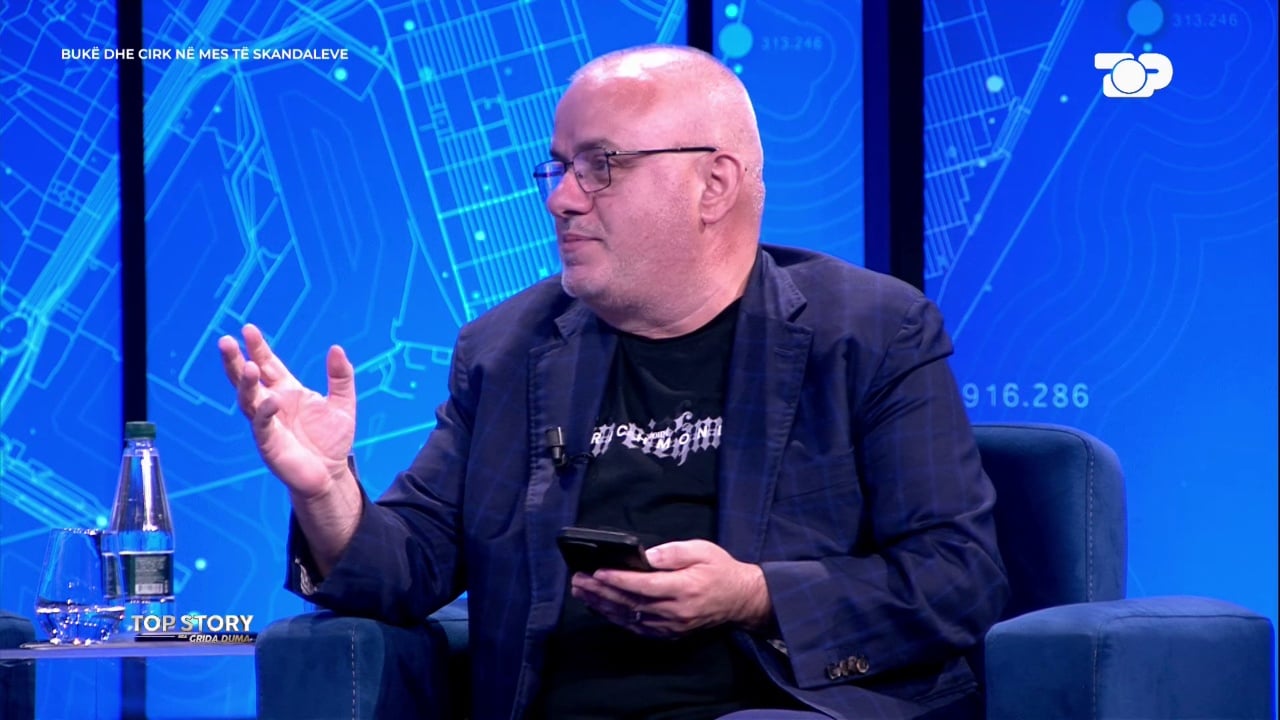
The case has been referred to the Prosecutor’s Office
Hoxha said that from this point on, everything remains in the hands of the prosecution body. He stressed that the investigation has begun, but gave no further details on the specific progress of the procedure or on any people involved.
His statement places the focus on the procedural stage, while answers on criminal responsibility and evidence remain to be verified by the Prosecutor’s Office.
Four charges, but not severe punishments
According to Hoxha, the case involves four criminal offenses: illegal surveillance, interference with computer data, distribution and publication of materials, as well as the dissemination of personal secrets.
He pointed out that these charges, in the version he presented publicly, do not carry heavy punishments. Illegal surveillance, according to him, is punishable by up to two years in prison; interference with computer data by a fine or up to two years; distribution and publication by up to three years; and the dissemination of personal secrets by up to one year in prison.
Alarm over digital security
In the journalist’s assessment, the case shows that in the age of technology, no one has complete guarantees. His comment raises a broader concern about data protection and the vulnerability of privacy in the digital space.
This is a claim made publicly by Hoxha and not an investigative conclusion. For that very reason, the weight of the case remains on institutional verification and on the ability of the authorities to document possible violations.
Criticism of the cybercrime sector
Hoxha also raised doubts about the state’s capacities in this area, describing the cybercrime sector as among the least invested in.
If this assessment proves accurate, it adds question marks not only over the specific investigation, but also over the readiness of institutions to deal with complex cases involving surveillance, interference in systems, and the circulation of sensitive materials.
For the moment, the only element publicly confirmed is that the case has entered the investigation phase at the Prosecutor’s Office and that four criminal charges have been mentioned.
It remains for the prosecution body to clarify whether these charges will be supported by sufficient evidence and whether the case will produce concrete accountability beyond public statements.