
Democratic Party MP Klevis Balliu has made a series of strong accusations against Prime Minister Edi Rama, former Deputy Prime Minister Belinda Balluku, and businessman Roni Yeffet, claiming that through the state-owned company KAYO, a scheme was set up that benefited from tens of millions of euros from the state budget and public assets. According to him, the issue is not only about public money, but also affects the defense sector and national security.
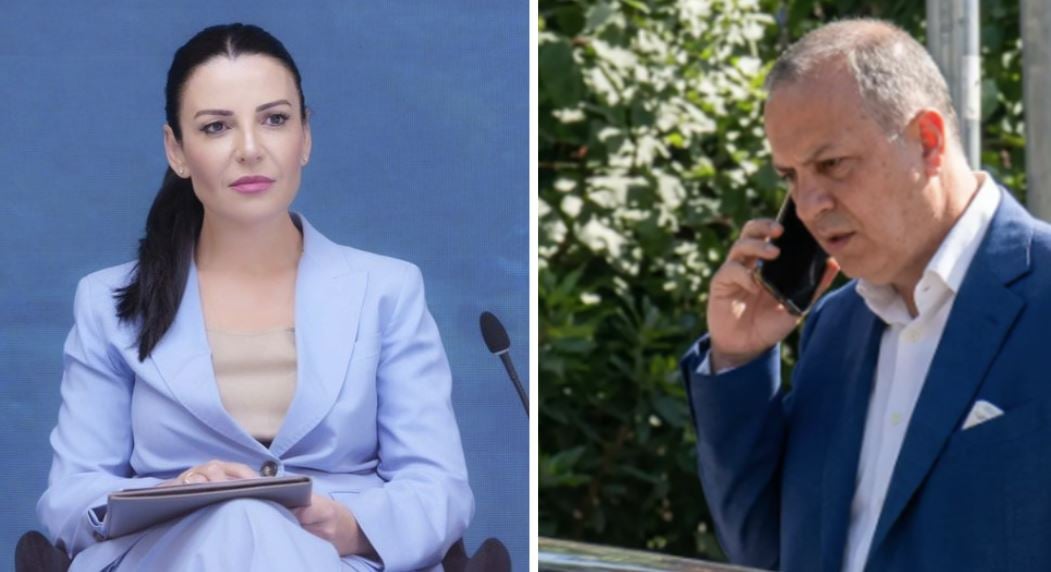
Political accusations focused on KAYO and the defense sector
Balliu presented the issue as a problem that, in his version, goes beyond the usual political conflict. He claims that through KAYO, a state-owned company linked to weapons production, trade, and other defense sectors, suspicious partnerships have been created with private entities, with financial and institutional consequences.
The Democratic MP said the scheme he denounced harms the state interest because, in some cases, according to the opposition’s accusations, the state has made important properties and assets available, while the main benefit has gone to private partners. He also linked the issue to Albania’s relations with NATO and the United States, but in this appearance did not provide publicly verified evidence beyond the documents he said he possesses.
Key point of the denunciation: reducing the state’s share from 45% to 20%
One of the central points of the accusation concerns the change in KAYO’s participation in joint partnerships. According to Balliu, government decisions reduced the state’s minimum stake from 45% to 20%, which he says weakens the public interest and increases the space for state assets to be effectively controlled by private actors.
He specifically mentioned Council of Ministers decisions which, according to him, changed this ratio in partnerships linked to special motor vehicles, uniforms, weapons, and drones. It is precisely on this point that the opposition raises its main suspicion: why was the state’s share reduced in such a sensitive sector, and on what reasoning was this change based.
The companies mentioned and doubts over the criteria
In his denunciation, Balliu mentioned several companies created or linked to KAYO, including Timak Defense, Guna Tactical, and Advanced Arm Technology. According to him, these structures do not meet the required criteria for minimum capital, investment, and number of employees, even though they have been involved in partnerships related to the production of military vehicles, uniforms, and other security equipment.
Another element he raised was the very low level of initial capital in some of these companies, compared with the scope of their activity and the claimed value of the projects. The political accusation here is direct: according to Balliu, the government has opened the way for private partners that do not prove the required capacity, while benefiting from access to state property and public contracts.
€45 million in contracts and a call for an investigation
Balliu said that, according to documents he claims to have obtained, companies linked to KAYO have so far benefited by around €45 million from public funds. He listed payments that, according to him, are tied to uniforms, vehicles, technical equipment, and anti-drone systems, received by entities such as KAYO, Guna Tactical, and Timak Defense.
At the end of the denunciation, he called on the justice system to verify the criteria for selecting private partners, the documentation on technical and financial capacities, competitive procedures, the change in KAYO’s participation from 45% to 20%, and the use of public property. Balliu also asked that the investigation extend to Prime Minister Edi Rama, whom he described as the key person in this operation.
So far, these are accusations raised by the opposition and claims that require institutional and criminal verification.
Precisely because the issue concerns public funds, state property, and the defense sector, the weight of the answers cannot remain within political rhetoric. If the documentation exists and if the legal conditions have been respected, this must be proven clearly and publicly.