
A tense debate over the investigation into former Deputy Prime Minister Belinda Balluku unfolded in the studio, where political accusations clashed with demands for evidence and with the objection that there is no final court ruling against her. The clash also highlighted how investigation, political responsibility and criminal guilt are often conflated in public debate.
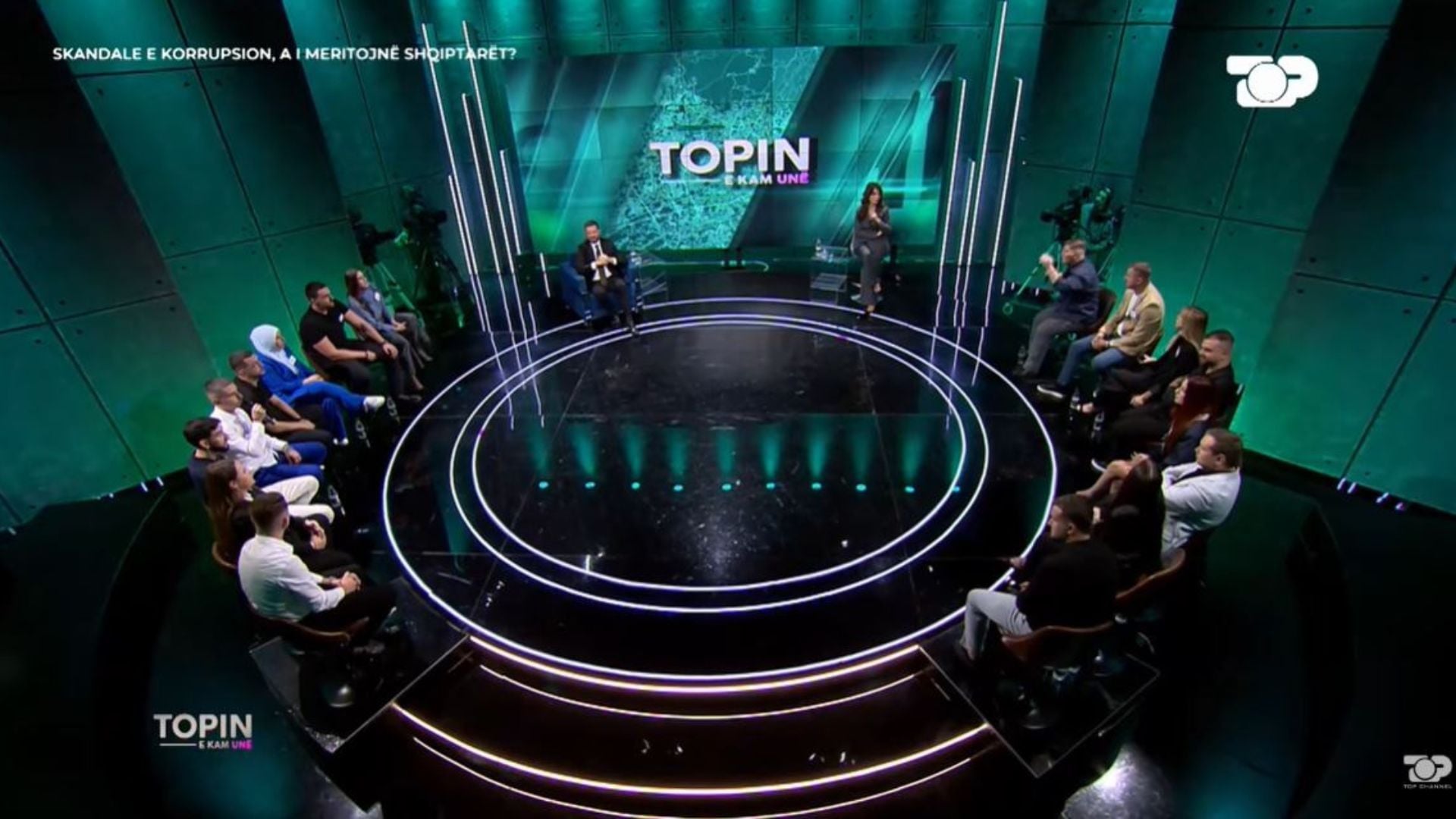
Strong accusations and comparisons with other political standards
Enri raised the tone of the debate by linking the issue to social inequality and public perceptions of officials’ wealth. He said Balluku “has a villa in Palasa,” while he himself pays 550 euros in rent, using this as a political argument against her.
He then cited, by way of comparison, the case of a Greek MEP to argue that in other countries resignations come even over smaller matters. He went on to make serious accusations of abuse of public money, also mentioning the figure of 50 million euros in healthcare, without at that moment providing a judicial reference for Balluku.
Objection: an investigation is not the same as guilt
Flogerti challenged this approach, insisting that a person under investigation cannot automatically be considered guilty. According to him, the debate should be based on facts and on a final court ruling, not on premature political conclusions.
He stressed that he is not aware of any such ruling against Balluku and used this as the dividing line between public accusation and the legal standard. In essence, his response raised an issue often overlooked on screen: an investigation is a procedural stage, not final proof of guilt.
Clash over removal from office and “immunity”
The debate grew even sharper when Flogerti said that calls for protests demanding Balluku’s removal from the ministry conflict with the fact that she has been dismissed. At this point, Enri turned the discussion to what he called protection through immunity, also mentioning SPAK’s request.
This part of the debate left unresolved the ambiguity between the political and legal terms often used in public. The claim of “immunity” was raised in the studio as a political accusation, but it was not accompanied during the clash by a full procedural clarification.
When public debate slips between perception and proof
The clash once again showed that in highly politicized cases, public debate quickly moves from suspicion to moral condemnation, while the legal standard requires evidence, procedure and judicial decision-making.
In the absence of a final ruling, such accusations remain part of the political and public debate. This does not diminish the questions raised about senior figures, but it makes it even more necessary to distinguish between what is alleged in the studio and what is proven before justice.
The debate did not produce new procedural facts about the case, but it clearly exposed two opposing approaches: one that demands immediate political accountability and another that insists on evidence and a court ruling.
In today’s political climate, this remains one of the central points of public confrontation: how far an investigation alone is enough to demand someone’s removal, and where the line of proven guilt begins.