
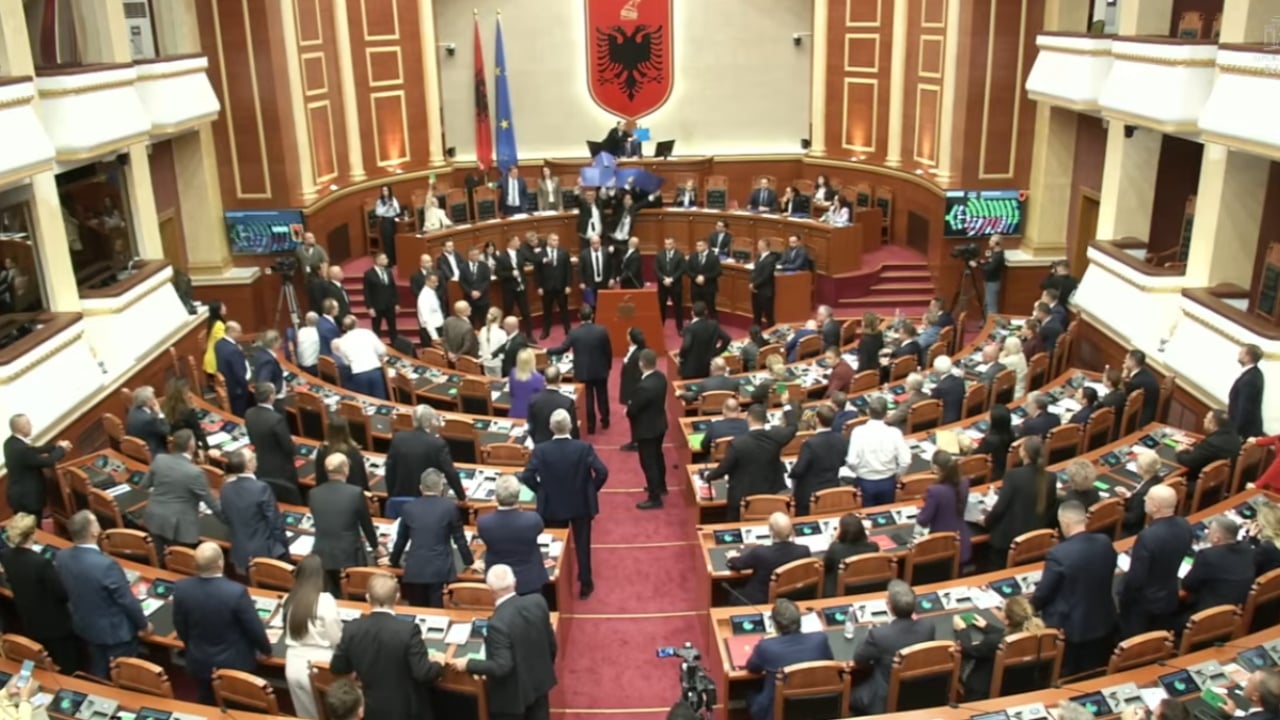
With 85 votes in favor and after a session marked by objections and debate, Parliament approved the law on the new territorial map. The change directly affects local government organization in several counties of the country, merging 28 municipalities into 13 new units and bringing the national total to 46 municipalities.
What the new law provides
According to the version approved in Parliament, the new territorial structure will have 46 municipalities, 71 constituent towns and 387 administrative units.
The model keeps the municipality as the only unit of local self-government, with one mayor, one council, one administration and one budget. In total, 13 municipalities with around 225,000 residents are merged with neighboring municipalities.
The official arguments for this organization are related to territorial distances, geographical continuity, road access, the presence of minorities and the identity characteristics of the areas. However, the reform has come after strong controversy and opposition in several counties.
Tirana and the airport area, one of the most sensitive nodes
In Tirana County, the Municipality of Tirana remains unchanged, while Kavaja and Rrogozhina are merged into one.
The law also creates the administrative unit of Rinas, which is included in the Municipality of Tirana. This unit is formed from the villages of Rinas, Bërxullë and Domje, bringing together in a single territory the area of the international airport and the economic space around it.
This is one of the most significant changes in the new map, as it affects an area of economic and development weight for the capital.
From Berat to Elbasan, mergers that have prompted reactions
In Berat, five municipalities are reduced to three. Berat is merged with Poliçan and Dimal, while Kuçova and Skrapar remain separate.
In Elbasan, the reduction is also significant. Përrenjas is merged with Librazhd, a move that has sparked outrage among local residents. Likewise, the Municipality of Elbasan expands by including Belsh and Cërrik, while Peqin and Gramsh remain separate units.
In Fier, the central municipality expands through a merger with Patos, while Lushnja includes Divjakë, securing access to the sea.
Deep changes in the south and some areas left untouched
In Dibër, Klos is merged with Mat. In Gjirokastër, the changes are among the strongest: Tepelena is merged with Memaliaj, Përmet with Këlcyrë, while Gjirokastër also includes Libohovë.
In Vlorë, the municipality expands with Selenicë. In the southeast, according to the majority’s position, Maliq is merged with Korçë despite objections.
Meanwhile, some municipalities are preserved as special cases. Pustec, Finiq, Dropull, Tropojë, Has, Skrapar and Konispol remain unchanged despite financial and demographic indicators. Kukës County also remains with three municipalities: Kukës, Has and Tropojë.
The approval of this map reopens the debate on how local government is being redesigned, especially in areas where local opposition has been open and continuous.
Beyond the official arguments for efficiency and better administration, the real effect of this reform will be measured in representation, services and the weight communities will have after these mergers.